The only way to offset the discomfort of beating into 20 knots is to make Sous Vide steak diner.
The sweet downwind dream has passed for the moment.
We have a reach ahead so only a night of tacking.
Your Custom Text Here
The only way to offset the discomfort of beating into 20 knots is to make Sous Vide steak diner.
The sweet downwind dream has passed for the moment.
We have a reach ahead so only a night of tacking.
Today, with winds going down to just 3 knots, crew got an opportunity to pause.
Fishing lines were out and sunbathing on bean bags was in full swing.
Rhys and I used sextants for the noon sight and plotted a nice-looking parabola of sun reaching its highest point in the sky and starting to go down. This allowed us to get our latitude and longitude from sun observations alone. What a thrill!
After the mid-day sun, it was hard to resist the blue waters. We used a floating sheet from spinnaker to float a small stepping fender behind the boat, as a safety measure to help catch up with it. With that in place, we took a splash jumping from the bow, floating by the moving boat, and catching up with it at the stern. So amazingly refreshing! 17088ft of water beneath us with surface temperature of 74.4F!
As we approach the midpoint of our journey, things are settling down into a good rhythm. All the daily boat tasks are becoming easy and familiar and body and mind is fully adjusted to the motion and views of the open ocean.
On long passages like this, two things come to the forefront as great sources of joy: learning and food. I’m grateful for so many little and big things I’ve learned and continue to learn from every member of the crew:
Rhys continues to work through celestial navigation practice problems and is using some new techniques from David Burch’s book, which helped me sort things out in my head by looking at a different way to do things.
Iain compressed his days-long learning curve into a 30min crash course of weather routing software qtVLM for me. Now I have it on my own computer and can play pretend-navigator in parallel with his focused effort to get us the best route.
Craig gave me awesome pointers on creating marinades and salad dressings. He manages to balance flavors so well and uses ingredients I’ve never touched before. Who knew I’d really enjoy a splash of Coconut Aminos or that half of a lime could brighten up salad dressing so much!
Speaking of food, the prep put into developing a balanced and varied meal plan is paying off. Our shake-down sail helped gauge who likes what type of food and flavors. We managed to pack some good surprises into the menu and generally not repeat any dish twice. A bit more cooking effort than usually (I did bring a sous vide!) but results are great and crew is happy. Many more fun meals ahead!
Based on predictions, we are bracing for some lively winds overnight and then likely a few more days of motoring with stops for a dip in the ocean along the way.
Onward!
Kirill
VIVACE HAWAII - SITREP 2024-07-05 - EVENING WATCH REPORTING

CREW HIGHLIGHTS: The food! Kirill, Craig, and Rhys have been serving up gourmet meals at every turn. Never thought I would see a sous vide strapped to a pot perfectly cooking chicken breasts for a killer salad. Sardine melts on toast for breakfast? Oh My! Had a few close encounters with freighters out in the middle of nowhere. Hundreds of miles off shore and we come within 4 miles of these giant 800ft+ vessels. While sailing under spinnaker, which limits our maneuverability and is a lot of work to set up or take down, we did hail one that was particularly close and ask them to slightly change course to pass behind us which they graciously agreed. First time for the crew using the VHF radio's DSC call capability to hail that vessel specifically.

CONDITIONS: Wind has been 15-20kts all day on the starboard quarter with a settled 3-4 sea state. Not a single tack or gybe. While unsurprising given the vast open ocean it's a remarkable difference from coastal sailing where you're constantly having to tack and avoid land hazards. We've made great strides, looks like another 160+ nautical mile day will be in the books when Craig tallies it up at 03:00 while thinking about breakfast.

HOPES AND DREAMS: About 36 hours ago we made a routing decision based on the developing wind/weather forecast models and departed our rhumb line course to instead pick a way through the uncommonly shifty low-pressure conditions that now separate us from Hawaii. Rather than long tacks on a constant heading, we have a carefully calculated route to minimize our travel time while optimizing and balancing factors such as speed, sailing angles, wave heights, and if there's no wind, motoring range. Through practice and experience we're learning how this particular boat sails at given wind angles and strengths, now it's time to put that to the test and follow a specific maze-like course through the shifting conditions.

GOINGS ON: While frequently frustrated by the persistent overcast conditions, we've all been enjoying developing our celestial navigation skills with Kirill's knowledgable tutelage. It's rewarding to learn how to tune and use a sextant to measure, more accurately for some than others, elevation of sun and stars over the horizon, and then apply reasonably simple maths and paper plotting to derive our latitude and longitude. Impressive performance and accuracy from a basic plastic tool that was standard issue for all WWII lifeboats. Maybe tomorrow my plot will put us in the ocean somewhere...
Iain

(We are slowly approaching the first tricky part of the routing Navigation at sea is different than inland or on the coast because rather than negotiating rocks and the hazards of land you have to navigate the weather. Surprising as it seems the wind and waves are moving all different directions at different times. Pressure changes and move causing winds to change strength and direction. Fortunately, we have amazingly powerful technology that helps us predict these winds so that we can stay in wind of favorable strength and direction at the same time head towards more of the same. Every day we download weather charts for the coming days called GRIB files. These gribs combined with data about our Boat’s sailing angles and performance allow us to plot the fastest and most comfortable route to our destination. This is called Weather routing and Iain has been in charge of gathering this data and looking ahead to help us discuss what we hope is the best route involving the least motoring or uncomfortable sailing. We have some motoring coming us and some upwind sailing in 20 + knots so we are enjoying the tapering winds and calm for now. These are predictions and fallible but other than slight wind angle discrepancy’s and strength they have been right on. The “polars” or the boats performance data has been the most challenging part of this work because the polars we have for this boat seem to suggest we should be sailing faster most of the time which means it point us to places that we can’t reach in time and out here the right place at the wrong time is not the right place at all. This and the fact that we have new sails aboard that allow us to perform better than the “out of the box” Amel 55 is proving us with a great challenge. We are having to tune the polars to our crews ability’s and our particular quiver of sails. Soon we will get to try out the “Code Zero” a sail that is a mixture of a spinnaker and a Genoa and should help us get through the light stuff ahead.
Rhys
A very quiet Fourth of July this evening out under the stars. We can still hear the bar reports from the Oregon coast all the way out here 700 miles offshore. We managed to be somewhat patriotic on this US flagged vessel by barbecuing burgers on the rail while listening to the Boss. Everyone is quite stuffed and those that aren’t asleep wish they were. We are also pleased with ourselves after a big mile day under Spinnaker all day with a top speed of 11.5. Were are getting better at setting the big beautiful blue beast but I think it’s safe to say everyone is at least a little afraid of setting it and taking it down and sailing under it sleeping while it’s up and going to the head or whatever else because it can wrap around the headstay and has a few times requiring all hands on deck to untwist it and get it flying again. It is very powerful and also very delicate and also expensive but it is beautiful and it’s how we got 166 nautical miles today. Wish us luck we miss this light patch coming for us so we don’t have to listen to the engine in the next few days.
Sleep tight and don’t blow your fingers off or the country up while we are gone. .
Rhys

The highlight of the day is hard to pick but I don’t think I’ll forget tonight’s dinner. It was one of the best passage dinners I’ve had. At about 19:00 with the appetites getting sharp and the smells of cooking coming from below Craig is playing some beautiful classical guitar piece in the cockpit on and equally beautiful flamenco guitar he said he picked up on his travels to Portugal. The performance is interrupted by the call from the galley that dinner is served and we eat in the cockpit as the sun shines scattered beams low through the clouds and we gently surge along at 7 knots dead downwind with the Genoa poled out wind on wing.
The vegetarian stir-fry that Kirril made would have brought anyone back to this restaurant if the parking wasn’t so bad. Before that it was generator and water maker on so we could all have showers
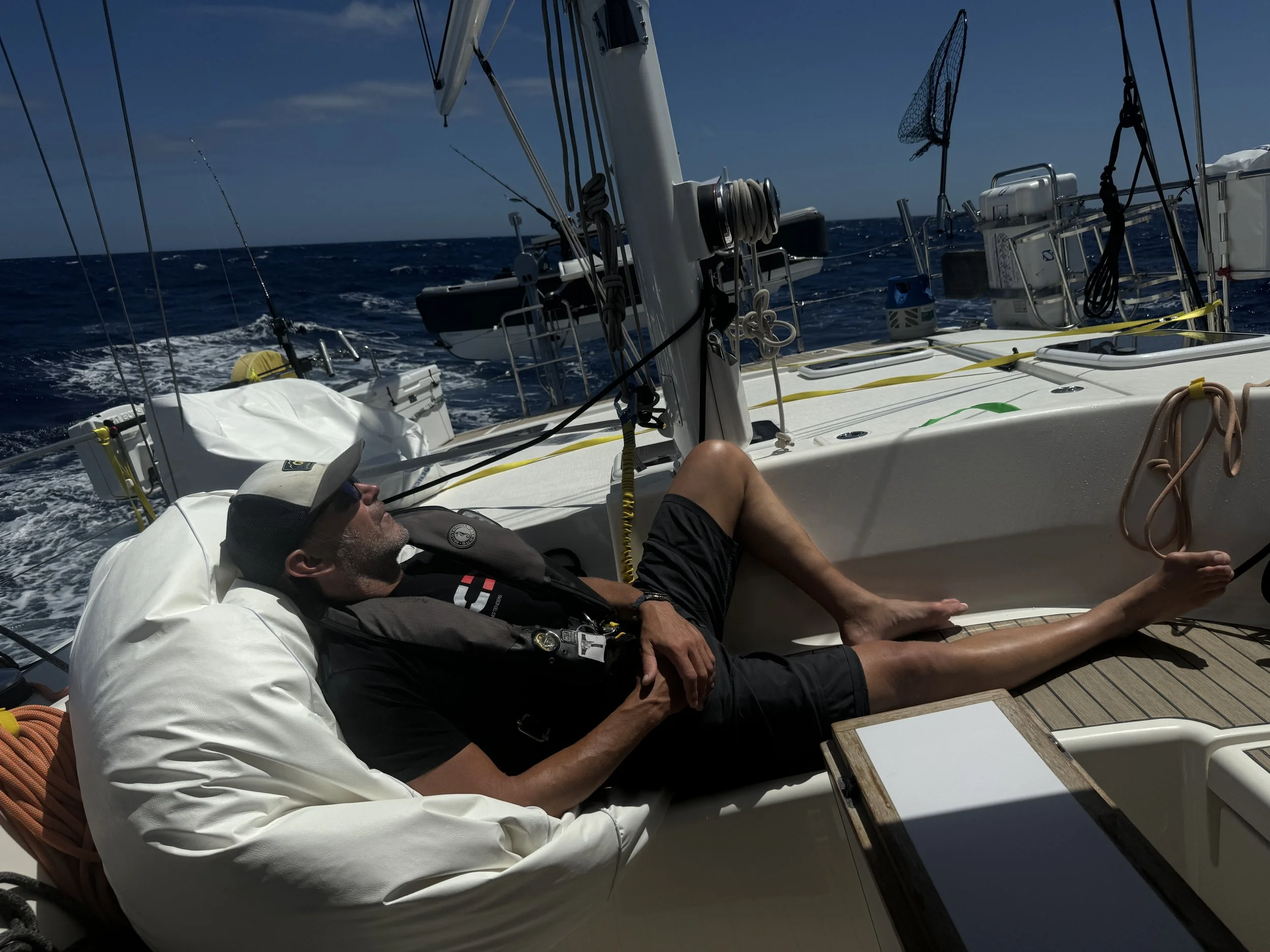
Before this, there was the setting of the whisker pole in order to sail a more direct route and continue to skirt the wind that, while blowing gale force off the coast are quite pleasant out here 300 mile or so offshore. Before that it was our first opportunity to get out the sextants and try some celestial navigation practice and work on our noon sun sights….or at least three of us employed our newfound sunny day that way. Craig’s idea of enjoying the sun was having a nap in one of his new bean bag chairs on the aft deck.
Before that Iain, I enjoyed the first glimpse of offshore stars and a waxing moon through the clouds at 4 am.
The days are packed I tell you. Between the important work of naps and chores and lessons, it’s hard to get far into a chapter of some non celestial navigation text. Will I ever find out what happens to Frodo?
Sorry for the late post everyone. It really is a busy little ship.
I hope you are all eating half as well as us.
Rhys

After a nice uneventful night we started the day with light rain, gray skies, and waves abeam that gave us lots of rolling.
Making steady progress to the destination, averaging about 8kts.
Everyone is feeling well and it seems we all got our sea legs - nobody got sea sick even with the heavy rolling throughout most of the day. Catching up on sleep nicely as well.
Sparky continued to perfect weather routing system by monitoring actual performance of the boat with observed weather and comparing that to the predictions we got. We have much higher confidence in the route now. It’s great to have such an expert onboard!


Craig and I did a set of practice sextant sights, which proved especially challenging with the cloud cover. But with enough patience and quick action, we managed to catch the sun in brief moments it showed up and now have some sun angles to practice sight reductions with.
Continuing to stick with the original meal plan and using up the first-to-spoil produce. Started a day with a veggie omelette quesadillas for breakfast. had miso soup with carrots and tofu for lunch, and wound down the day with a greek salad and gnocchi.
Crew is eager to start fishing and got the lures prepared on the rods; unfortunately, we are moving too fast for fishing so will have to postpone the excitement of reeling in a catch to a day when there is no excitement from the wind.
Water is getting bluer and warmer. The sun is peaking out from the clouds. Spirits are high.
Onward!
Kirill
VIVACE HAWAII - SITREP 2024-07-01 - EVENING WATCH REPORTING
CREW HIGHLIGHTS: Sailing! Food! Birds! Whales! Reportedly some pancakes at breakfast. Delicious avocado toast and tomato salad at lunch. Italian-style tilapia for dinner w/ potatoes. Kirill's hands must be missed at home. An albatross cruised by to check things out while setting the spinnaker. Craig and Kirill had close encounter with two huge whales close alongside. Several what we believe to be storm petrels have been seen flitting about.
CONDITIONS: Wind filled in over night and by morning making 8+ kts boat speed in 12-14kts. Sailed on broad reach putting in good miles right along the rhumb line. Set the new spinnaker for several hours making 9+ kts. Stronger winds gusting up to 20kts required hand steering to keep from rounding up, forced to shift gears and pull the spinnaker down around 18:00. Geared down further to settle things out while Kirill crafted delicious dinner. Night watch forecast for rolly beam seas and 20kts+ that have materialized. Tolerable but somewhat rough down below. Kirill hasn't launched out of the vberth bunk but the night is still young.
HOPES AND DREAMS: Weather models calling for clear skies tomorrow morning that may yield opportunities for celestial navigation practice with noon sun sight, possibly carrying on into evening for star sights. So far has lots of low overcast and/or fog. Lots of wind to carry us for a few days yet, route and performance seems to be hitting the right marks thus far although wind angles not quite as predicted.
GOINGS ON: Excited to have flown the spinnaker successfully, some minor notes include not trapping the tack line under the razor-sharp roller furling drum (chafed cover) and to mind the plastic "toilet bowl" snuffer ring when in the vicinity of your face. Diesel shut-off still showing minor leak across the hall when heeled over 20 degrees. Had hoped that would settle down after using up some fuel but no such luck. Helm seat came unstuck at one point - pin/plates were held on with tiny #0 Robertson fasteners - perhaps snuck on board by a Canadian engineer. Reattached without incident. Digital/smart/assisted weather routing getting dialled in on laptops and Furuno system. Adjusted calibration of boat speed sensor and tackled some problems with network card in the ship tracking data box. Ships log is detailing energy consumption/battery status to better judge generator runtime requirements.
Iain
VIVACE HAWAII - SITREP 2024-06-30 - EVENING WATCH REPORTING
CREW HIGHLIGHTS: Hot Showers! With the engine running all day we had plenty of hot water. Food delicious as always, high cuisine courtesy of Kirill and Craig. Egg salad sandwich or granola and yoghurt for breakfast. Lunch was fresh spicy shrimp on a bed of arugula and grilled turkey/pepper panini with chips. Dinner we powered down to create favourable BBQ conditions - grilled salmon with a spicy senegalese salsa, spinach salad w/perfectly ripe avocado. Everyone napping well and comfortable in the gentle conditions, although the vee-berth is a bit active in the swell, and could have been more exciting if Kirill hadn't discovered that the lift-up berth hadn't been fully latched down. Recently improvised lee cloths doing their job.
CONDITIONS: Winds continue to be unusually calm for these waters at this time of year. Finding mostly F2/F3, velocity mostly less than 7 kts. Unfortunately not enough to make our minimum desired boat speed of (6 kts). On track for 175nm day.
GOINGS ON: Tested the desalinating water-maker to top off the freshwater tank. Careful observation revealed a loose fitting on the saltwater side that threatened to drip water directly onto the control electronics. Judiciously tightened and passed testing with flying colours, water tank was successfully filled.
HOPES AND DREAMS: Wind models predict an increase to 15 kts overnight with an approaching high-pressure system. We are angling to ride down a sweet spot off a high-pressure ridge as it pushes up against the west coast of North America. The trick is to stick to the right isobars between the light conditions at the centre of the system and the heavy stuff closer to shore. And then of course to actually make a good course towards our direction on a point of sail that works for the vessel and crew. All a question of how to be at the right place at the right time. Too soon or too late and that becomes the wrong place.
Iain (Sparky) McBride

Day Two - Evening
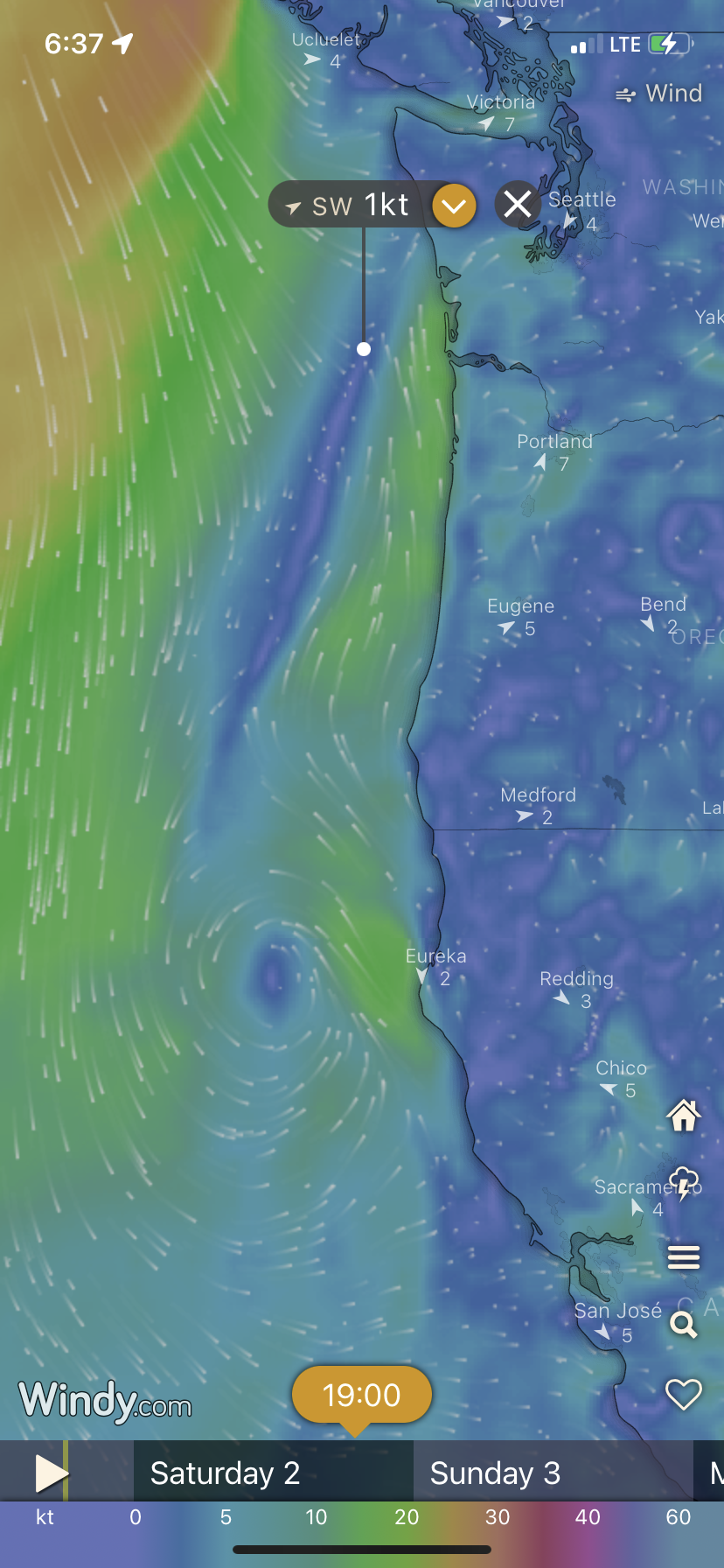
Developing high pressure to the west

Day Four Prediction
Riding high along the sweet high isobars

Kirill, Craig, Iain and Rhys
Left the dock at 7 am and motored out into a beautiful glassy calm Strait to begin our 100-mile cruise to the last fuel dock we will be seeing for a few weeks.
I went up the mast and taped possible chafe points and anything sharp enough to rip a spinnaker. It was amazing looking out on the eastern end of the Strait of Juan De Fuca. I saw a pod of whales in the distance after finding nothing of concern in my rigging check aloft.
Craig and I installed the lee cloths in the forward bunk so anyone who has to sleep there will roll out of bed when the boat heels.
We also ran the jack lines other side of the boat which allows sailors to be attached to the boat at all times while working on the deck. This is standard practice but less standard is having a boat so wide in the stern that we needed to run a jackline athwartships (across the boat). We rigged this a different way when we did our shakedown sail a little while ago. Im hoping this will work better. The last thing you want to struggle with when you have a big fish on the line is your safety tether.
The next stop is the fuel dock in Neah Bay before we head out to sea and our first night underway. Ive been here many times for fuel and i’m so glad it’s there. The Makah Tribe who live there have always been very nice even when there was a lockdown and I needed fuel on a challenging yacht delivery.
Wish you were here
This link will update when our Starlink is on.
https://saillogger.com/svvivace#
Capt Rhys Balmer
I wonderful chat with my friend and shipmate Capt Erden Eruc about his entrance in to the non stop round the world sailboat race the Golden Globe in 2026. We talk about his subsequent adventures and accolades as well as his inspiration to take on this amazing new challenge. We plan to do more interviews about the boat prep and logistics as the start approaches.
Follow along and help support this amazing mariner here.
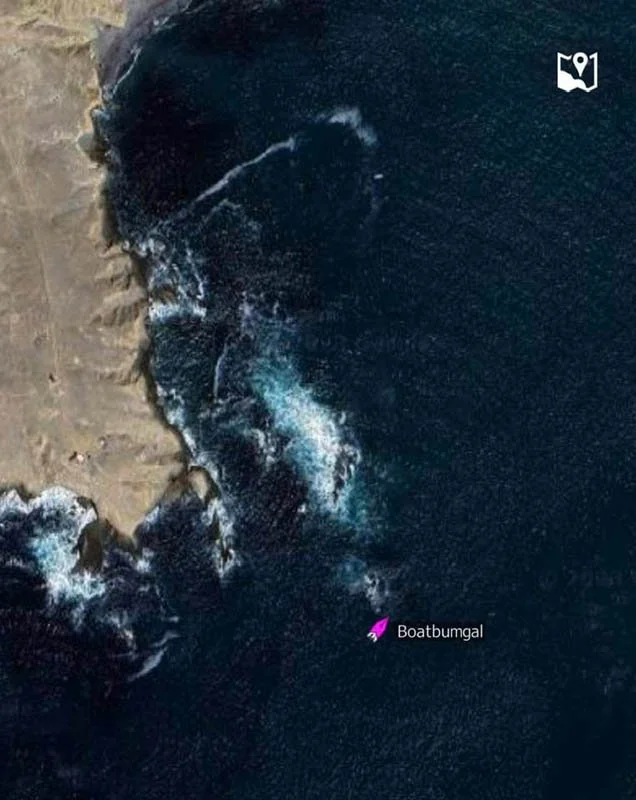
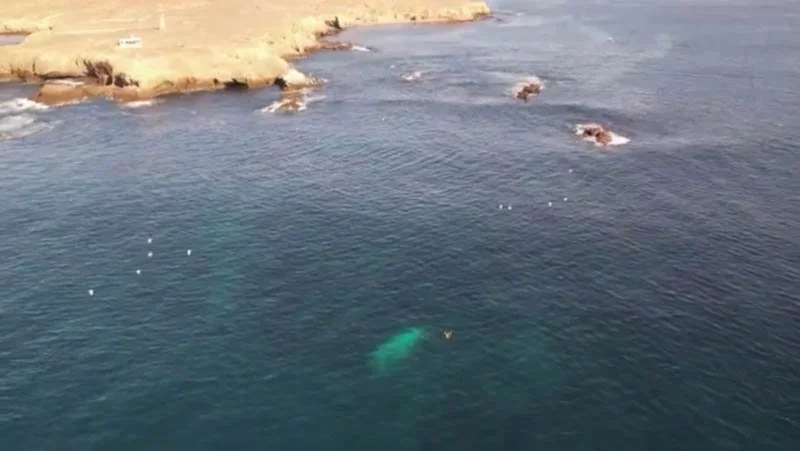
Captain Ray McCormack's interview regarding the sinking of Bum Gal.

Postmortem
I have read a little bit of what people have been posting about this incident and a lot of the comments refer to other instances or deliveries and digress into focusing on the character and history of Capt McCormack. While I can see it’s tempting to damn the man in question I think that the most productive way to talk about the incident is to look at the facts or at least what we have been told happened and focus on how it could have been avoided as a learning opportunity. This is hard because the accounts of the boat owner and McCormack don’t support each other so we will have to imagine what really happened is somewhere in between these and direct our thinking toward how the sinking could have been avoided.
This event has many people in the sailing community up in arms and perhaps this makes sense. We humans have been looking to each other for guidance for a long time. We look to a person’s past to help us evaluate the worth of their opinion and capabilities. We do this as a shortcut to knowing them firsthand. With an aggregate of their documented successes, and failures we can find it easier to dismiss their competence or not. In an instance where we don’t know exactly what happened this helps us know if that person was likely at fault such as in a case like this. Unfortunately, the only public accounts of McCormack’s former jobs are edited by himself so this is not reliable either. To add to this the fuel of the indignation comes from a feeling that a captain should be infallible. This means leaders get a lot of criticism for the decisions they make for others to follow. This can be hard and maybe selects for people who have thick skins and are overly confident.
The first thing we know is the boat owner wanted to head to Mexico. She chose to go with a cruising rally renowned for its great parties and we may suppose that she sought safety in numbers rather than going independently. McCormack admitted in his account in the Lat 38 article that he weighed the deficiencies against this idea of safety in numbers. We also know the boat owner does not have offshore experience herself. She described herself as a newbie in the Lat38 write-up. We know as well that one of her crew left the vessel or for whatever reason decided not to go at the last minute. I would like to know about why and more generally how she chose her crew. She said she found McCormack’s Facebook page and was impressed by his experience. Another interesting aspect that puzzles me is why McCormack volunteered to help them sail the boat south. McCormack is a professional captain living as he says “paycheck to paycheck” and doing pro bono work in the field is rare. Another very important thing to point out at this stage is that even though McCormack did not have a per diem and a corresponding contract the fact that he received compensation for transportation puts him in somewhat of a professional position. When delivering boats and applying for riders insurance companies want to know if crew are being compensated. If they are they want to see that they are experienced. Another point to note is that as a captain whether you are paid or not you have an obligation to ensure that whatever vessel you are on you must do everything in your power to ensure its safe operation. McCormack said that he did not go through his normal procedure, before departure because he was not under contract for hire. This was a big mistake as we will see. He did however tell the crew because of his experience he would be in command. He also said that he does have an uncanny ability to know the seaworthiness of a vessel just stepping aboard and the boat owner said that he looked the boat over and gave it a green light but after the sinking, McCormack questioned the seaworthiness. The normal process of application to deliver a boat is to start with a survey. I don’t think this boat would have gotten a good enough evaluation to satisfy most insurance companies and certainly wouldn’t have been a boat I would deliver. That said the fact that the windlass didn’t work would have been enough to make me walk away regardless of a good survey. The windlass is an essential piece of safety equipment on a cruising boat of this size. Even with the lightweight anchor McCormack encouraged the owner to buy (there should already have been one onboard.) it would not provide adequate ground tackle to cruise or conduct safe passage in the waters they were intending to sail. I believe this was bad counsel on McCormack’s part.
The next issue was the charging/electrical one. Corrosion on the alternator terminal and corroded wires resulted in the batteries not charging and made them decide to turn around. Then once in the harbor instead of advising the owner to get a professional to ascertain the extent of the electrical issues, he enlisted one of the crew to make another wire lead. They left again and it sounds like they did not fix the issue but instead of turning around or because they were past the halfway point, they continued on. At this point, McCormack hooked the gasoline-powered generator to the battery charger on the AC side of the system, and it continued to blow breakers (running a gasoline power generator on deck underway is very unusual). This was done to continue powering the navigation system he was using on his computer down below and as I understand to continue using the autopilot or not. I'm not clear on this. There are mixed accounts of this. All this was going on while he was skirting the shore in 30 feet of water. When sailing close to any land whether your autopilot is working properly or not, you should have the ability to navigate from the helm, and if there is the possibility that you will lose power to the navigation electronics you should, if you’re not already, begin plotting your position on a paper chart. As I understand it there were no paper charts on the boat but apparently, the boat owner did have an iPad for navigation. It is not clear why it was not at the helm.
This is a list of the actions that in succession led to the sinking of the vessel as I understand it.
1-Leaving without a working windlass.
A windlass is a key part of the seaworthiness of the boat. If you can't sail out of trouble or motor out of trouble you stabilize the situation using the ground tackle. The lightweight “Fortress” folding anchor is a backup device and you don't count on using backup devices before you leave safe harbor. The fact that the windless didn’t work did not lead to the sinking but the fact that it didn’t work is indicative of the condition of the boat. The age of the wiring on this old boat did contribute to the sinking. I have learned that even though failing systems may not be related the fact that they are failing and require attention can lead to accidents. For example, it doesn’t take much imagination to see how a broken head could lead to a crew falling overboard.
2- Not hiring a professional to repair and diagnose the electrical systems and fuel problem.
To be a delivery captain on a boat of this size you have to be able to fix everything. That said when you are underway any attention from the captain that is taken away to navigating the boat is dangerous. There were several issues with the vessel that they were all aware of before they were out of the area where support and facilities were available. It’s one thing to discover issues underway and to “Jury rig” a repair but the float plan should be reassessed given the knowledge that the vessel is now less seaworthy.
3- Sailing close to the shore and not reefing
Sailing close to the shore in this case in 30 feet of water is very dangerous in unknown waters. This requires very close attention. It would require a plotter at the helm and hand steering with a depth alarm on with good visibility. That said there are mixed reports who was at the helm. McCormack gave a report the the Mexican officials that he was at the helm and then we heard that the third crew member was at the helm or at the shrouds.
4- Continuing to use the autopilot given the issues involved.
Whether there was an issue with the autopilot or not this is too close to hazards to do safety.
5- Not having a plotter at the helm
Every smartphone on the market can be used as a chart plotter these days and I see no reason that the crew could not have a phone with Navionics up in from of them as they are on watch. I require my crew offshore now to all have the app on their phones. This reduces fear and the “need to know basis” as well as adds redundancy. I monitor the boats heading from my bunk and often come on deck to make coarse or speed corrections.
6- Given all the things happening approaching in the dark was a bad idea.
Regardless of the boat’s faults, this wouldn’t have happened if they had waited to approach in the dark. This could have been done by slowing down or heaving to outside the entrance.
It is tempting to hang ALL the responsibility on the licensed captain here because of his experience and endorsement and I would say that most of it is. I’m sure most people will but it is not as simple as that. Before all the decisions I just listed should have been made by the person in command. Ray should have walked away from the passage or offered to oversee the vessel’s refit but I'm sure this would have been challenging to the relationship as the boat owner paid for his flight in exchange for his help sailing. This previous investment trap is a huge contributor to accents like this. If NASA can fall into it so can most.
This boat was not in good condition and certainly not in good enough condition to make a coastal passage and even more so to sail into waters with limited resources. The owner may protest and say that the vessel was in good condition (the statement in Lat38 said she “had the boat checked out by many mechanics and riggers”) but she has also admitted she is a newbie. It is common to seek safety in numbers or offset the risk of doing dangerous things with limited experience by joining a group like this rally but coastal and blue water sailing is one of the more remote things a modern person can do. It is something that few moderns can even wrap their minds around. The self-reliance this sailing demands is one of its greatest rewards. Preparing for a cruise like this often takes years of refitting and practice to be properly prepared. Once the time comes to cast off it should be done with a crew that represents known entities. A truly seaworthy vessel and crew must be shaken down first.
We can’t be too cautious in choosing who we sail with and what vessels we board. Going through someone’s Facebook profile does not constitute the due diligence necessary to choose the people we may find ourselves in a life raft with.
Hiring surveyors, certified techs, and instructors is essential alongside the time spent building our experience before advanced sailing.
I hope that everyone involved is not too quick to move on and spends the time necessary to reflect on their respective errors. Shirking responsibility with blame or just quickly moving on does not give this serious incident the grave attention it demands. This loss could have been prevented.
Here are some links that illustrate the risks the previous investment trap or sunk cost fallacy represents. #challenger, #endurance, #crowhurst,
https://youtu.be/4kpDg7MjHps?si=UHkemPWt91r4q-V5
https://youtu.be/yV7EBF8LAw8?si=bdrvIh1ZMm9hUPgj
https://youtu.be/4kpDg7MjHps?si=3h5COhu4x5WxxUyU
https://youtu.be/qvrEMhm3Z-g?si=ds6kUyFLYtJLpOFs
https://youtu.be/SiWv12EL4LE?si=VcI1PE_YjGzaQF2Z
And a good example of accountability in leaders and crew.
I must be getting lackadaisical with delivery applications because it was day two on this delivery when I realized that my folks had owned this boat and sailed it extensively.

Back when my folks owned the boat.

A rig you can’t miss. More about it to come.


My folks have owned quite a few boats, and in my defense I’d only been aboard this one once and I think it was at night. Several things should’ve alerted me other than the name. The tall fractional rig for one because I remember reading something in Brion Toss’s Rigging book “The Rigger’s Apprentice” where he used it as an example of a performance-oriented cruising design. Also, the fact that it is an aluminum boat, which is fairly unusual in the Northwest or the United States should have tipped me off.

The thing that made me finally realize that it was my folks’ old boat was the Data Scope, and its custom-wood holder that had been made for the boat we cruised on as a family when I was a kid. That, and then later noticing the upside-down compass we got my dad for his birthday was mounted in the v-berth.

The delivery started a little bit more awkwardly than most. Traveling to Vancouver BC shouldn’t be as hard as it is without a car but there we go; two hours late on the train from Bellingham to Vancouver. A brief orientation from the broker who acted like selling a boat worth less than a million was an act of charity, and I am off. Off to spend the night at Cabbage Island just Northeast of Saturna Island, or at least that was the plan.
Once underway in calm water, I checked the forecast for the following day and the current at the Eastern point of Saturna was going to be Max flood against me in the morning on top of an adverse southerly. So I changed my plans and continued into the night landing in Friday Harbor at 11. The following morning went through the customs process with the additional stress of dealing with the importation of the vessel without the proper documents the import brokers were supposed to have waiting for me. I could say many things, but I won’t other than that I wouldn’t recommend “Border Buddy” to anybody looking to import a boat. Once cleared, I provisioned the boat with my first mate and we left for Watmough Bay (an anchorage on the South end of Lopez). I made this decision because there were a number of logs floating in the area and I didn’t want to damage the propeller unnecessarily or risk more night running than I already had. I don’t mind running at night but it is an added risk and it needs to be weighed against the benefits.

Once in Watmough we grabbed a ball and had a nice dinner and I worked on getting the bulkhead heater working with no real success. The following morning we headed south without much wind but not much adverse current. That evening we found a spot in Eagle Harbor and grabbed some dinner ashore. Back at the boat later I struggled more to get the bulkhead heater going. It looked like the former owner had never cleaned it and unfortunately, the forced air Webasto Heater no longer was serviceable after a conversation with the nice gentleman at Sure Marine in Seattle. The next morning, just after clearing the breakwater, the engine stalled and wouldn’t restart so after rolling out the jib and passing the helm to my mate I started to look for a set of wrenches or a crescent wrench on board. Finding only a pair of channel locks I thought twice about whether I wanted to risk damaging the fuel hose nuts trying to bleed the fuel system on the old Westerbeke. Not too far from Quartermaster Harbor inside Vashon Island where we were heading and the Salty Boy’s Marine Repair headquarters are, I reached out and asked if they would be able to make it out and assist us if I couldn’t get it going, and they kindly obliged, but not wanting to be beat by something as simple as air in the fuel line, I jumped in the engine room while my first mate steered under sail. Not much cranking later and the old red beast came to life and we were off again adding a little delay and perhaps disappointing our Salty Boys that they couldn’t save the day.

Autopilot from a galaxy far far away and a long long time ago that works only when under power. And the cutest shipmate a salty dog could hope for.

Click on image for Brion Toss’s words on the design from his book The Rigger’s Apprentice.
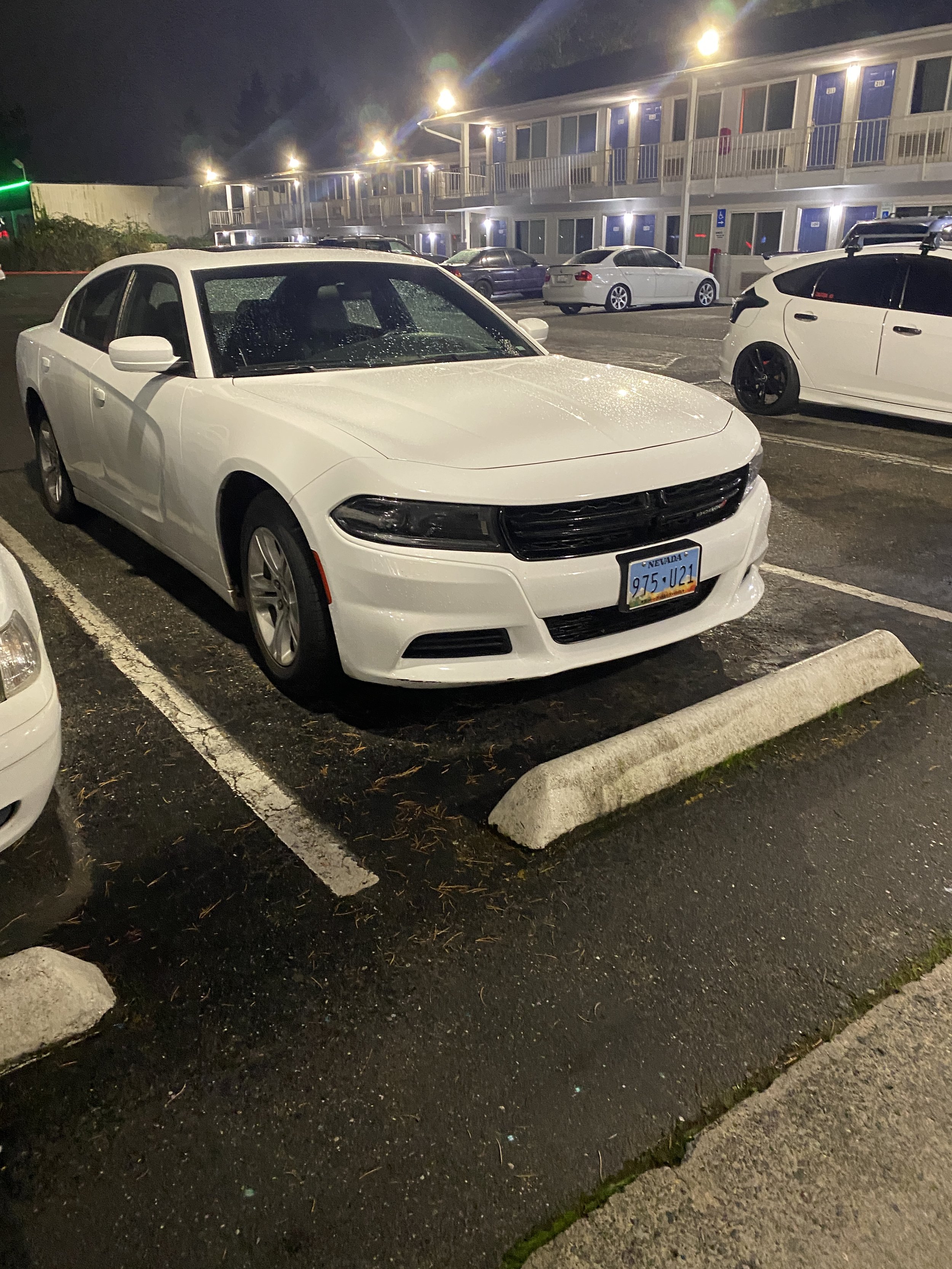
Rental upgrade!
A fine boat for ocean sailing but the mainsail as it is, is more headache than I would want to deal with sailing in the close waters of the Puget Sound. Speaking to the owners, they said that they were planning on cruising the world and skipping the intermediate boat that would have taken them from their previous starter boat of a Tanzar 27 to this ocean beast.
I connected them with my folks who it sounds like got much more use out of the boat than the guy these people bought it from.
Lessons
Be very careful when using companies like Border Buddy that have amorphous areas of operation. It’s better to use a company local to the area and well-established in that field. This instance showed that talking to the customs officials ahead of time to ensure that things would move smoothly was not helpful.

Bring a crescent wrench in your kit and if it’s your boat be sure and have good tools aboard. I also recommend a start switch like this so you can jump the starter while you bleed the fuel line.
One of the great things about yacht delivery is getting to try out different designs and sometimes designs you think that you would really enjoy turn out to be a pain. If I compare this rig to the Cal 40 I have a lot of miles on I would say that I prefer the lower aspect masthead rig. I could hoist that main without a winch by myself and even though I didn’t have furling and carrying a variety of headsails was a bit of a pain - the ease of hoisting means sailing more and that’s what it’s all about. Now that said I am sure that the Brewer goes to weather better and more comfortably than the Cal with its flat bottom and outboard chainplates but it’s the rigs I’m comparing not the hulls.
Long may you run as Mr Young says.
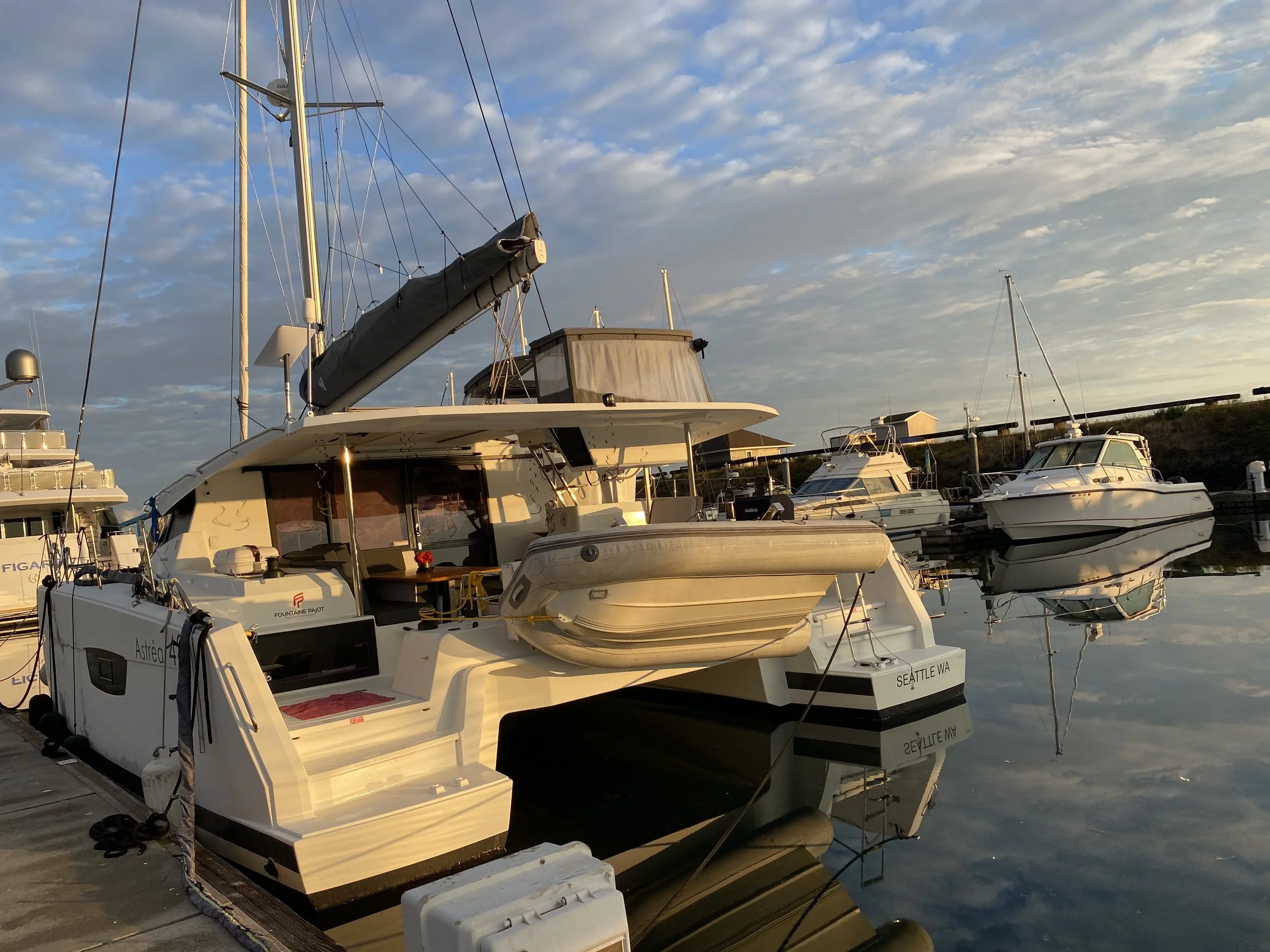
I’ve been teaching sailing for 24 years full time and have been delivering boats for 15 years and unfortunately, I don’t get to do things how I have learned they should be done very often. This was a wonderful exception. I was first contacted by the owners of this very new catamaran to help them sail their boat to Mexico. They wanted the boat in Mexico because they were retiring and Mexico would be their first adventure and winter abroad and if it went well they would sail to the South Pacific the following year. I told them about the differences between delivery and training saying that delivery was best done with a crew I selected but that training would take them further. We understood each other and they said they would like the focus on training. I said I could oblige and asked who their crew was going to be to which they said they had some family and friends in mind. I asked which of them were the best sailors and unfortunately, they admitted none were sailors. I pointed out that it is important to be a sailor to be counted as crew and that they should cultivate some relationships with the potential crew to help them on future passages. So they said they did have a friend who was particularly keen but only had crewing experience on racing rowboats. That’s a start I told them. Enthusiasm and respect for the elements is a perfect foundation for any aspiring mariner. So I advised that this person join some cruise and learn courses offered in the area or better yet break up the classes into weekend courses on boats appropriate to the cert level. Unfortunately, the classes were very full in the area at that notice so we decided to run a cruise and learn for them on Tula and it would serve as a review for the rest of the sailors. This worked out very well. We took some of the pressure off the certs and more focus on learning the boat. These days spent cruising the San Juans in the spring provided everyone myself included a great sense of what the boat could do. It turned out to be a windy week and we saw 40+ knots at one point.
After this educational cruise, we planned to meet for a 106 or Advance Coastal Cruising Class on the boat where we planned to take the boat out to sea and get to know the boat in the ocean before the jump down the coast.
Doing crew overboard drills on ocean swell is a great exercise and always creates huge development in boat handling and cooperation. These big cats are made to be short-handed so everything is led to one place at the helm which can be good solo and short-handing but as soon as you want to put a person on each job to do tight maneuvers like this you start seeing some of the limits of the design and this of coarse is part of why we must do it. The practice and review with new crew of these drills is essential for being able to both get back to a person in the water and how to maneuver the boat in a tight spot under sail if you have to pick up a mooring ball under sail or sail back to the dock if you loose power.
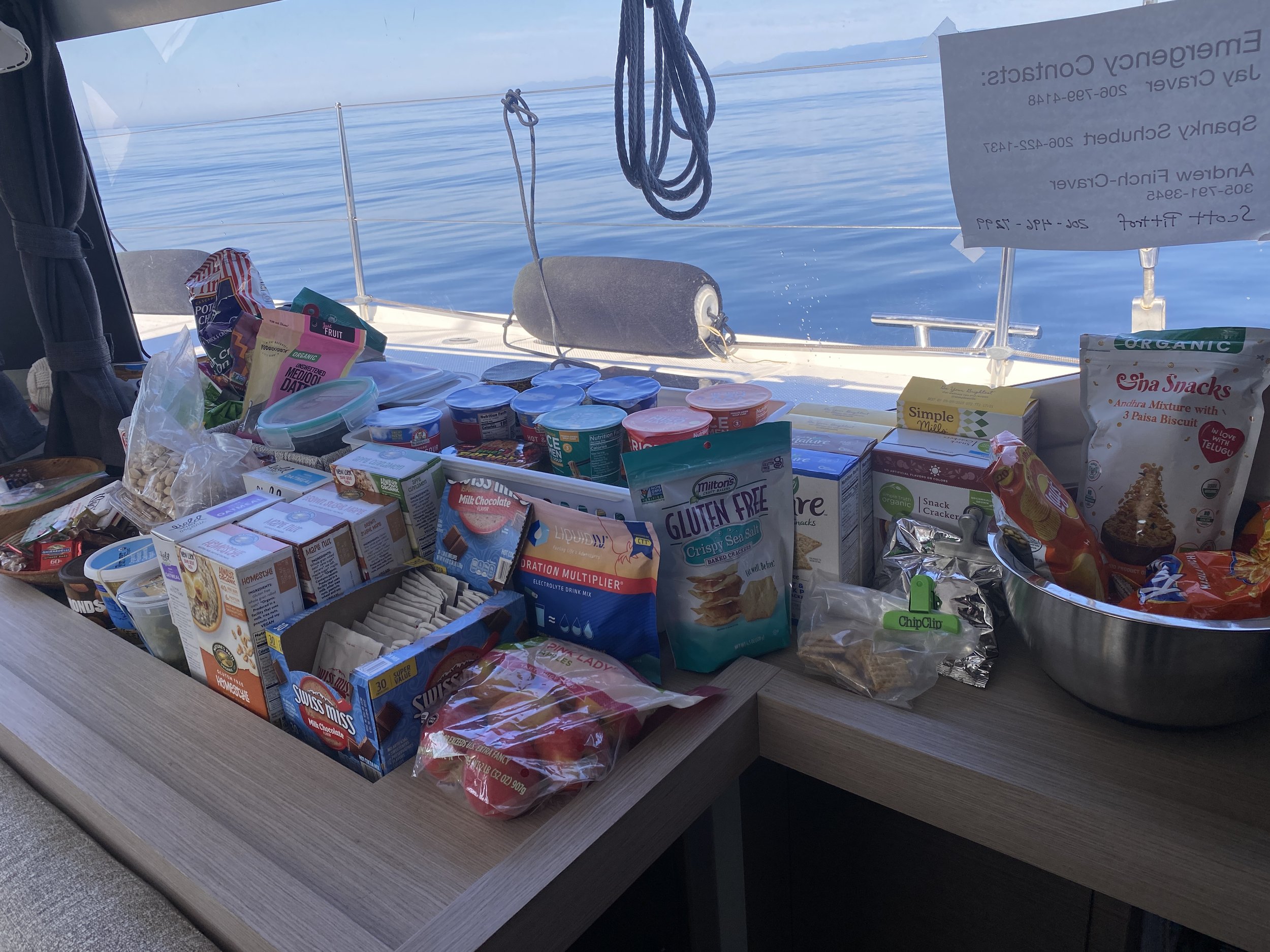
Stowing on multihulls is something to get used to.
Tattoosh off the port bow. Southing next!
Going soft with this sort of treatment.
We departed in settled weather and did a last fuel-up at Neah Bay. The forecast called for some 15 knots offshore so we added some Westerly into our southerly heading and did eventually find some wind. I could see it wouldn’t be enough as it was right behind us and would have required lots of jibes and a slow VMG. (velocity made good: basically the shortest distance between two points is a straight line). I could see the crew wanted to hoist and try it out so I briefly explained and acquiesced realizing it was a good way to make my point and earn some credibility for future calls. A two-part main halyard is tied to the top of the mast and runs down through the shackle at the top of the main and back up and over a sheave on the masthead. This means you have to pull twice as much halyard but it’s half the load. My biggest concern was coming from the dead reckoning I was doing on the capes further south. It was looking like if we kept the vmg at 6 we could make it in one shot. Fuel was less an issue than most boats as they had added a hundred-gallon tank.
Regular engine checks are key to successful passage making and I included it in the standing orders and watch log for the end of the watch to check the engines. This does require a keen eye as some of the mechanical problems can be hard to see before they are catastrophic.
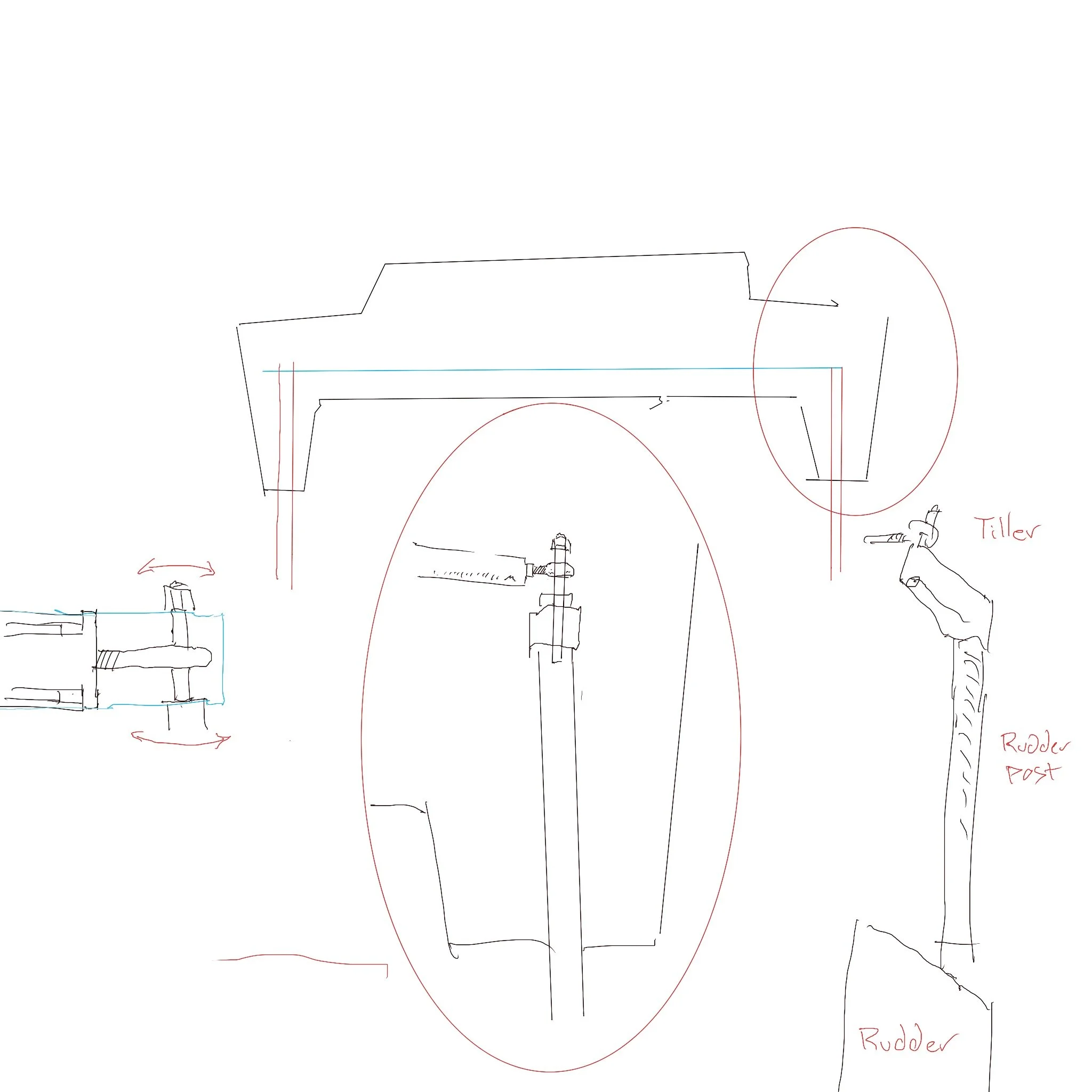
It was on one of these checks that I noticed the bar that connects the two rudders was torquing with the loads of the waves and the autopilot.
I brought it to everyone’s attention and learned that prior to leaving and after much research before buying the boat. They decided that the stock design was not good enough and hired a local machinist to add some hien joints. Unfortunately, they used the existing hardware as well and it was torquing the rubber bushing and this was causing concern as once it wore through the rubber it would gall the aluminum tiller end.
We made the call to go into Newport and a friend brought some materials to make new temp bushings.
To prevent ongoing boat repairs and compounding failures at sea, I have included a clause in my delivery contract stating that repairs during a passage will cost more than those made beforehand. This financial incentive encourages boat owners to complete repairs before the journey starts.
In this case, I guided the owners in the repairs while we added two lay days. Fortunately, this looked like it would not cause too much issue with weather routing.
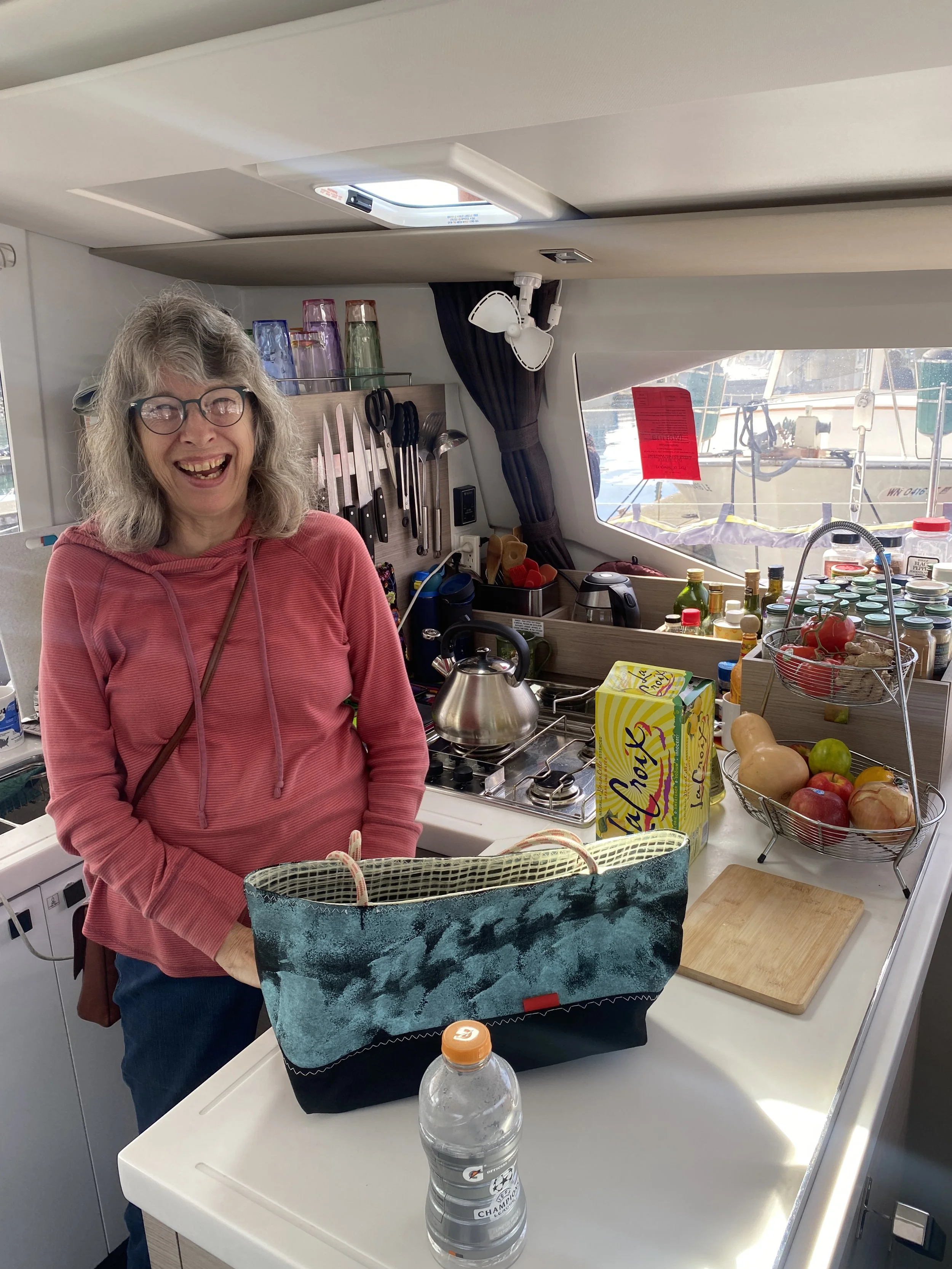
Special delivery of hard to find materials and cookies and in a TCYC bag no less. Day saved.
While in Newport Oregon the friendly fuel dock attendant let us use the grinder wheel in the back shop. While doing this work we managed the fend off most of the Coho Hoho rally boaters strolling the docks with the beers looking to distract our progress and perhaps get a tour of the boat.
I warned the crew that these seem to be opportunities to glean what they can from others about weather routing advising them that they should try and qualify any information with the sailor’s vessel and experience.
One boat had the dinghy lashed over the jack lines on the bow. One boat didn’t have fenders down at the dock and the one boat owner, most interested in looking at Tula because he had an older FP admitted he his starboard engine had discharged all its oil into the bilige.
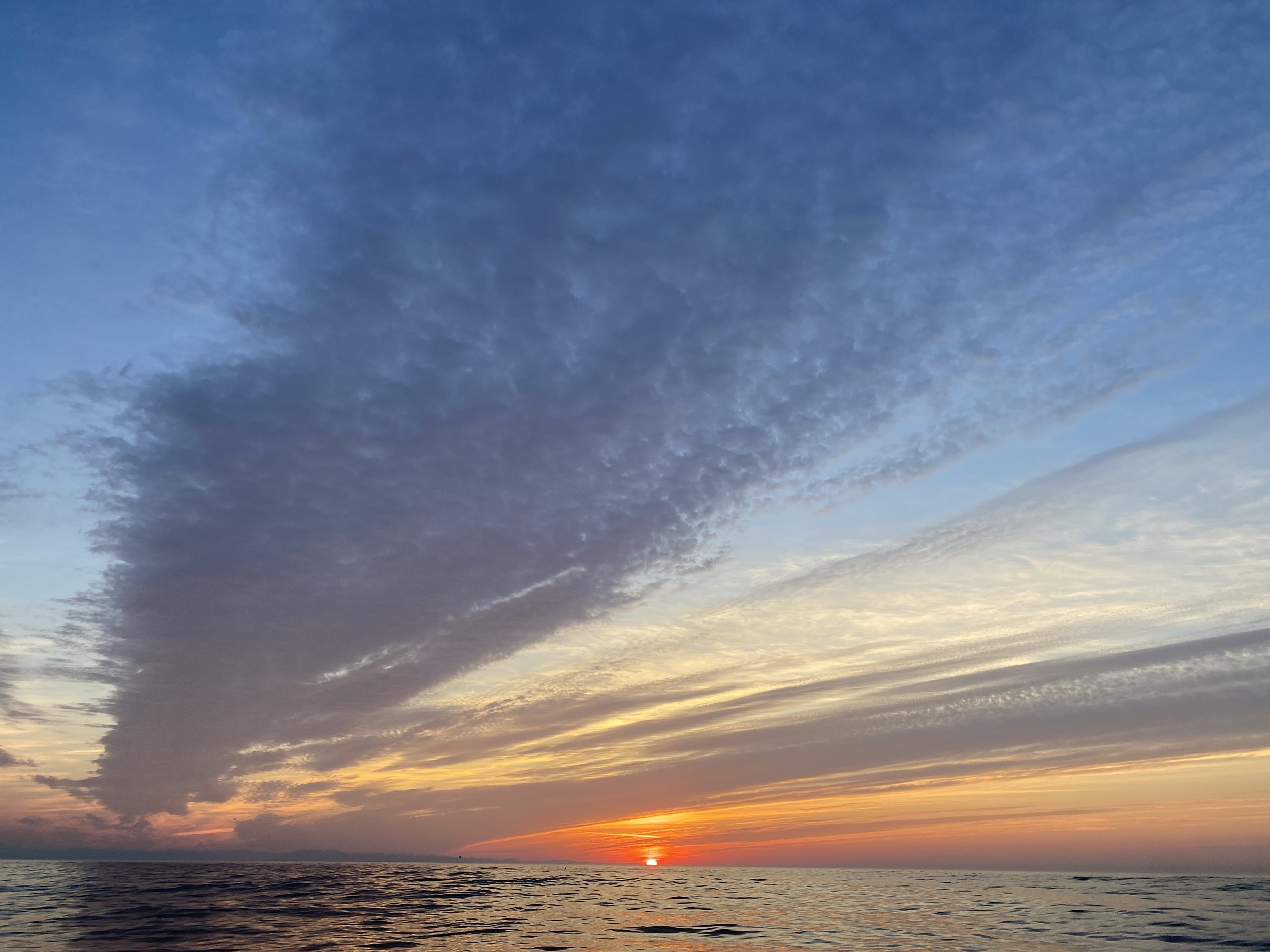
Sunrise off the Oregon Coast
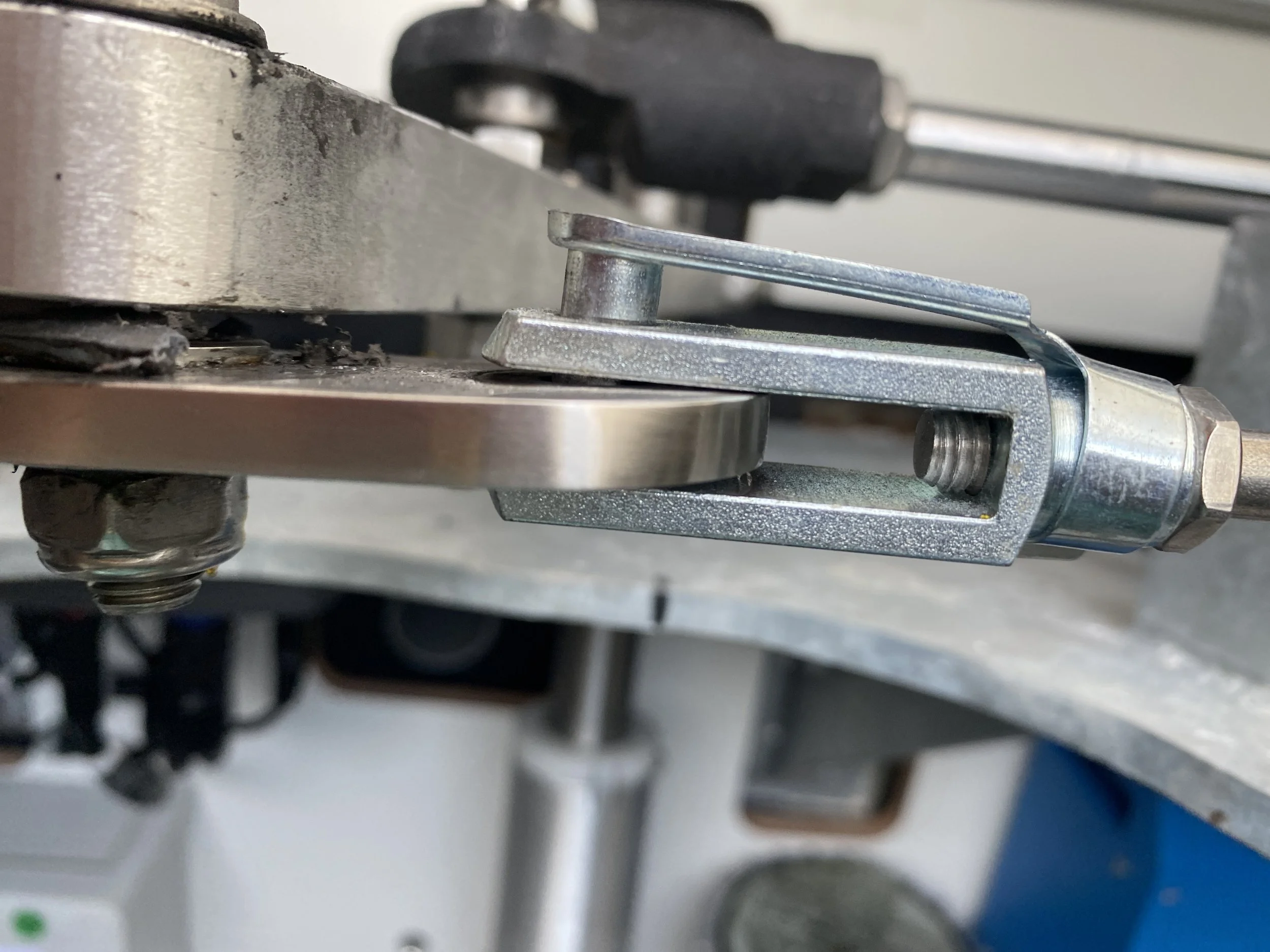
You can see the rubber coming out of the bottom of the tiller here and note the pin for the steering cable is about to come out.
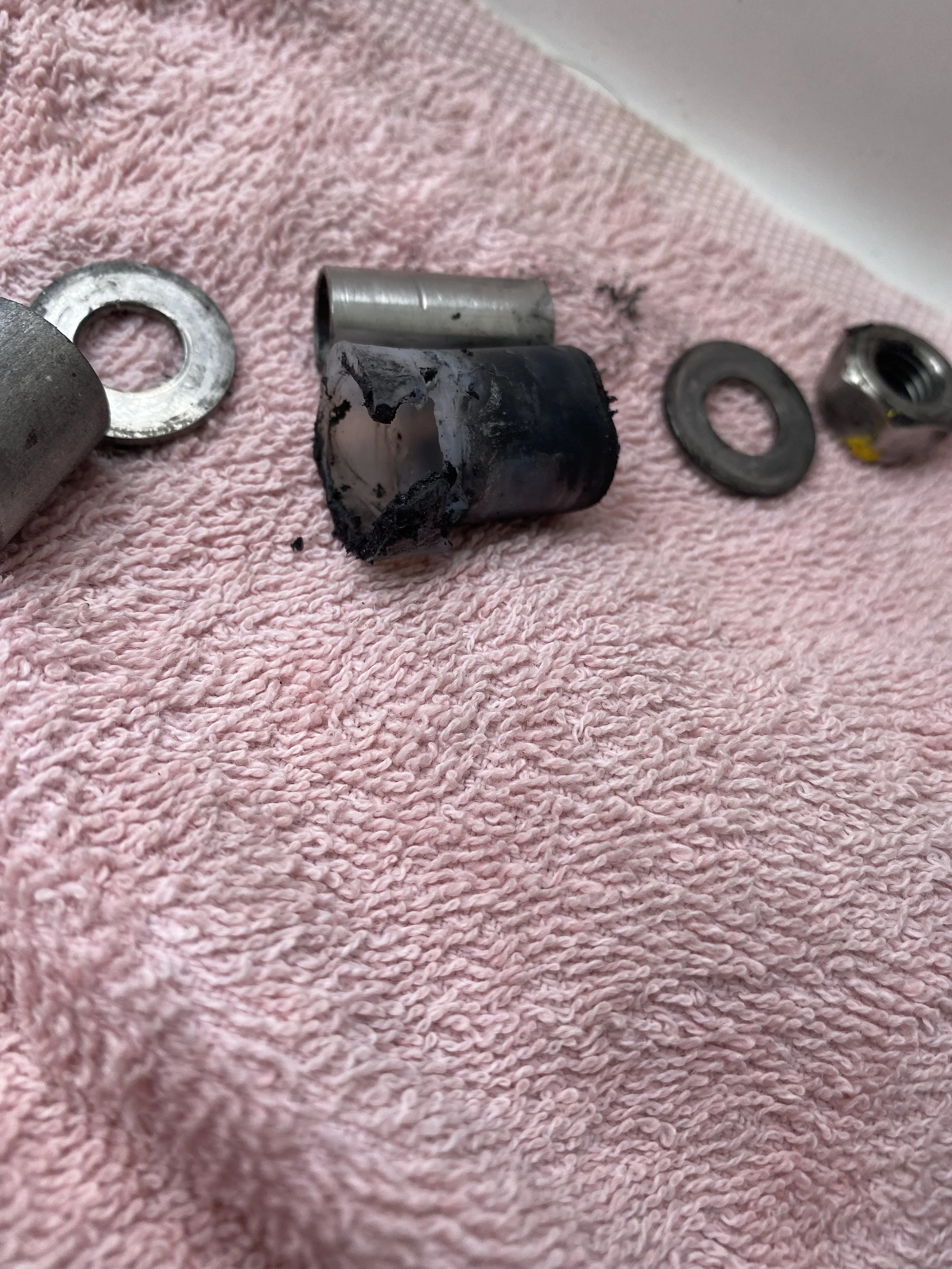
yikes
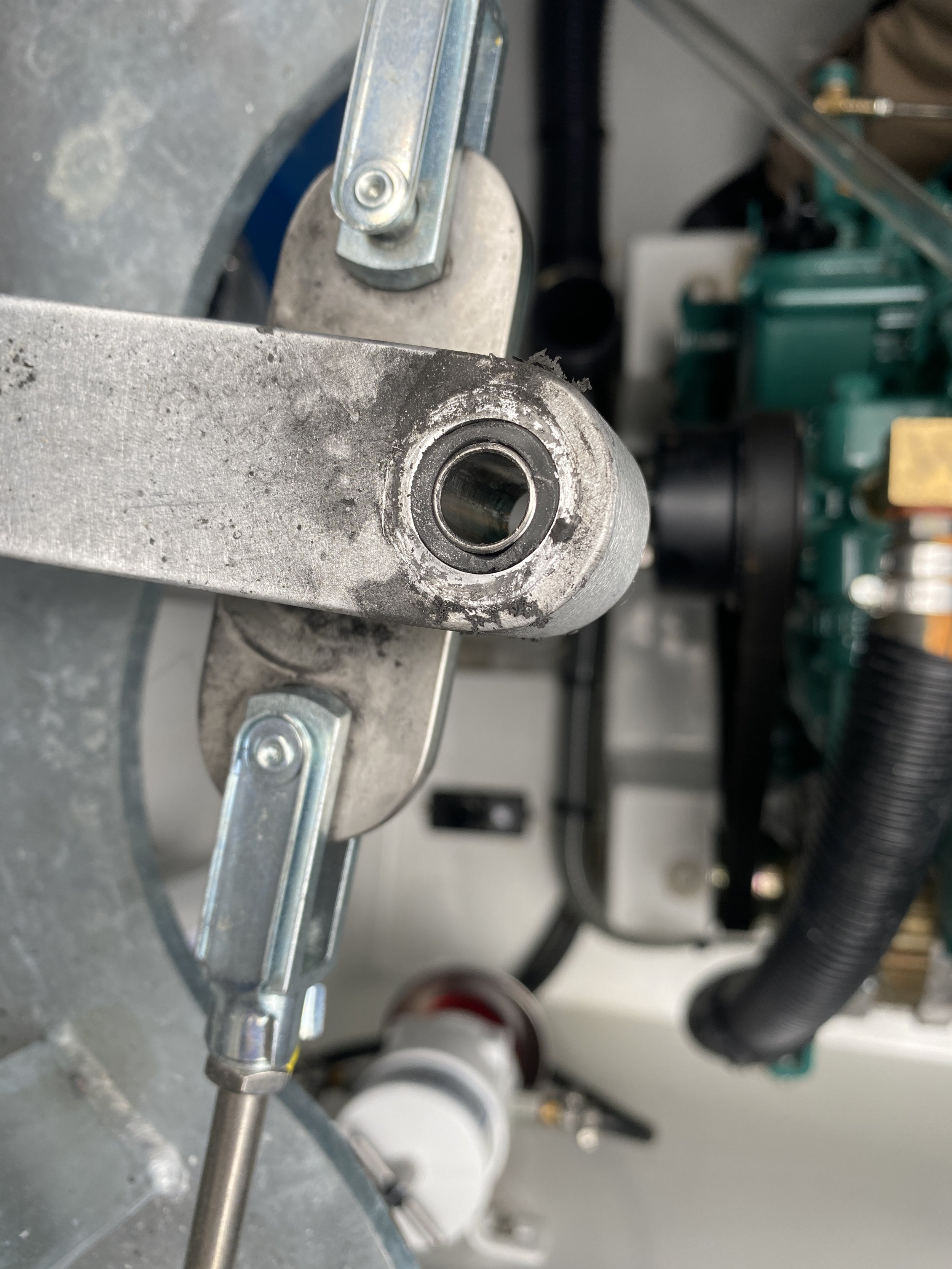
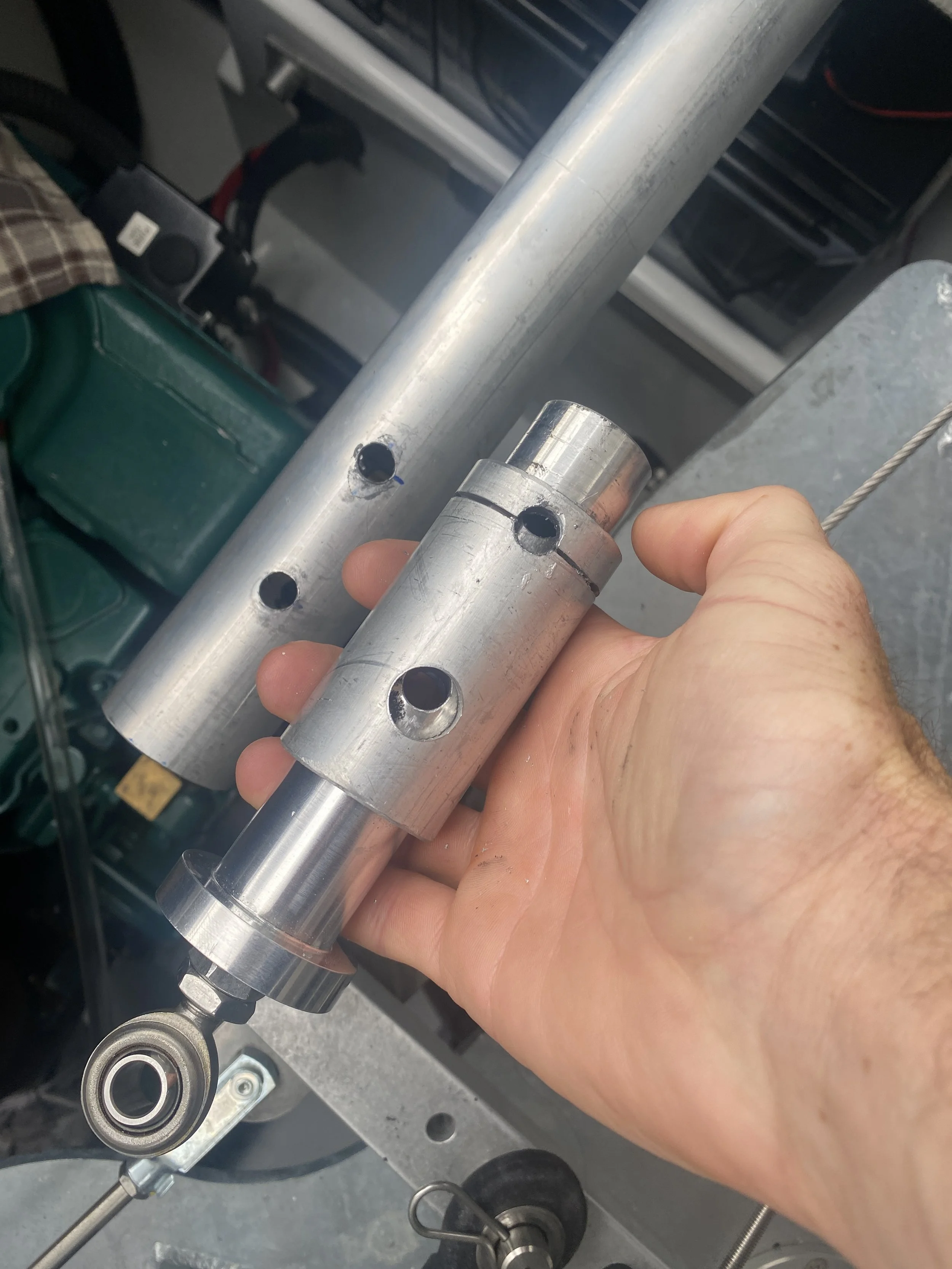
retrofit heim joint. I wonder if they had to mill that much off the end fitting….
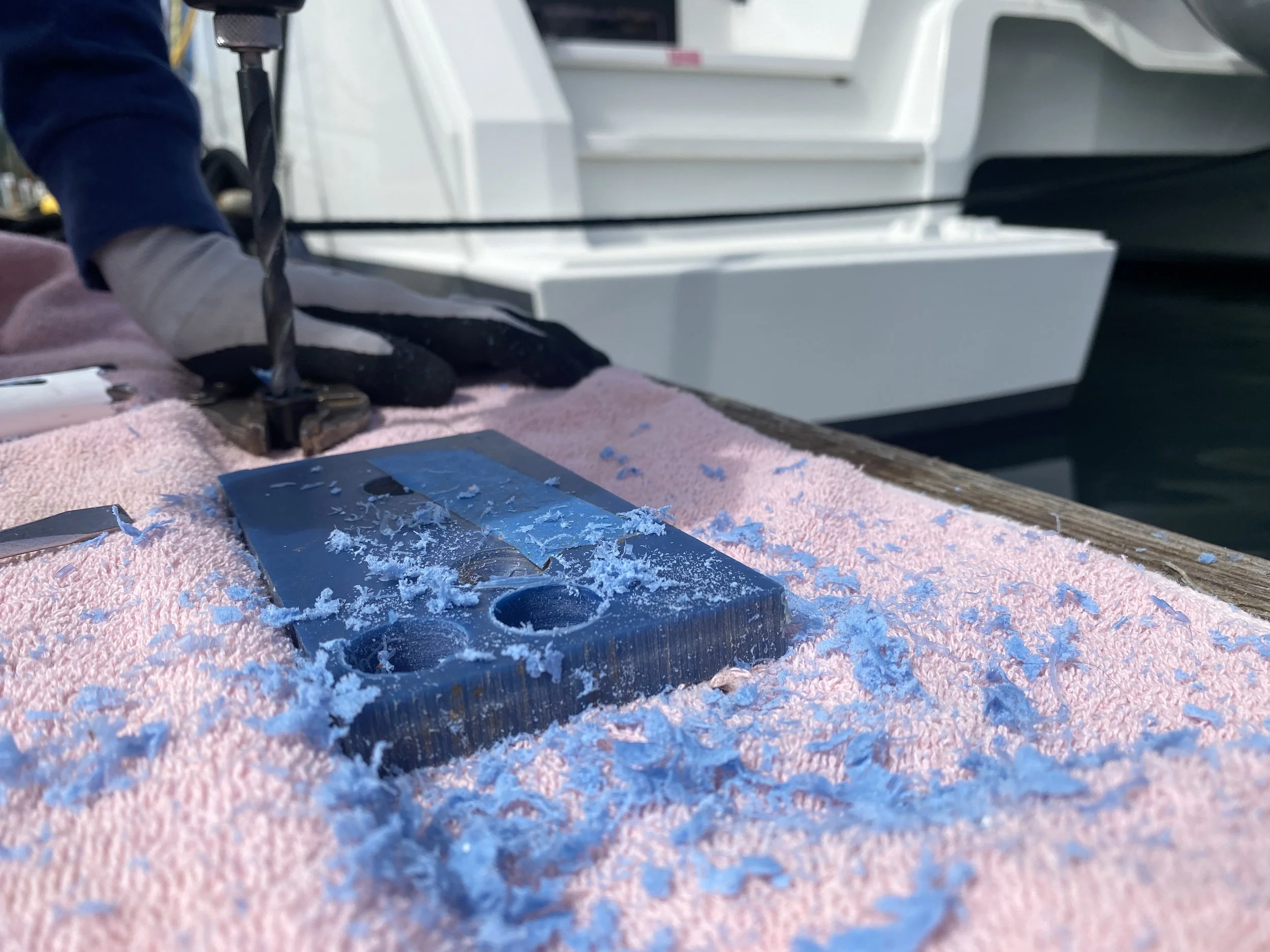
Custom bearings out of HDPE
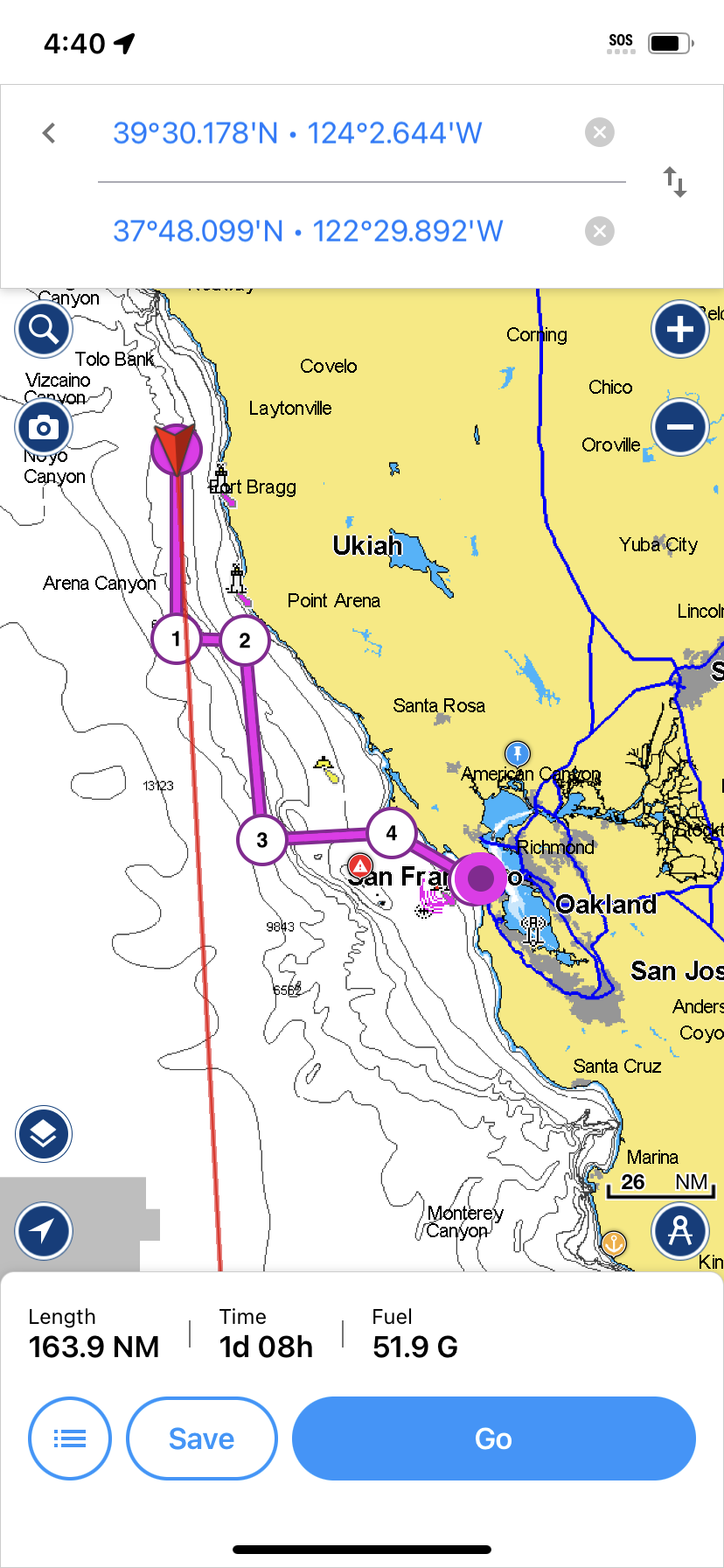
Two beautiful new bushings were milled and the steering was put back together and we were off again. There would be a little wind rounding the cape but were would miss the worst of it. Our approach to the gate would be in adverse current and in bad viability so we opted to anchor in Drakes Bay and enter the bay in the morning.
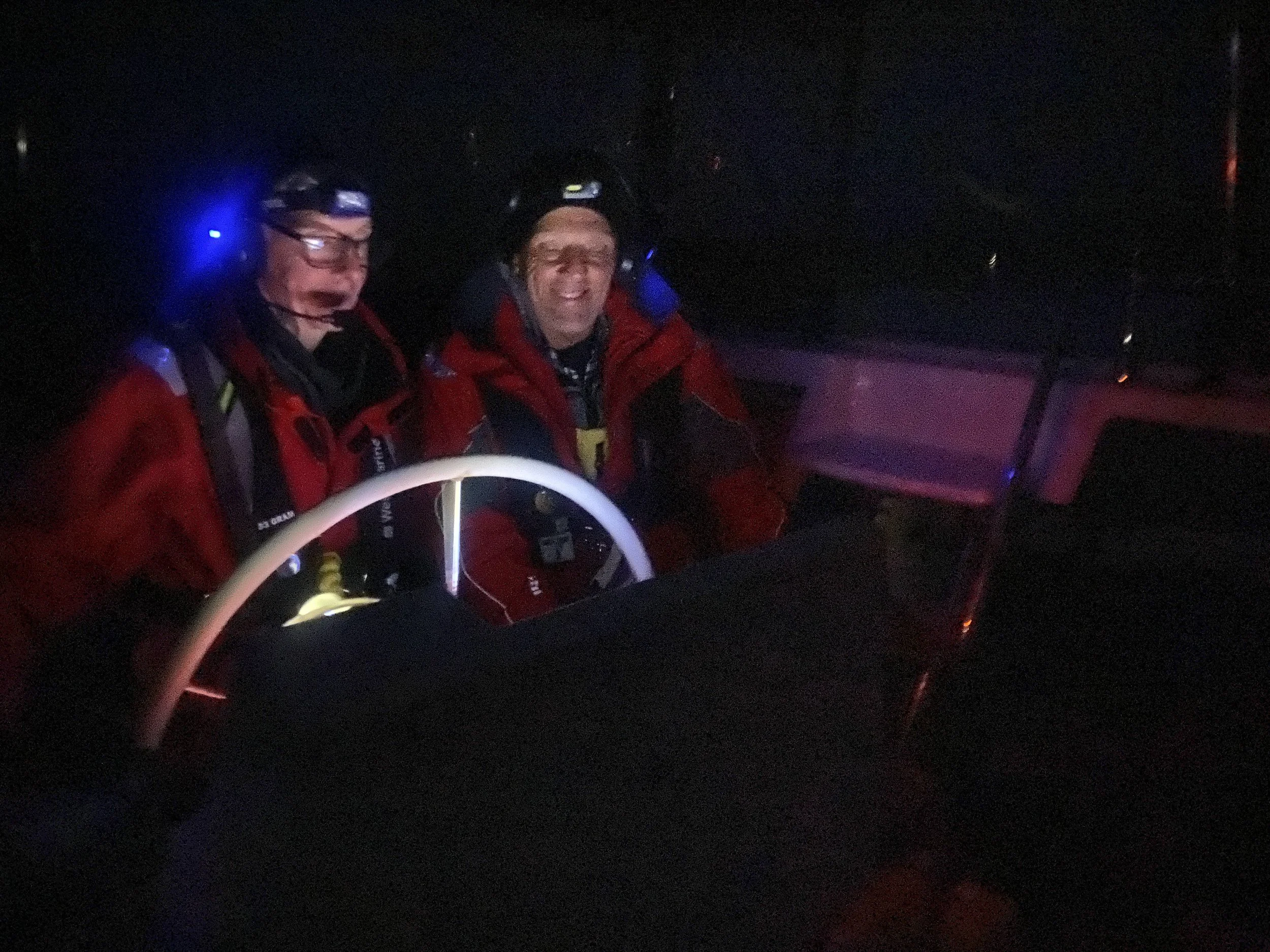
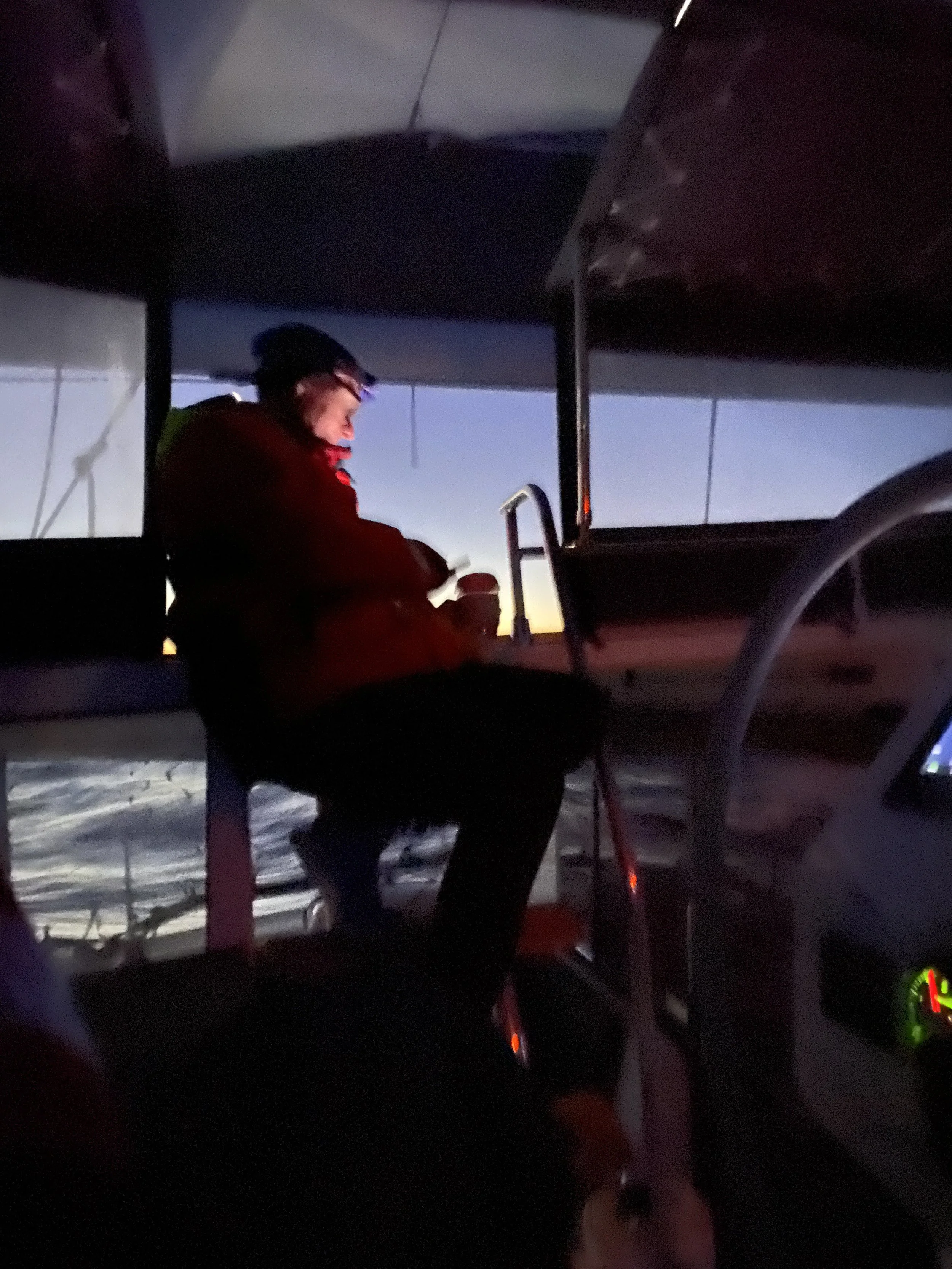
Night time “Shy Jibes”. (Tacking instead of jibing)
Being out of cell range has its advantages.
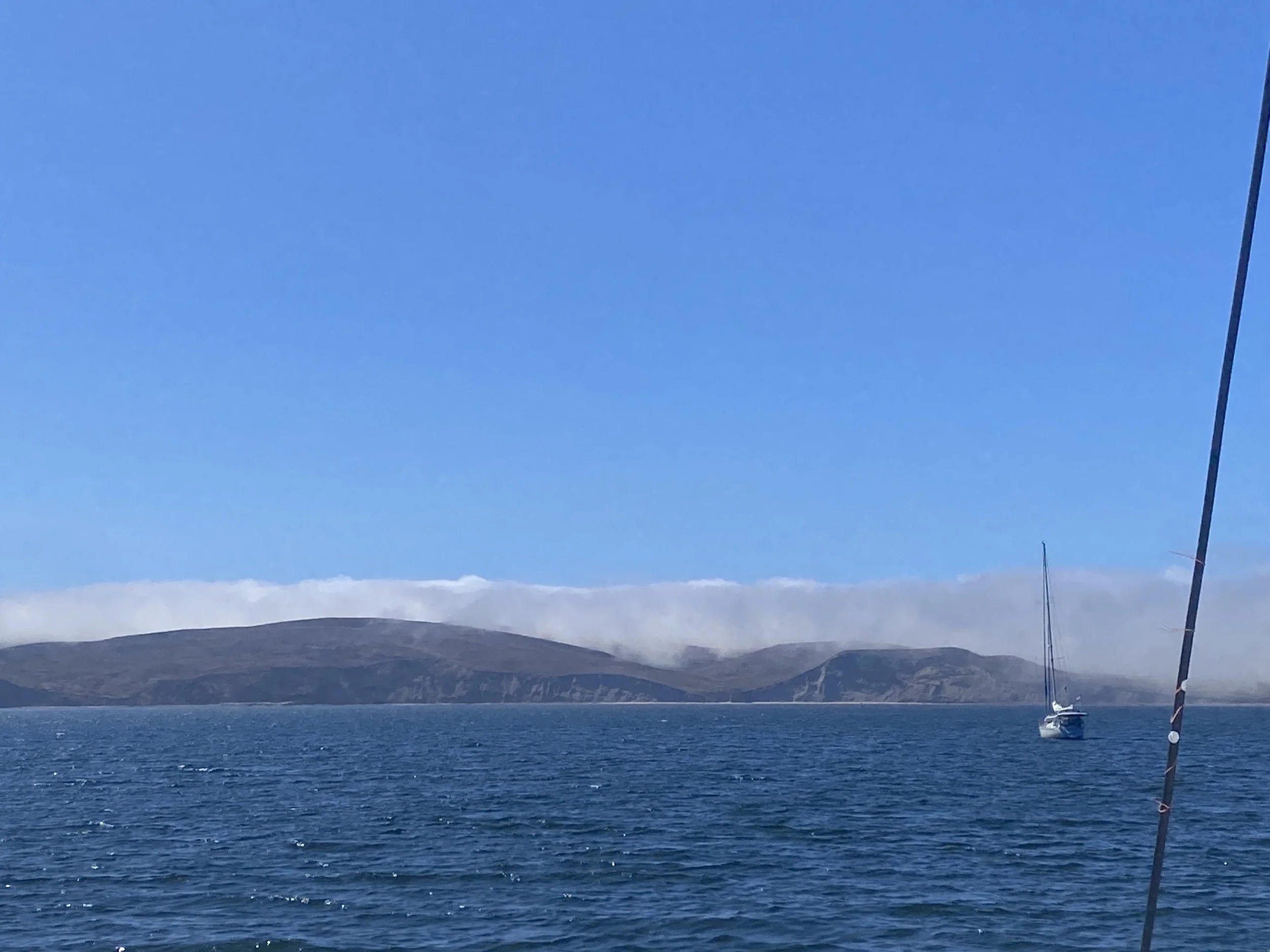
Anchored just out the gate in Drakes Bay waiting for a better tide in the morning.
Pretty momentous experience for this crew. Honored to be a part of it.
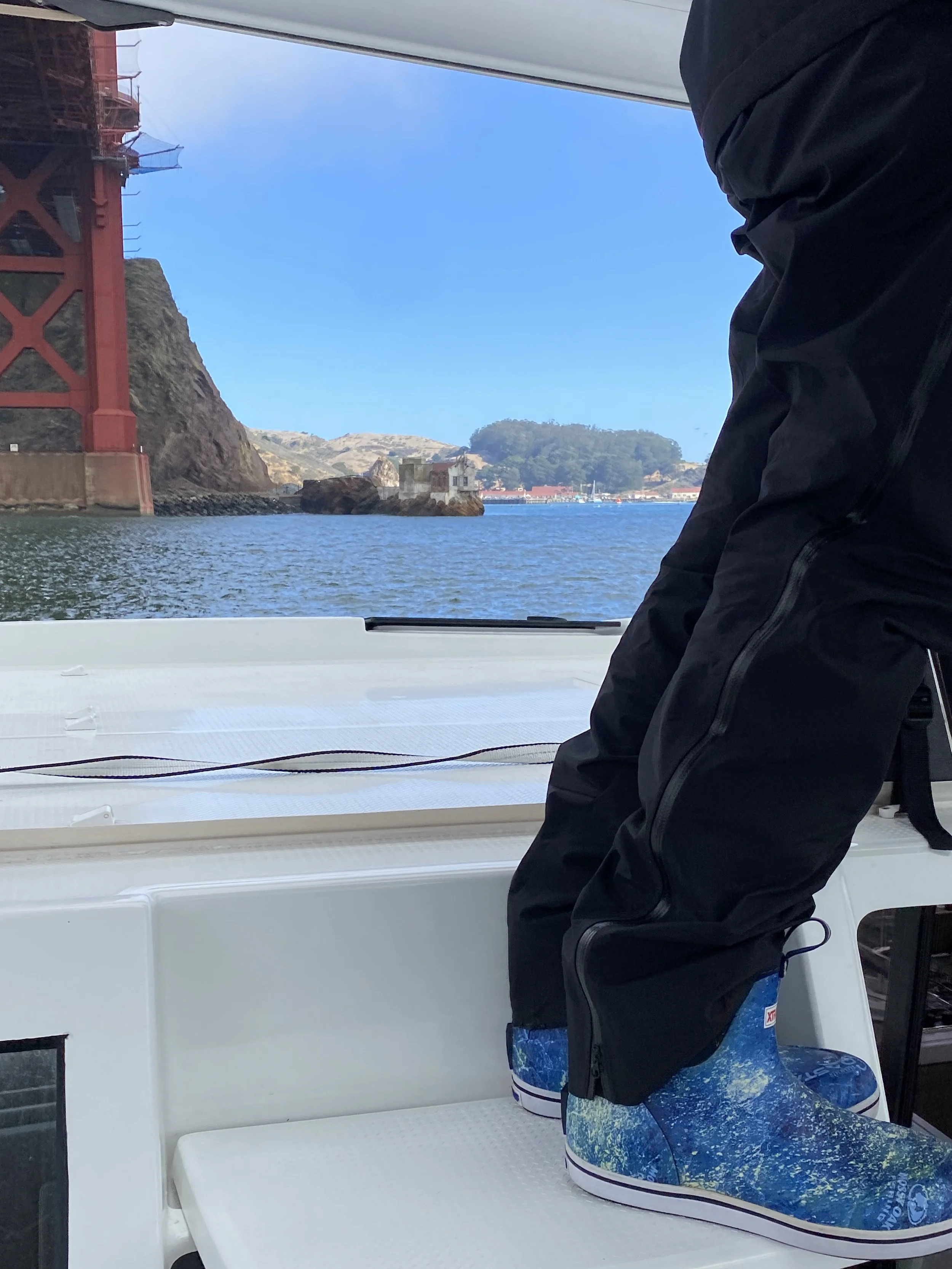
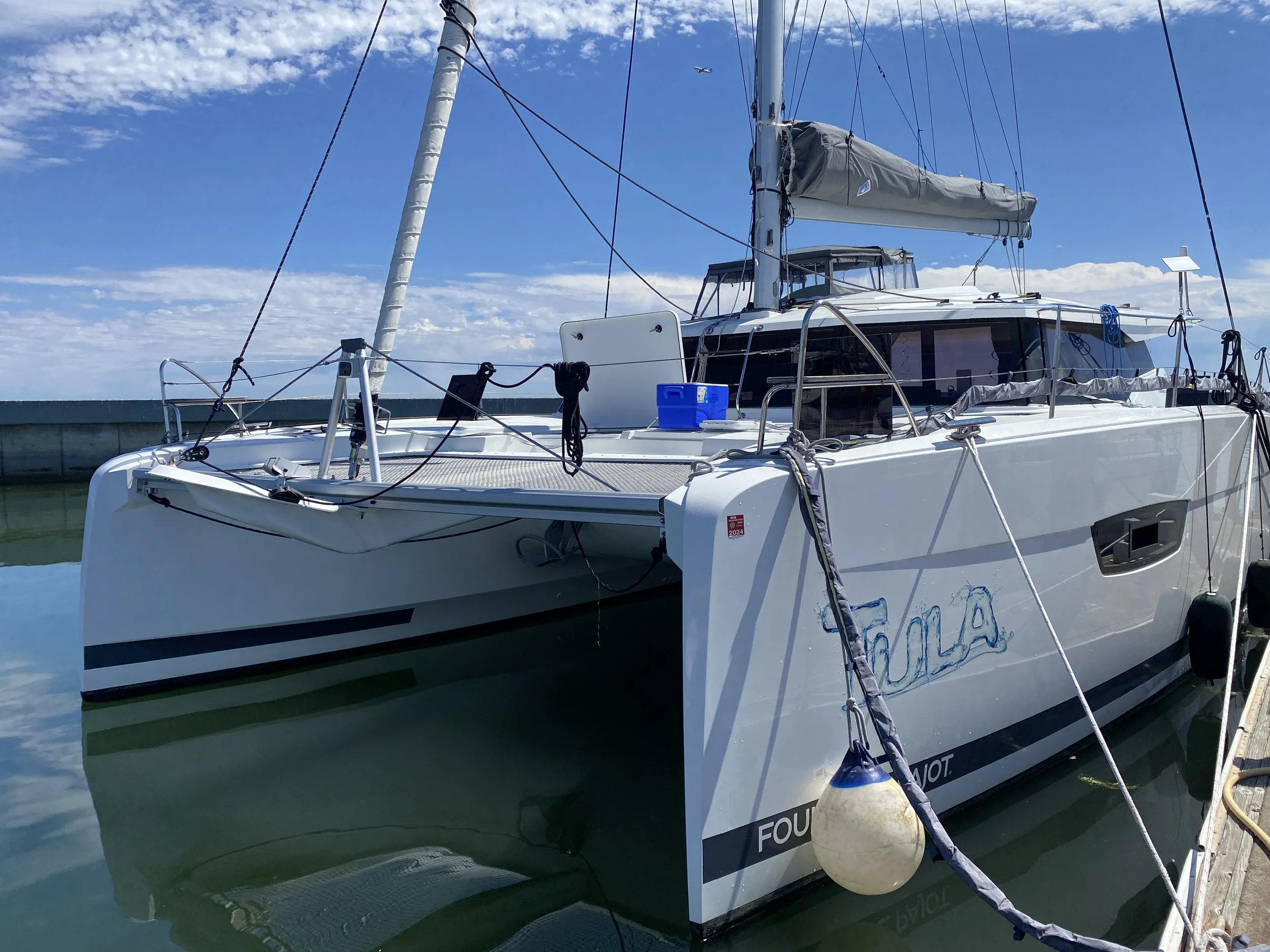
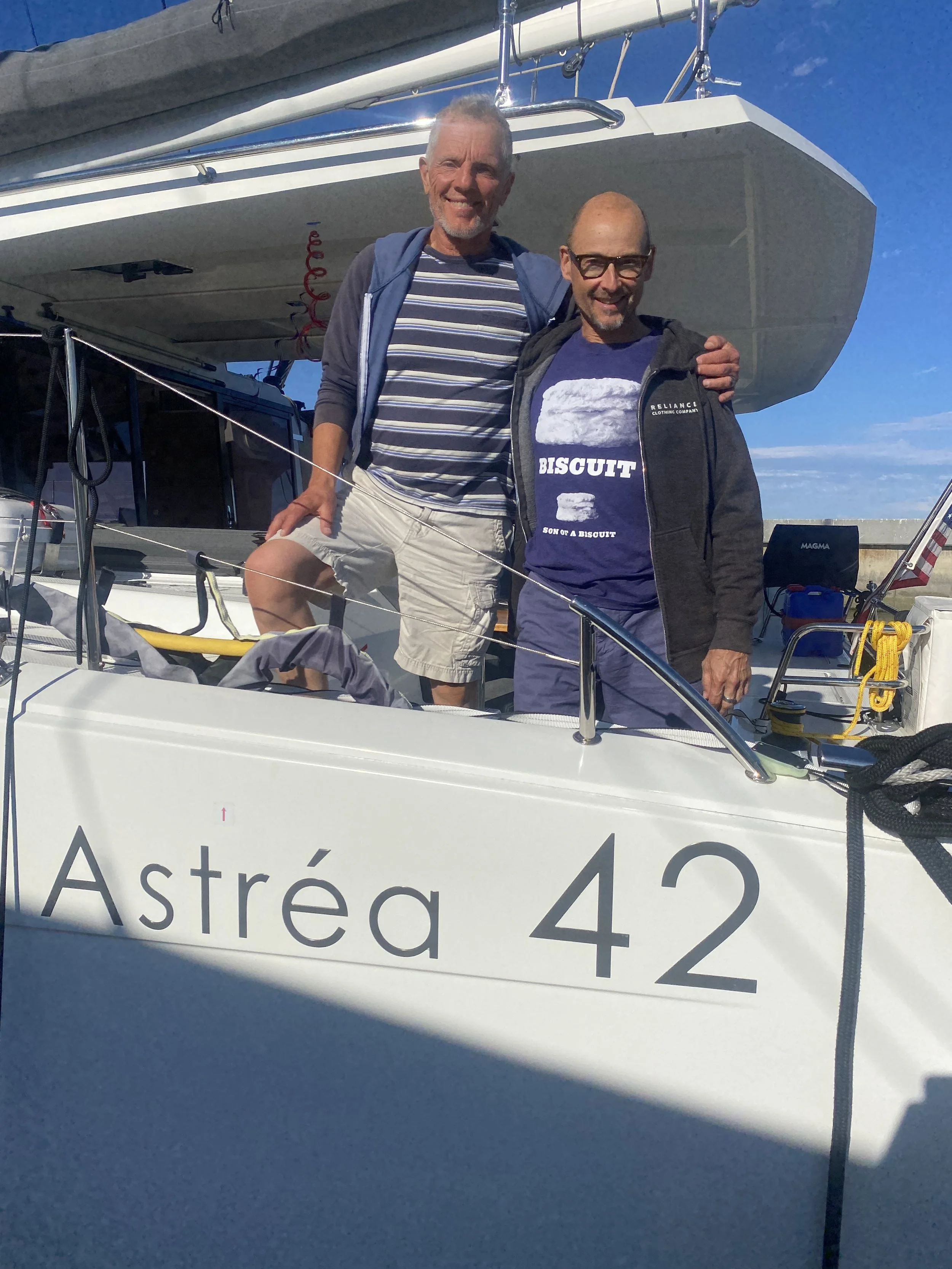
What a great trip and feeling of success. I feel confident that the Tulas will do well in their future adventures.
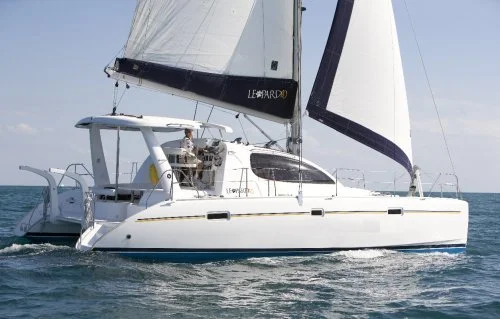
A renowned design this 40 foot cat has quite the pedigree.
With this log, I’ve tried to review and share what I’ve learned on these adventures so I can improve my work and share what I’ve learned.
In the past, I’ve gotten in the habit of sharing my logs and personal notes in greater detail and now I think that I need to focus more on the particular lessons because I am getting behind on editing these logs that often exist in pretty cryptic short-handed form.
I think every mariner should keep a log so I’m demonstrating one way of doing it. In 2024 I hope to streamline this process more so the most important lessons are shared more quickly. I will share more about this process as it unfolds this year.

First I want to share a little about a sailor who started as a student and who I now consider an offshore shipmate and crewmember of the highest order. I met John Palmer in 2017 teaching a Cruise and Learn in the San Juans. John and his two grown boys made the class a very fun week. When I started GBA his wife reached out and asked if I would offer a gift certificate for John's birthday. He and his sons joined the crew of Journeyman GBA’s Cal 40 and training vessel at the time to do an Advanced Coastal Cruising class and the Oregon Offfshore. John joined for the delivery down to Astoria and we ended the race with a second place. After John expressed an interest in joining deliveries and hired me to help him buy a boat of his own. Six years later John owns a fine Wauquiez Centurion and has joined on many deliveries. He now has thousands of blue water miles and coastal miles under his belt on a variety of boats. John is top of my list of crew to call for deliveries. He has all the merits of a good delivery crew member. Ready and stoked to go, trusts me and my choices, has all of his own gear, has a stomach of steel, can make a meal for a big crew out of almost anything, and most importantly is a good conversationalist yet capable of long silences. John is a retired fire captain and has many great stories and there seems to be an overlap between our work and life choices, oh and we like the same music. In the delivery of this yacht, John would serve as the first mate.
It was the spring when the owners of this 2005 Leopard 40 contacted me about helping them deliver their boat to SF. They told me they hoped to learn something along the way so they could continue to Mexico without help.

To think of all the strange places I’ve had to sleep on deliveries…
Their sailing background consisted of a cruise and learn aboard a catamaran in the Caribbean with four other people. I later learned that in the week’s training cruise, they only got 15 minutes of sailing experience. Since buying the boat they had been out a few times but boat work had prevented them from getting much experience. Built in the early 2000s the catamaran had presented a number of serious mechanical failures and found its new owners more handy than they had thought they were (if not behind on getting to know their new vessel underway). I told them we were going to proceed with the planning necessary to make a trip like this with a green crew. Delivery of boats like this and offshore hands-on training are different things. One is done with a crew of vetted and experienced sailors like John Palmer and at a pace that could traumatize the fledgling would-be mariner and one is done at a slowed pace with plenty of stops and time to discuss learning opportunities as they arise. It can take a week with a strong crew to get to SF from the northwest and with more inclement weather. But even a good window of a week in calm weather the window may close or mechanical issues may present themselves and may jeopardize the chances of reaching the destination. What I have learned from doing both of these types of passages is that people looking to learn while underway, should take their plans of a destination off the table and focus on absorbing as much as they can from the experience that way they can continue safely on their own. When I speak about this to boat owners I describe these two types of passages and my role aboard as the difference between me wearing the captain’s hat and the teacher’s hat.
The captain and teacher have similar roles, but their differences are the most important. A captain gives orders to a known crew on a need-to-know basis, while a teacher gets to know their students to impart knowledge and create learning experiences. The captain and crew are more immediately capable, but this power dynamic can slow down the crew's development and progress. The teacher and students take more time but can eventually help the students become independent.
We left a day later than planned to accommodate John’s schedule after his return from another delivery helping a fellow GBA alumni he met on an Island Packet 350 delivery move his boat down the Washington Coast. This was a welcome delay as it allowed the current-opposing winds to settle in the Strait and for the owners to do some troubleshooting on one of the engines.
On the way out of the strait, we noticed the running light on the bow wasn’t working. We managed to remove it underway and clean it with a wire brush but it was going to be a temporary fix as the LED bulb was distorted from corrosion. It was hard to remove the bulb cover because there was a docking light installed above. Poor design here and a red flag for the readiness of the vessel for the trip.

Motoring out to sea in calm water on the infamous Straits of Juan De Fuca

Multihull boaters do it different
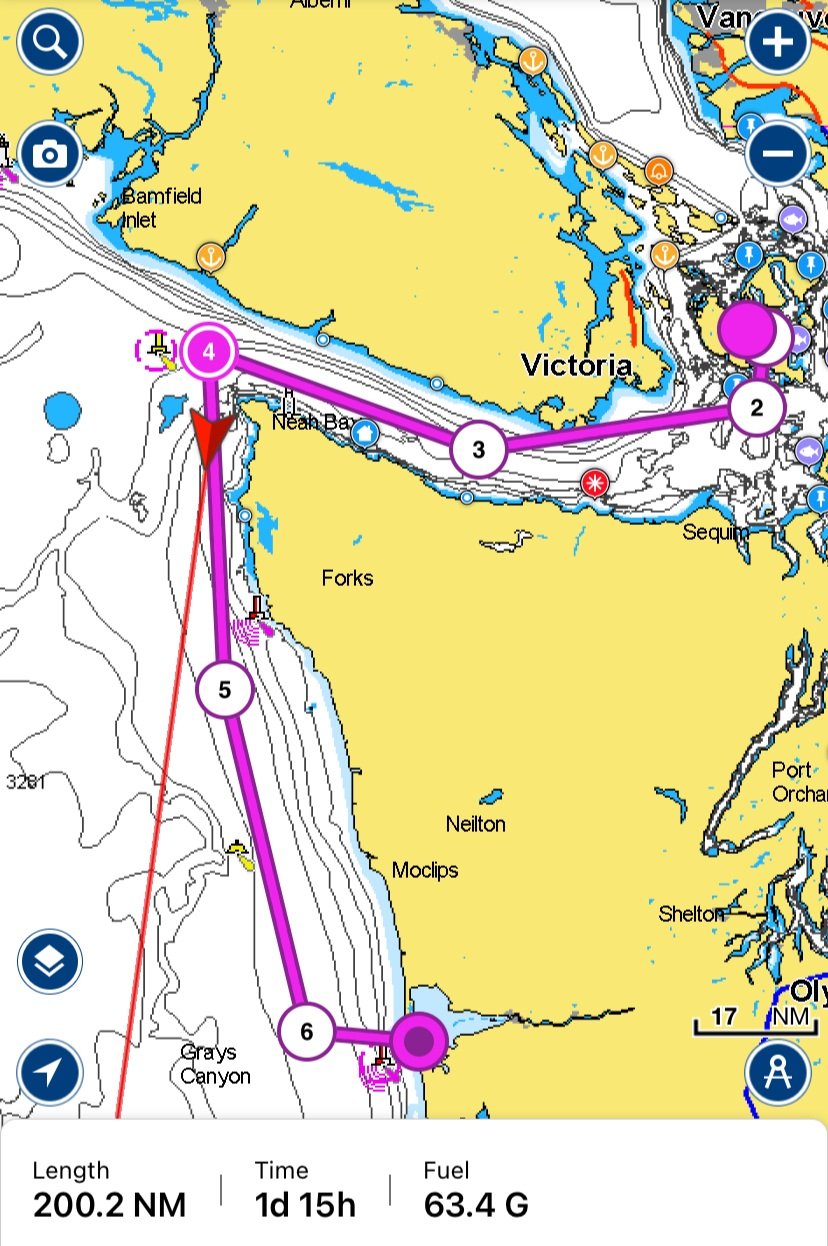
Best fueling opportunity. A calm exit of the sound is great but it costs the go juice.
The weather did settle, so much so that it required that we motor more than usual this time of year to keep up with the time allotted for the passage.
This motoring necessitated going into Westport to fuel up. This was done very quickly as the safe time to cross the Greys Harbor Bar lined up with the fuel dock hours with little time to spare. Once underway the engines ran smoothly but by the third day, diesel fuel fumes were coming up from the fuel tanks under the aft bunks because the inspection plates had been leaking from the pressure caused by the sloshing fuel. This is the sort of thing that would have been discovered if the boat had been used or “shaken down”. This required ventilating the aft cabins to make them more tolerable to get the rest necessary to crew the boat safely.

The next incident came when we tried to tack through the wind with the help of the engines. The port engine did not start and required bleeding which should be avoided in the future because the tiller of the Port rudder comes dangerously close to the spot that allows access to the lift pump and could hurt someone in that position. There was quite a bit of air in the line and it is not clear to me whether it was because that engine had a squeeze bulb installed in the line and was leaking or that the squeeze bulb was installed by the prior owner because the engine needed to be bled in the past for some other reason. There was not a bulb on the other motor’s fuel line. This installation of a squeeze bulb is unusual and not recommended. Another reason that it could have been installed is that it was used to prime the Racor water separator after replacing the filter. Either way, I advised that it be removed and all the fuel connections and hose clamps be tightened once out of harm’s way. Another thing that began to happen at this point was the autopilot kept disengaging with the moderate following sea that was beginning to run and required that the helm be watched closely to prevent the boat from rounding up. This was mostly a concern because steering by hand and by compass requires the experience only half of the crew possessed. This is not the first time I’ve experienced this with multihull sailboats. Without going into too much depth this is because catamarans often have large roached mainsails with fractional rigs (smaller headsails) and little shallow rudders. They can sail fast upwind and across the wind and navigate the shallow waters of the Caribbean but off the wind in following seas this rudder sail combination tends to make the boat want to round up. Which, if I’m honest is a little scary because, in conjunction with swept-back spreaders (another thing that goes with large roach sail plans), you can’t luff the main like you can on other boats with the wind on the beam. So you have to reef the main often either by turning around into the wind and luffing it or by pulling the main down while sailing downwind which is hard without high-end batten cars. In addition to these challenges jibing these big mains can be scary so in moderate wind I opt to tack the boat around so I can let the load come off and back on the rigging more gently. In more than moderate winds this method (often called a “chicken jibe”) is aided with the use of the engines. The downside is heading into the wind and the waves while you do it.

Cnav practice offshore

This is a new and improved specialty of Jon’s: The Seattle Dog in a tortilla. Very good and less messy that the original version. Jon has made a name for himself on past passages making food when no one else has the stomach to go bellow.
We also went from a three-hour watch to a four-hour watch system to allow for more downtime to rest but stuck with the doubled-up supervised watch system. One watch when I came up with my watchmate to relieve the crew I noticed my watchmate nodding off and after only a little while on watch, I offered to take the remaining watch myself so he could get some sleep.


“..Not long later a wave came in through the forward port hatch to drench the port bunk along with John, his bedding, and gear.”
Once we were passing Cape Blanco a wave came down the deck and the aft port cabin’s hatch was open and drenched the owner’s cabin and bedding. I didn’t know this hatch was open to introduce fresh air due to the build-up of fumes. Not long later a wave came in through the forward port hatch to drench the port bunk along with John, his bedding, and gear. This was due to old hatch seals. The waves were primarily on that side of the boat so it is not clear that the same wouldn’t have happened to the other side’s deck hatches. The seas were not big at this point and the wind was below ten knots so I was trying to imagine what would happen when things got rougher at the next cape.

I caught two of these beautiful Albacore Tuna. One by accident and one when the lure slipped back overboard and I had to jump into the engine room to bleed the fuel line when one of the engines stalled.

Look out!
Later in the passage, there was lightning on and off the coast. When we discussed making regular handwritten notes of our latitude and longitude in the event that we were struck and the GPS lost reception. I was told then that there were no paper charts on board to use to plot our position and navigate to safe harbor if we were struck and lost our electronics during what was turning out to be a foggy trip.
Once the bunks and gear were wet in conjunction with the other factors: crew fatigue, rigging concerns, fumes, leaks, autopilot, and fuel levels the decision was made to head in. By the time the bunks would be dry and the laundry and inspection plates done the weather window was going to be closed. 9-foot seas at 8 seconds with 30+ knots forecast would be beyond the boat and crew's ability to safely transit the dangerous coast off Cape Mendocino. The options were to wait for the weather to abate and repairs to be made and charge lay days or curtail the delivery in Eureka.
It would have taken five lay days until the next weather window opened up which would have required recrewing.
Unfortunately, I had a contracted commitment starting the 1st of September that was scheduled to last 7 to 9 days (another cat delivery to SF). I offered to come back and move the boat with them from Eureka to SF after it was completed. If this didn’t seem like a good option I offered to contact a local fisherman friend with experience on the coast to join them. They refused deciding to go on alone when the next window presented itself. After an uncomfortable time, they paid the travel expenses for John and me to get home. I suspect they were upset that we didn’t just go regardless of the weather and the boat’s condition. It's tough because when you help someone avoid a scary situation at sea, they don't realize what you are saving them from.
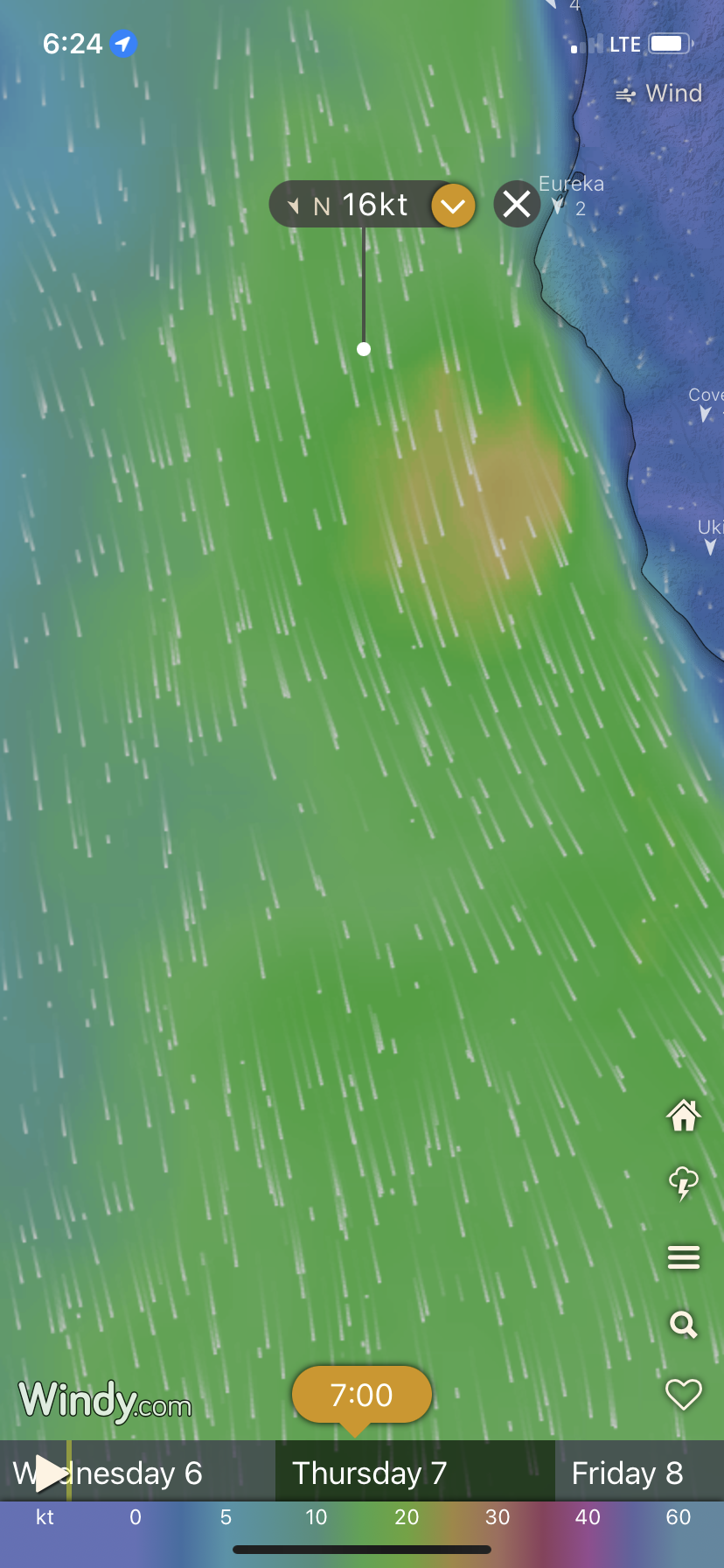
The following are screenshots of the forecast on Wednesday the 23rd for planning the cape roundings. It shows we just had enough time to get around before the 20+ knot conditions.


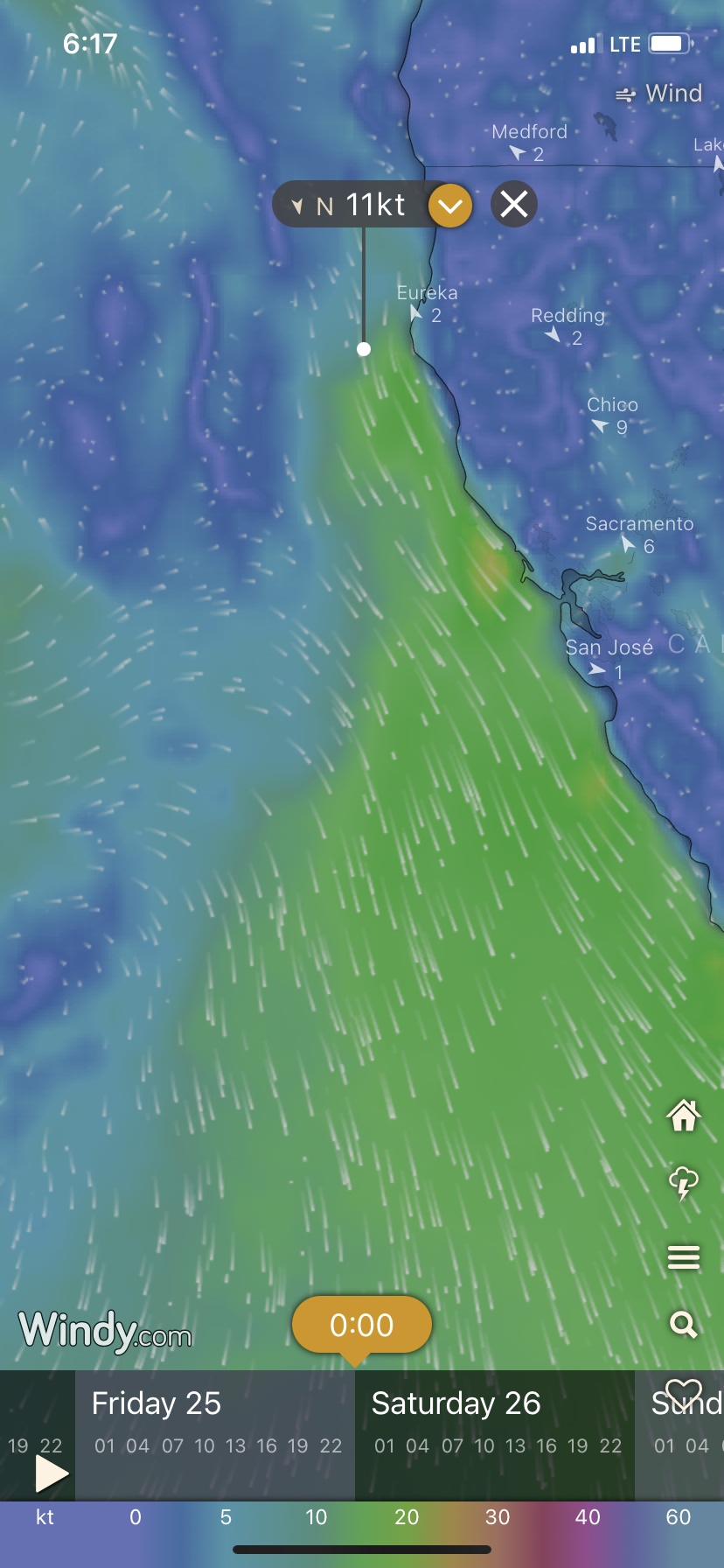
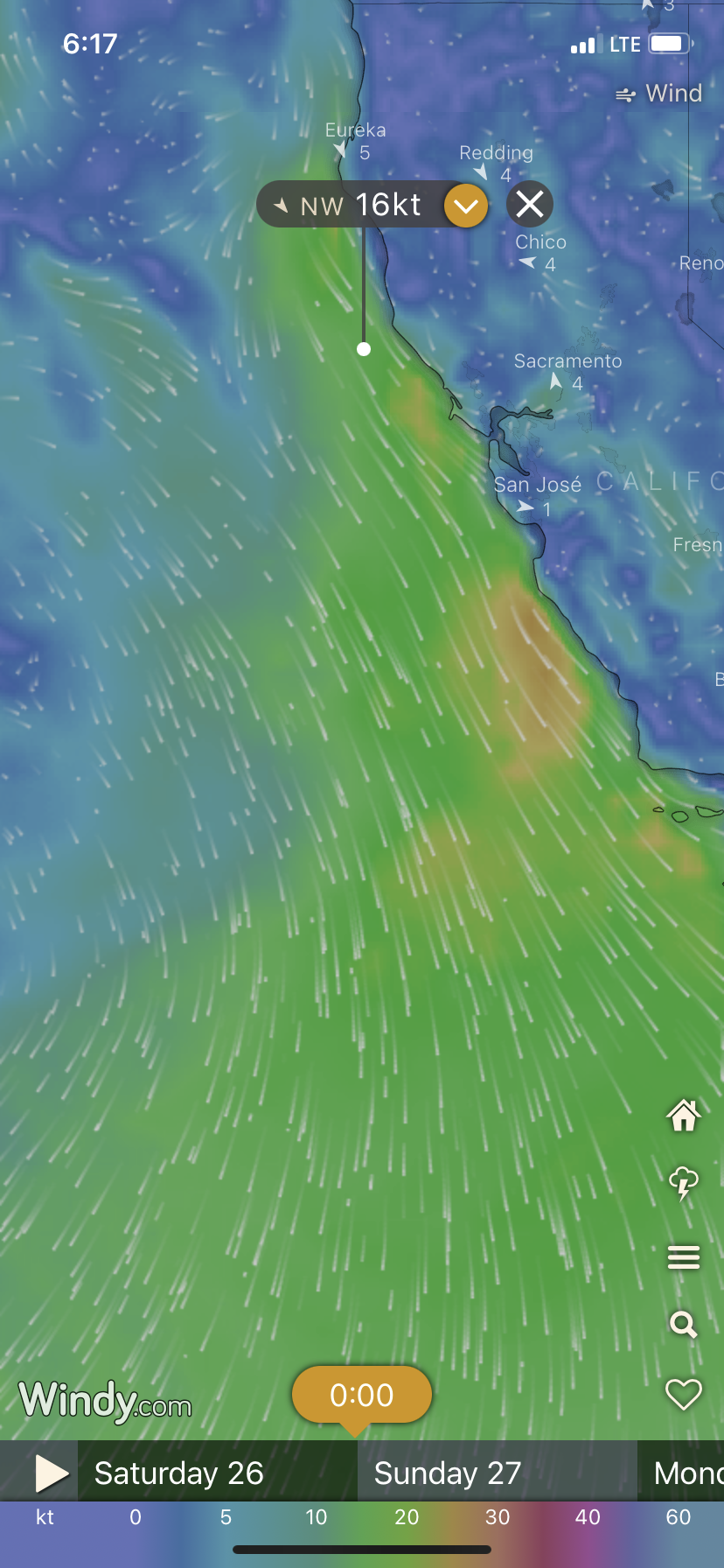
These are the forecasts taken on the 26th showing that sometimes a little delay can be significant.


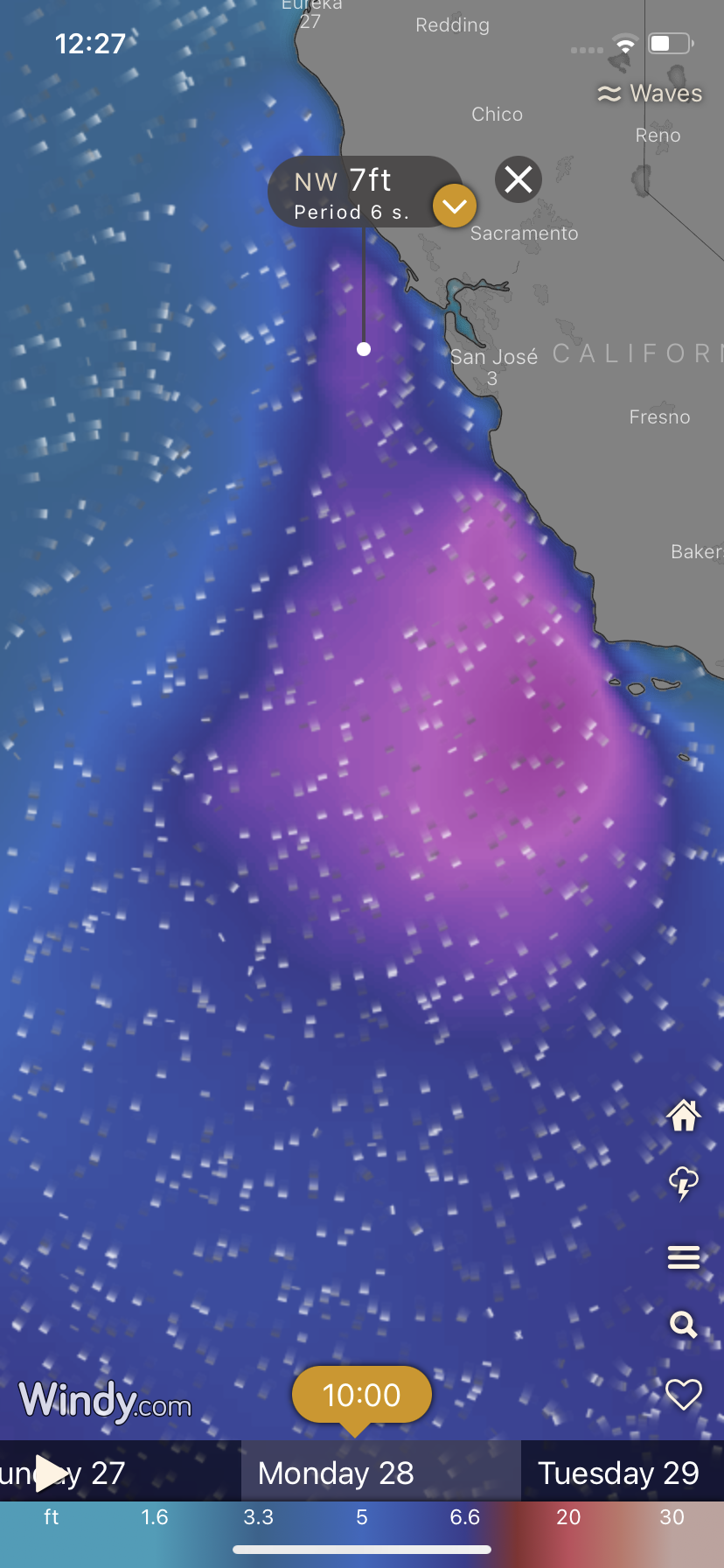

I only received half the payment I expected for this job because of the setbacks the poor prep caused. On top of that, the time I set aside for this job clashed with a 30-day delivery on a 2018 Amel 55 that I could have taken instead.
This story shows the ugly side of things but this is a seasonal business and the reason I now expect full payment prior to the departure.
Takeaways
-Shakedown your boat prior to a trip like this. The Strait of Juan De Fuca is a great proving ground for crew and vessels alike. We offer shake-down opportunities every year on the easter straight.
-Discuss contingency plans early. These passages are about learning and moving a boat. Sometimes trying to get the boat moved gets in the way of learning. Motoring to make time gets in the way of learning how to sail. Learning how to drive the boat in moderate conditions in the daytime is the only way to prepare a sailor to do it at night.
-Don’t rush. Buying a boat, taking a crash course in sailing, and leaving the first year is not a safe way to approach the ocean. These folks would have been better off hiring an instructor to help them learn their boat rather than joining a multi-hull “cruise and learn” with 3 other couples. Cruise and learn classes cater to bareboat charter prospects. This way they could have sailed their own boat down the coast at their own safe pace.
-Spare fuel. Extra fuel helps with deliveries. If you have a window and need to go far, reduce the number of stops you need to make. This reduces risks at the bars and time wasted coordinating bar crossings with fuel dock hours.
Some hard lessons for all on this one but good conversation and food were had as well.

I was contacted by the new owners of a C-288 Coupe to get some training to meet the requirements of their insurance provider. It may be a little-known fact that at GBA we teach powerboating as well as sailing. The American Sailing Association has created an offshoot organization called the Recreational Powerboating Association. Designed with the express purpose of providing the same quality training materials and standardized testing that they have for years with ASA accreditation.
My training as an RPBA instructor meant that although their insurance company provided a checklist of things to cover I had an outline and textbook already to help them learn the material.

I joined them at the brokerage in Bellingham and was hugely impressed by the knowledge of the gentleman in charge of commissioning the vessel. Now I guess that one would expect this to come with a boat that goes for as much as $339,937.00 (according to the website). The only thing that the boat was missing was its dinghy davit and dinghy. These boats and their pocket cruising cohorts the Ranger Tugs have an innovative dinghy launching system that stores the dink over the engines. Aperantly the parts were delayed due to COVID.
First, we went through everything on the boat and when we were in the chart plotter (This boat has two huge displays) we set a course for Friday Harbor and noted all the hazards on the way. A boat like this that has two 250 hp outboards and will do 45 knots so you had better know where you are going.

Over the following days, we covered everything the insurance company wanted and more. We removed the anchor and rode and marked it off as well as installed a swivel at the anchor. I have never seen the knot that the bitter end was held to the boat with before. Lots of practice docking was done and confidence slowly increased but there is something about something so shiny and pricey that will never quite allow total confidence.. and maybe that’s a good thing. I’ve wondered if the word confidence, which is used so much in the boating education world, is perhaps not that good of an idea. As some of us know tequila produces confidence and is cheaper than boating lessons but doesn’t improve competence. A word that I feel much better working toward with my clients.

There are a few boat builders that meet this design niche. I mentioned the Ranger Tug and there is also the Jeanneau NC series that offers a fast pocket cruising design that miraculously can accommodate two couples.
Going small makes a lot of sense and not just for those who can’t afford a 60-footer.

Tied up and the lovely Jones Island dock 10 minutes away from Friday Harbor and the boats new home.


I wish more insurance companies were doing this or better yet referring schools like GBA to help reduce claims. Not 20 boat lengths from where this boat is berthed there was a 29-foot two-year-old version of this brand up on the hard with a mangled prop and a recked bottom. Totaled. Two big chart plotters are sometimes not enough. Perhaps the best insurance is know-how.

Day 1-
Left Friday Harbor for Bedwell Harbor to clear Customs, then went on to Montague Bay for the night. Got in the skiff and headed to the Ferry terminal on Mayne Island in Village Bay to pick up my girlfriend Fallon. This works well for a rendezvous spot for anyone coming from mainland Canada or Vancouver Island.
Day 2-
Left for Dodd Narrows and Nanaimo to provision. Anchorage was full and we had to anchor twice as there was very little room. Forecast for more wind around the corner has the crew tempted to wait till calmer waters in the Strait of Georgia.

Testing the anchor buddy out. Cant believe a waited this long to buy one.


Ten cruising guides paired with the Starlink, Navionics reviews, and hours a day are what it takes find the sweet spots in these cruising grounds. Even then may trailheads were overgrown but that makes it feel like a real adventure.
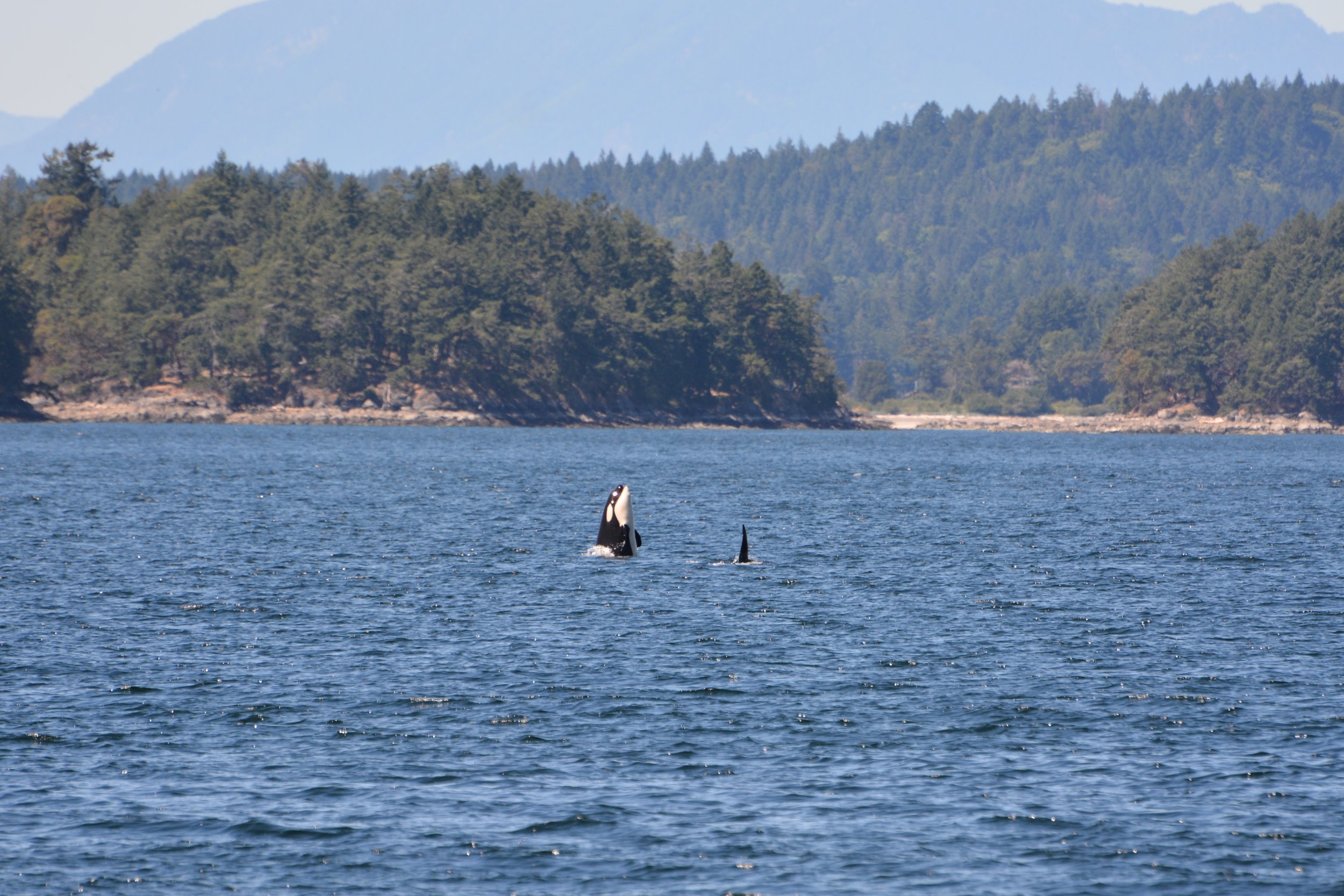
One of the young additions to the L pod checking us out. Seeing these two healthy Orca kids playing around makes us hopeful that this pescatarian subset of the species will not go extinct.


Day 3-
Provisioned and headed to Hornby Island. The rounding was nothing the Rose even hesitated at, 20+ knots on the nose, and towing the dinghy was no problem. Fallon and I kayaked and swam in the bay on the south shore of the island. I can see why this is a destination for Canadians in the area. Got back to the Rose and tied the Kayaks to the skiff which got loose later that evening and all were brought back to us by a friendly boater anchor downwind. Noted to keep paddles on the big boat and kayaks tied separately… as well as other things… knots are the foundation of seamanship skills but there is an argument for having painters with clips.

Parents providing scale for this deceptively large vessel
Day 4-
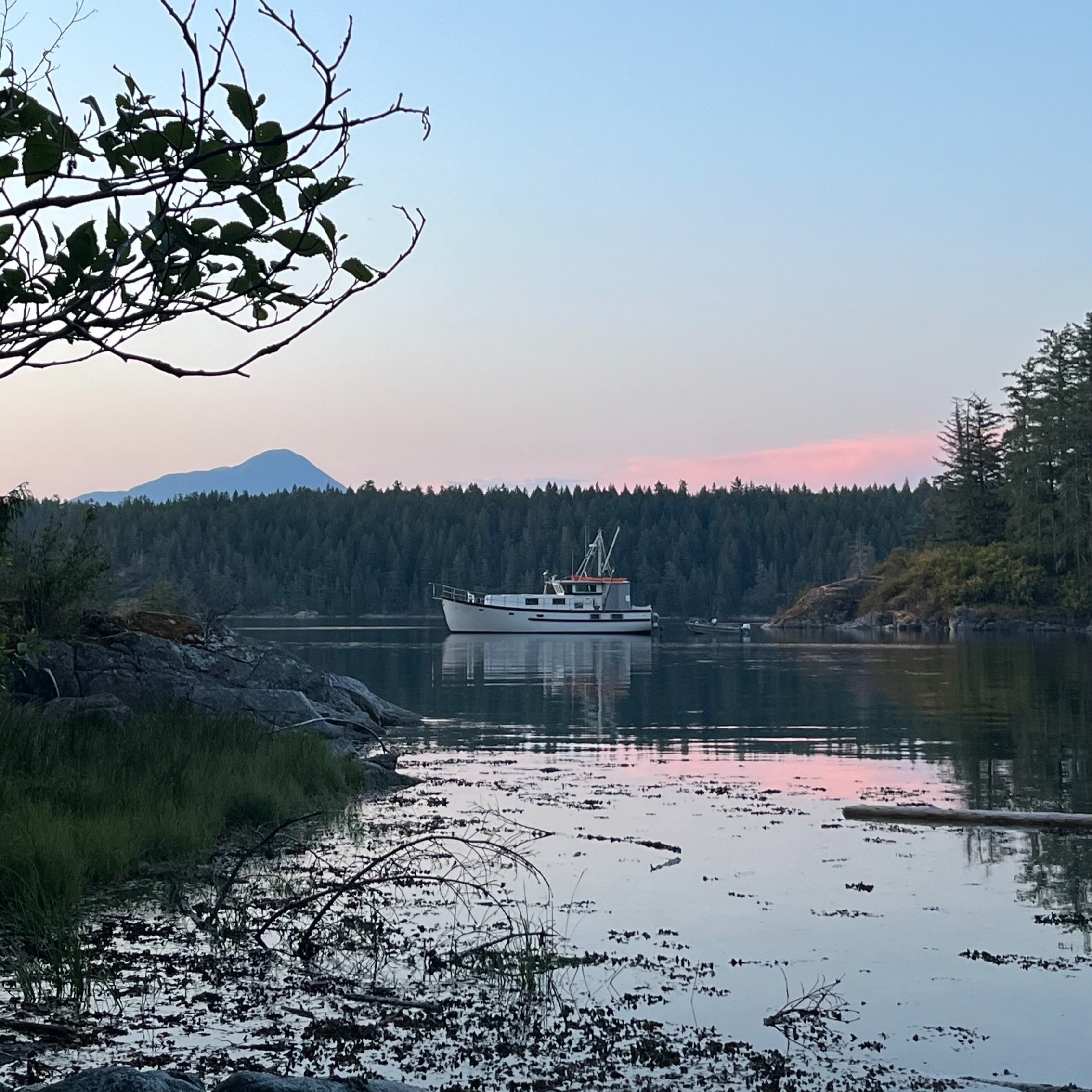
Spent the night ashore camping in Desolation Sound’s Cochrane Bay. This is the end of a well-known hiking trail. The anchorage was the smallest we’ve been in yet. Quietest Fourth of July to date eh?
Day 5-

Headed Beaver Inlet passing Shoal Bay and temporarily anchoring in Tallac Bay while waiting for the current to slow to transit Green Point. Took the skiff to Blind Bay on West Thurlow Island to walk to the big cedar. This was the best hike and we wished we had more time to do the full loop. We also bought an expensive cucumber. Having to do your perishable provisioning after crossing the border and in a place like Nanaimo is unfortunate. The grocery store in Nanamo is expensive and poorly stocked. Perhaps it’s worth getting a cab inland to a better store or doing all your produce shopping at the Saltspring Farmers Market.
Day 6-
Headed for West Cracroft Island and Lagoon Cove. Decided not to head down the turbulent channel (Blow Hole) with the big boat and opted to anchor in Cutter Cove and take the dinghy in. There was a big table full of cruisers tucking into a prawn dinner when we got there and went for our short/not-so-short hike. The signs were a little misleading and there were a few new additions to the trail. Still worth it.

Lagoon Cove

The marina shop
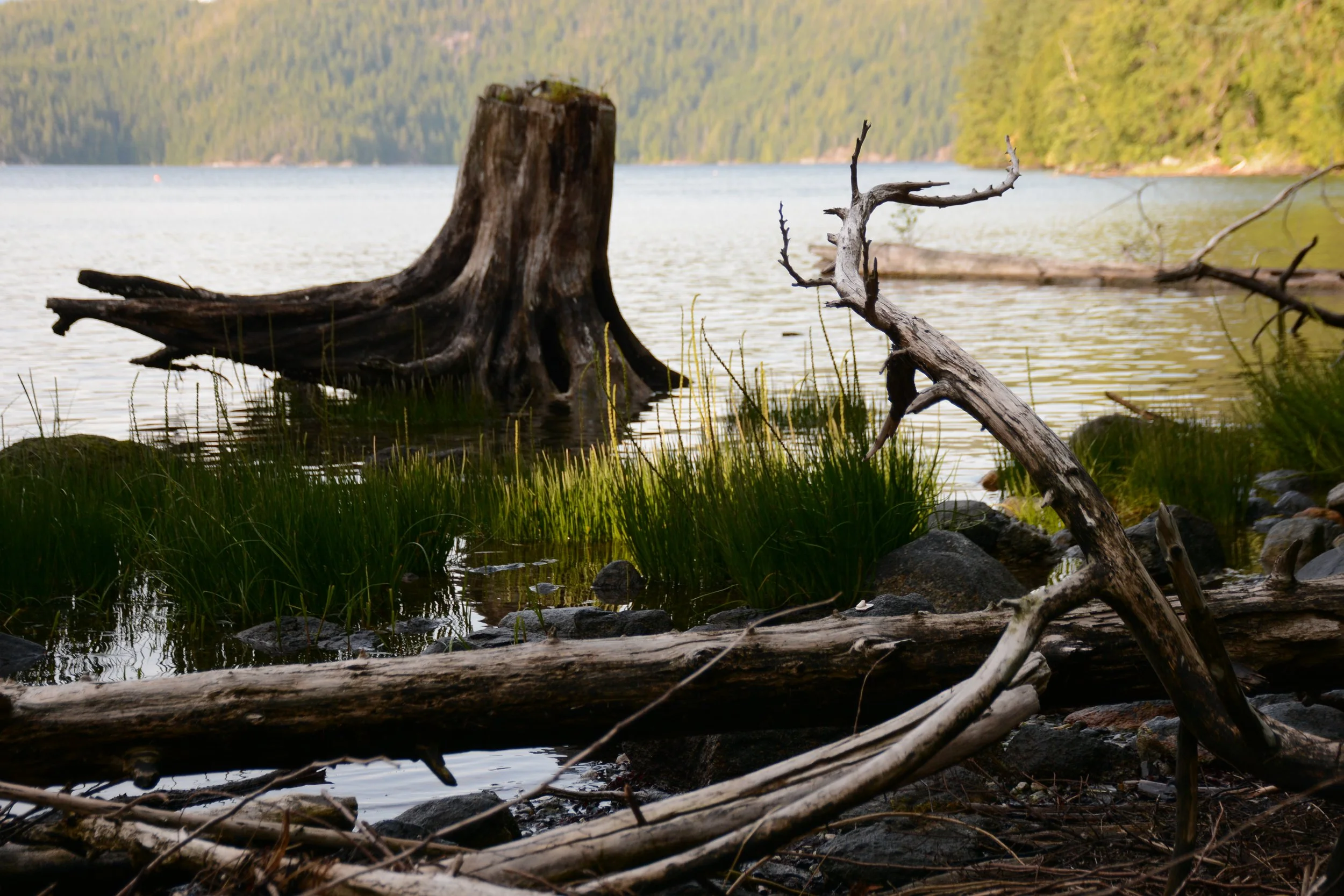


There are not many spots to get ashore and hike so it is important to try and get ashore when you can and stretch your legs. Physical and mental health aboard is key as is diet and mindful communication. Even a 62 foot boat can feel small after a week. Get off the boat and explore and take time for yourself.
Day 7-
Headed to the Broughton Archipelago and anchored in Village Islands Indian Cove because our first choice was full of rafted powerboats. Keen to check out the ruins of a native village Fallon and I set out in the Kayaks in what would be the longest paddle we have done and upwind. Fallon flagged a bit but we made it to a beautiful shell-midden beach and her favorite thing to do: beach comb. This beach has the feeling you get at all these ancient community sites of a safe place. A place where food is plentiful and landing your craft is easy. It was interesting to see the ruins of houses here spanning a thousand years. The remains of a long house’s plinth from 100 years ago represent a stark contrast so close to houses from the 80s abandoned so recently.


Day 8-
Not wanting to miss some of the sites in this beautiful archipelago we took off in the skiff after we agreed to rendezvous with the Rose in Cramer Passage. Having set times like this is important because the VHF and cell phones are useless here. First, we went south to Red Point where there were said to be Ammonites and when we got to the little beach and shut the outboard off we heard whales coming down the channel. It is quite an experience hearing these huge mammals exhale and inhale. You get a real sense of the size of these creatures you don’t when straining an eye through a camera viewfinder or phone. We did find the fossils, another reminder of the primordial nature of the land here. On the Way to Red Point, we noticed an active community on Harbledown Island. Fallon walked up the dock and was greeted by a pack of large and loud friendly canines and eventually a woman drove her golf cart to the fence that, as we learned later, was more to keep the dogs off the dock than the visitors out. She said she could give us a viewing of their museum later that day but we had a tide to catch.

Pictograph at Chief’s Bath Berry Island
After Red Point, we scoped out some kayaking campsites and caught up with the Rose for a few miles and a cup of tea before heading off again to check out the Burdwood Group in the skiff. This is a beautiful little group of islands and the best camping spot had just been landed by a nice couple in their tandem kayak. We asked about other sites and they shared what they knew and kindly offered to share their spot. We declined and headed after the Rose to find her tied up at a friend’s dock in the lovely Shawl Bay. After watering up we took the skiff to a recommended campsite around the corner at Moore Bay and left the folks to a dinner of freshly caught Prawns. We found a beautiful campsite and the water was by far the warmest I’ve swam in North of Mexico. We had a dinner of Prawns and potatoes on the fire and the morning after Fallon scared a black bear out of its den only 30 feet from our tent.


Just a couple strange ducks

Consulting with the people that know the best beaches and campsites…the kayakers. This is in a beautiful island group called the Burdwell Group and defiantly worth going back to.


We need more docks like these. The water here was by far the warmest salt water I’ve ever swam in in the Northwest

Unceded means that First Nations people never ceded or legally signed away their lands to the Crown or to Canada. A traditional territory is a geographic area identified by a First Nation as the land they and/or their ancestors traditionally occupied and used.

Black Bear in the campsite

Saw a bunch of these guys. Sad to see how humans devastated their numbers so many years ago.

Solo Merganser in Skull Cove.
Day 9-
Headed to the (Knight Island) South Gate Islands and skiffed to the Murray Labyrinth and Skull Cove to see the ruins but couldn’t find them. Things get overgrown quickly up here. Very cool to check both these spots out though. Both would make good anchorages. Murry is an advanced skill required spot but a real motivator to get to the point where the boat’s crew can set stern or shorelines or just tie between trees. Beautiful spots.
Day 10-
Left for Calvert Island around Cape Caution and had to anchor twice in the full bay. Windless is not running free even after I took it apart and did the above deck service. I think it’s because of the scales on the chain.
Walked to West Beach and out to Seventh Beach on the advice of some other hikers. All the beaches are amazing. Noted the big dog prints in the sand to learn later they were wolf prints.

Sea wolves and she wolves

…in good weather


Day 11-
Decided to take a break from the push north and stay the day. Kayaked to a lagoon and walked to Wolf Beach after hours of trip planning.


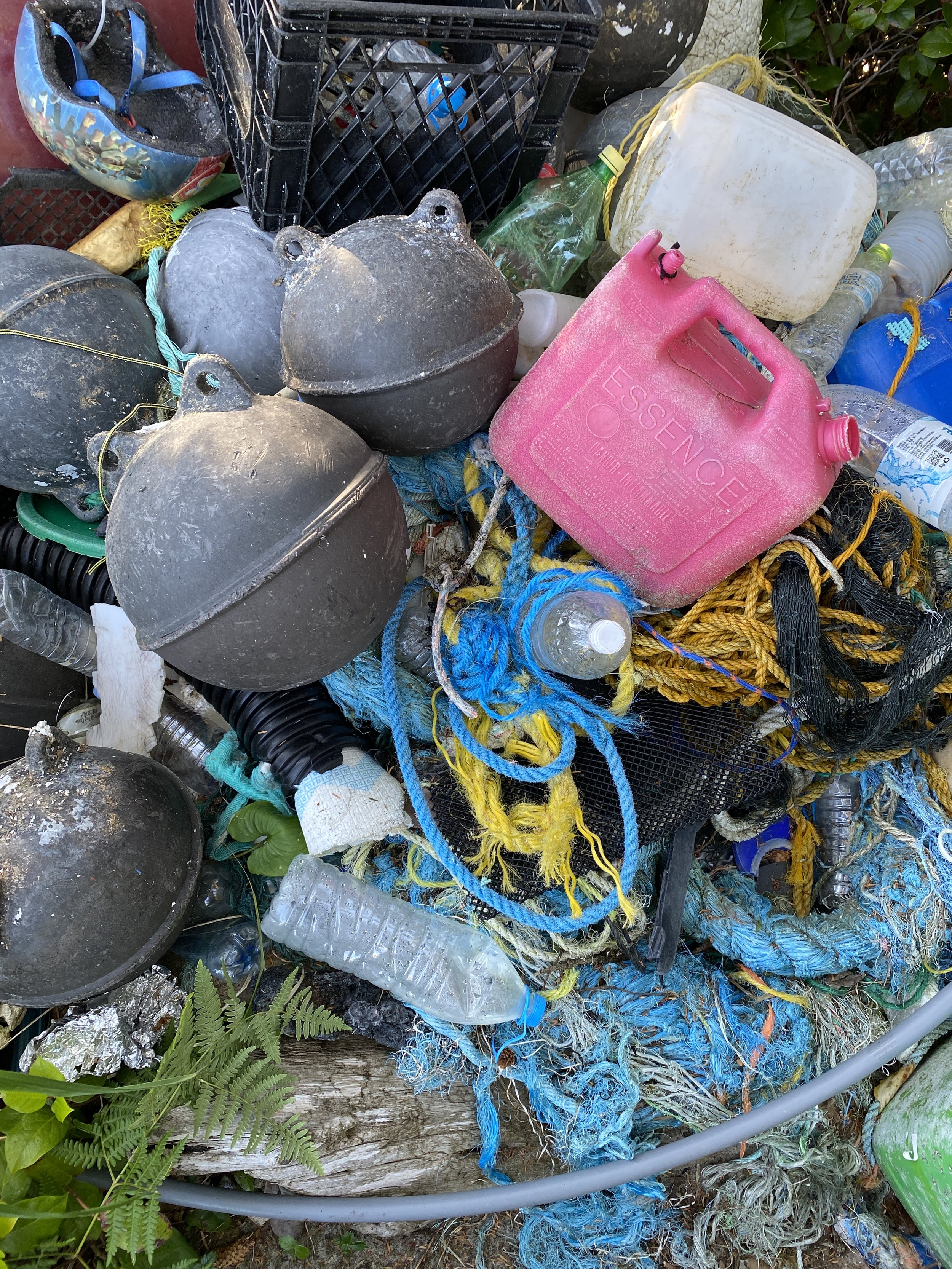


Returning from Wolf Beach we realized that we couldn’t easily see where we had come out of the dense forest when we arrived. After looking for half an hour found the trailhead finally and took a little more time to tie a derelict fishing float to a tree branch for the next people to use as a reference. Coming out into this beautiful place one not only forgets about the path home but time too seems to pass so slowly. It was 8:30 pm when we headed back and it felt like early afternoon.

Rhinoceros Auk

Wolf Beach had a magical lagoon that would have been great to explore with Kayaks. Wolf tracks everywhere.

Wolf Beach Calvert Island

Sand Piper
Day 12-
Went to Codville Lagoon and hiked to Sugar Lake a beautiful lake with red sand. Saw some other cruisers enjoying the water. These are always great opportunities to get beta from other adventurers. There was a Loon there making the most haunting song when we first arrived.

Day 13- Eucott Bay and hot springs with the Grizzly Bears! Horse flies were only out in the middle of the day. A shallow bay with a narrow entrance was a little intimidating at first and paired with the scant info about the spot made setting into this wonderful spot so worth the trip up the fjord. Bear watching from the boat. What a great way to see these awesome creatures.
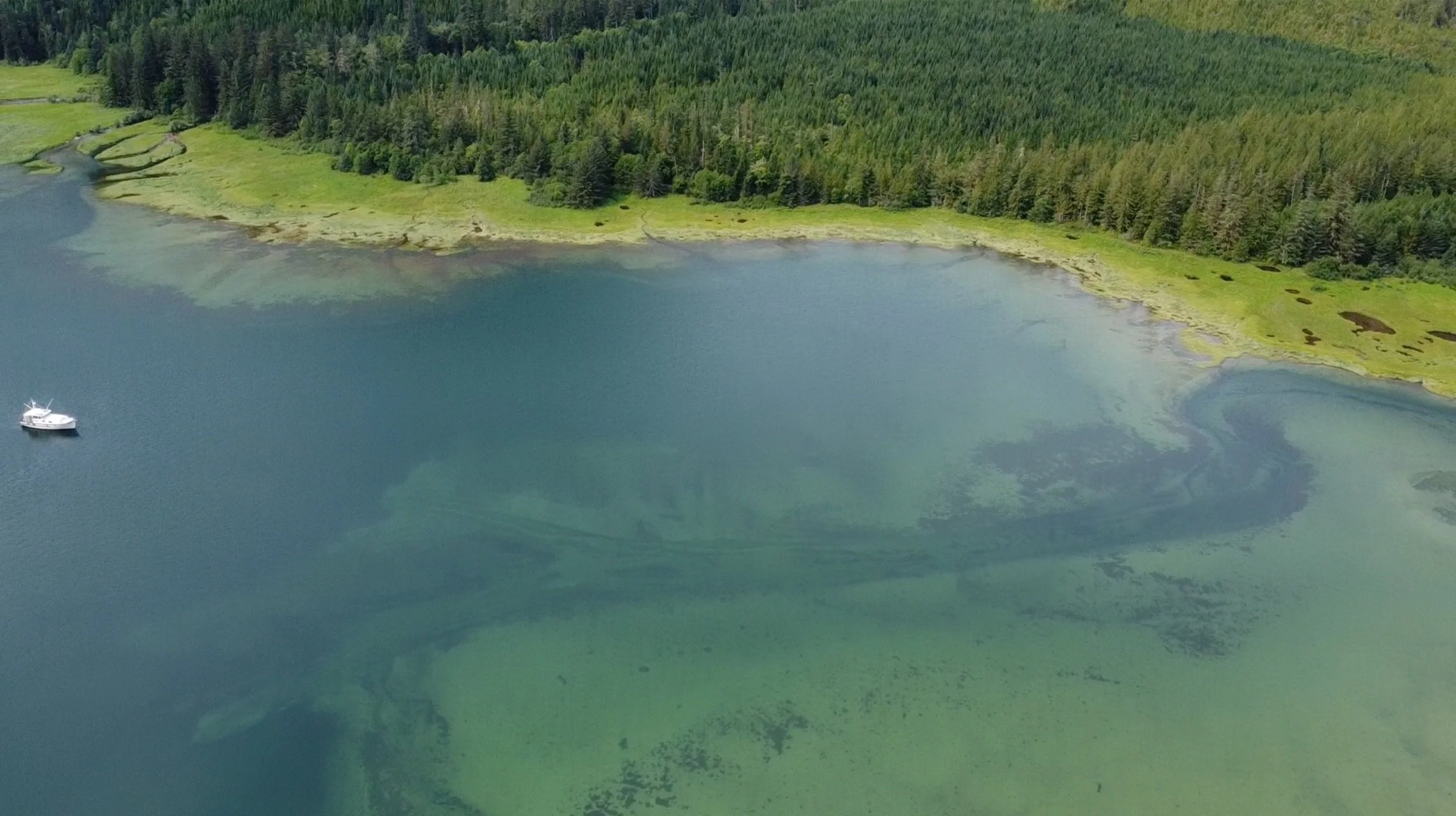
Compass Rose anchored in Eucott Bay

Sushi is a good way to make a little fish look great on a plate.


The elastic anchor rode on our stern anchor (an Anchor Buddy) really was useful on this trip. Here it is seen holding the skiff pulled in for loading after it sat further away from the shore as the tide went out. This added piece of mind while we soaked and watched for the Grizzly to return to the Hotspring. It would be bad to let your dinghy dry out when you have to escape to the safety of the water. I would add that a skiff like this is really well suited to the waters. Tough and light for its capacity it increases the range of exploration.

Eucott Bay Hotsprings
Day 14-
Bella Coola
I think this is a place we could have explored more and a better provision option than Bella Bella because of the farmland not far inland. Fallon and I went to the one bar on the reservation here and talked to some locals and they said that the wolves and bears are coming into the village these days because of food scarcity and people’s pets are being killed. Overfishing has effected this area significantly.
Always sad to leave or end an adventure but a great opportunity to explore new places and I’ll at least have some good resting spots in mind on the next delivery through these waters.


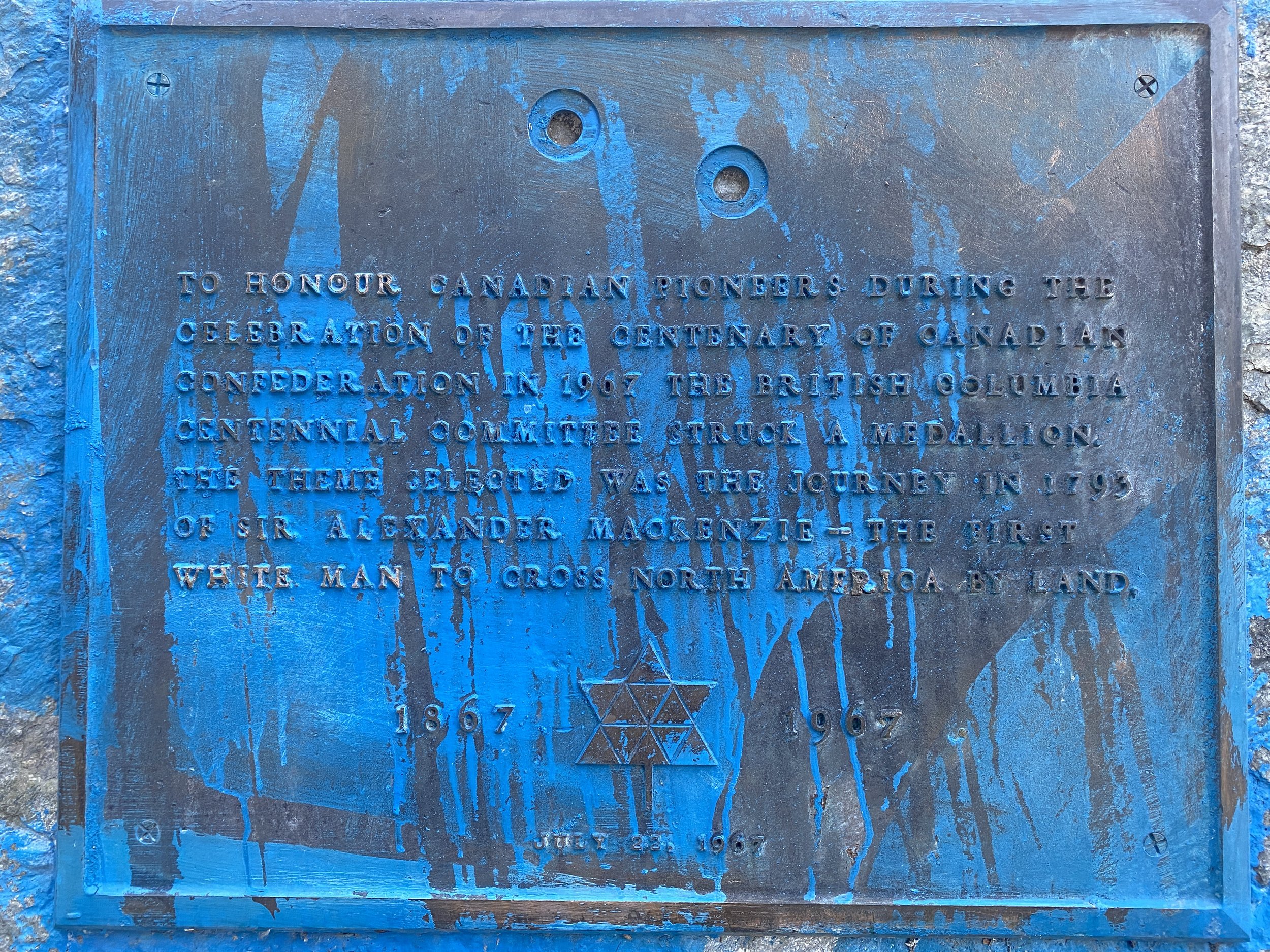
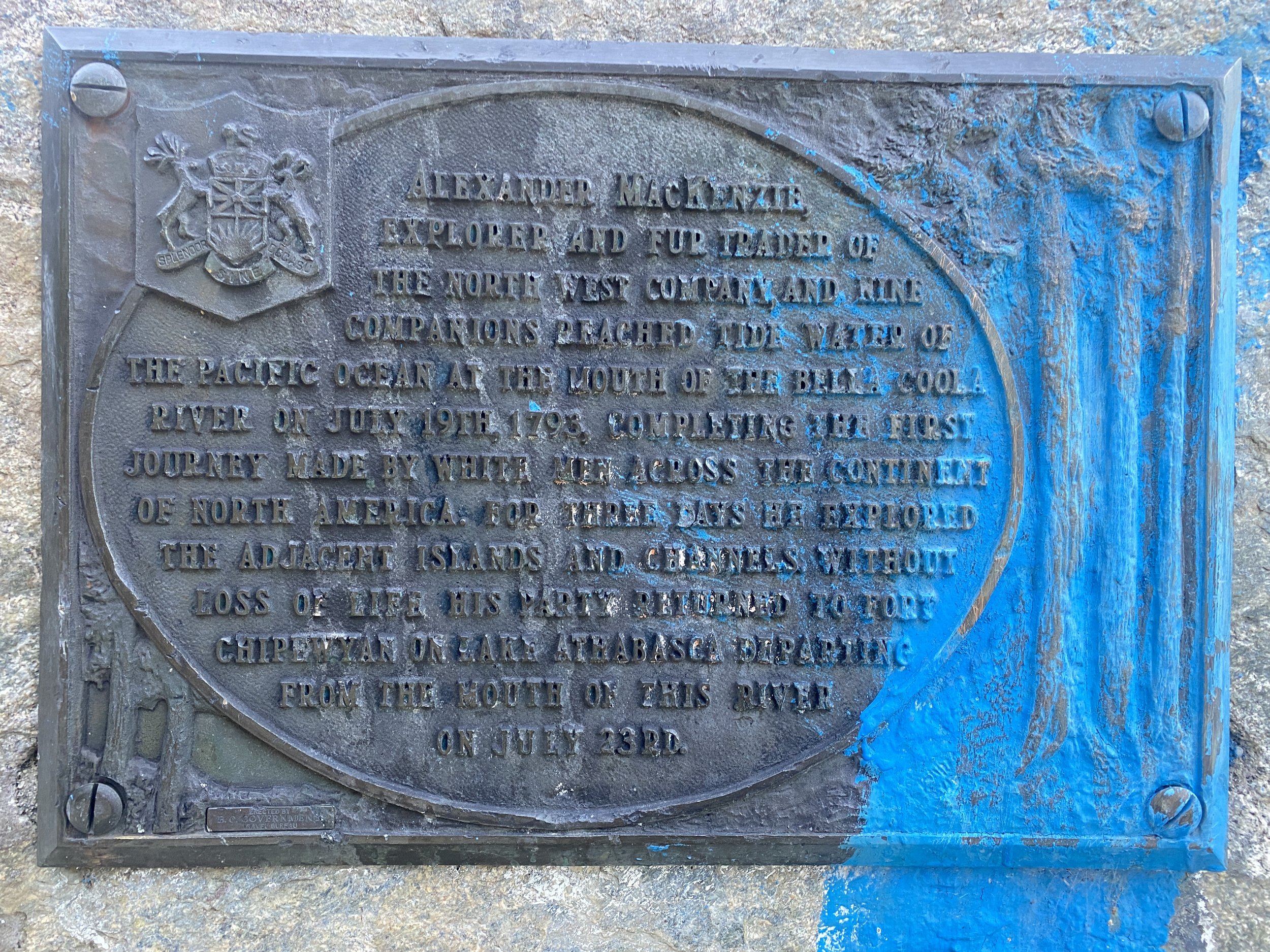
The Canadian Indian residential school system was a network of boarding schools for Indigenous peoples. The network was funded by the Canadian government's Department of Indian Affairs and administered by Christian churches. The school system was created to isolate Indigenous children from the influence of their own culture and religion in order to assimilate them into the dominant Canadian culture. Over the course of the system's more than hundred-year existence, around 150,000 children were placed in residential schools nationally. By the 1930s, about 30 percent of Indigenous children were attending residential schools. The number of school-related deaths remains unknown due to incomplete records. Estimates range from 3,200 to over 30,000, mostly from disease.

This is a beautiful and tasteful example of how graffiti can offer a critique of the establishment. One person’s pioneer hero is another person’s usurper. It is a complicated tangle of issues but mostly a sad tale of the destructiveness of colonialism in the not-so-distant past. I really hope there is healing and regrowth in these communities.

Unfortunately, if you are making a living delivering boats you need to be ready to go with little notice. On top of that, you have to be ready to go when the weather is not ideal and head in the direction that is the least comfortable. It is no mystery then that some brokerages only refer captains to the deliveries that their staff would never touch. I don’t think I’ve had an uneventful delivery referral from (a certain brokerage that will be unnamed) in the past 15 years they’ve been passing on my number. This delivery at least was a short one and I’m less nieve than I used to be so I hired a very skilled hand to help. Rick of the Salty Boys to the rescue again.
We arrive at the boat to find the house bank and start bank was dead. After turning on the generator and charging the batteries we ran into members of the yacht club that were familiar with the charging issue on the dock that the “as is where is” boat had been left. Big boats like this require big power and the little marina was just not equipped to accommodate it. Once the batteries charged we had to figure out why the starboard engine wouldn’t start. After jiggling wires to see if we had a loose terminal we became acquainted with a concerning amount of both deferred maintenance and hack job wiring. Cut wires were hanging down from the engine room ceiling and auto part store battery chargers and jumper cables were strung about with tools and parts everywhere. The owner who was joining had mobility issues so he had never been in the engine room. He was also technologically challenged so he had only sent the last and first pages of the survey to me with his camera phone prior so this and the fact that the boat “cant stay here” all presented frustrating pressure to get the boat that we were now seeing was barely seaworthy off the dock ASAP. After an hour of wire chasing we jumped the relay on the starter and the big Cummins came to life.


Unfortunately, this was not soon enough to allow us to dock the boat in its new berth in Bremerton in the daylight and the owner who was joining us did not remember where the slip he had been assigned was.
After some jockeying in a very tight marina and talking with Rick with my headphones as comms, we squeezed the boat in between two very rickety wood fingers in Suldan Marina.
Fortunately for the owner, the boat is close to the Salty Boys headquarters and the boat is already being cleaned up and fixed as I write this 4 days later.

Modern boat design to a T. Note the swept back spreaders, non overlapping jib sheet leads, tall freeboard, and extreme beam.
I’m just returning from a wonderful and sporty, private Advanced Coastal Cruising class aboard a beautiful brand-new Dufour 530. This weekend brought gale-force winds and a wonderful opportunity to see what the boat and crew could do. This class is the fifth in American Sailing Association’s instructional series and covers what a sailor needs to know to make coastal passages in exposed waters where retreat to the protection of shelter is often not possible when the weather deteriorates. The forecast called for winds from the south exceeding 20 knots in the San Juan Islands into the Canadian waters north over a 72-hour period. The forecast on the Pacific Ocean was the same but combined with seas exceeding 10 feet. When the owner reached out originally he told me that he was planning on sailing the boat to Mexico where he and his partner planned to winter aboard. He went on to say that he and his crew wanted to get some ocean experience and to learn about heavy-weather sailing. After looking at the forecast together we decided to head West to the ocean instead of North to the Strait of Georgia. This decision was based on the reluctance to have to sail back south at the end of the weekend into the 20-plus knot winds and choppy seas that wind over current produces. Instead, our decision to head West allowed us to head out into the ocean and strong winds on a more forgiving point of sail. The concept of apparent wind is an important subject in the material. In short, it is a fact that sailing into the wind adds the speed of the boat to the “true wind” speed. So, for example, a 50-foot boat sailing 8 knots into 30 knots produced the effect of 38 knots on the sails. This, paired with the fact that wind force grows exponentially while adding to the discomfort of sailing into the waves that are created by the wind, makes deciding to pick a heading where the wind is on the side of the boat or “beam” and easy one.


M.O.P. : Mom overboard pole

What’s wrong with this picture?
Our departure from Friday Harbor where the crew of three picked me up was slowed slightly by the strong flood at Cattle Pass and our entrance into the waters on the East end of the Straits of Juan De Fuca. Once in the Straits, there was enough wind from the Southwest to shake out the crisp folds of the French boat’s band new sails and to begin to find the optimal sail settings before dark. After a tack off Ediz Hook and Port Angeles, I threw the “Man/woman/cat overboard” pole in the water and each sailor did several figure-of-eight drills as a review of the manoeuver and as a test of the boat’s maneuverability. I was gladly surprised at the 53-foot long 15-foot wide boat’s maneuverability and ease of sail-handling. After that, the dinner of spring asparagus and pasta began but was interrupted by the cook getting seasick. I dived into the galley and finished what would be four servings of a wonderful dinner that was unfortunately only enjoyed by two. The crew mostly made up of R2AK veterans and old friends had forgotten to bring sea sickness medication. As an instructor and captain, I am not legally allowed to require crew or students to take medication so as uncomfortable as these experiences are they are valuable lessons about the dangers of the very uncomfortable but common occurrence of seasickness and the necessity of bolstering your system until you get acclimatized to the motion. With fifty miles to go, we decided to turn the engine on as the wind tapered so we could reach the conditions and sea we were looking for at sunrise and I went down for a three-hour nap before my 12 to 3 am watch. I came on deck and took the watch alone deciding to let the sick cook rest. At the end of my watch, my standing orders were to vary the speed to arrive at Cape Flattery at dawn. While I was off-watch, the wind increased from the South, and the engine was turned off. Unfortunately, too much sail was up, and when I came on deck at 6 am we were leaving the strait and entering the ocean in the dark. Which is what I had planned to avoid. We put in two reefs and rolled the jib in two feet and continued west into the dark sea. We went out for an hour- and- a half until there was enough light to see the waves and turn around. At this point, we were surrounded by ships entering the strait and with less maneuverability than I like to have due to being overpowered. We planned to head into Neah Bay 10 miles from Cape Flattery and get some rest and recuperate. At this point, everyone but myself was sick and eager to get back into sheltered waters. Just outside of the bay and out of the swell and chop we saw a gust of 41 knots on the wind gauge. At that point, we only had the double-reefed main and the engine on. Thirty minutes later we were tied up to a very inhospitable dock with broken cleats and rusty bolts protruding from the dock. The bright white hull of the new sailboat was in stark contrast to the rusting hulks of the dying native fishing fleet. The only real cause for alarm was one of the crew falling after jumping to the dock as we landed in a 25-knot gust. The freeboard of this boat was about four and a half feet making those fender-step things a real necessity. Everyone’s spirits were very high as we all went to sleep for a three-hour nap. After a nap, we had an amazing omelet breakfast with dill, chives, smoked salmon, and chevre.
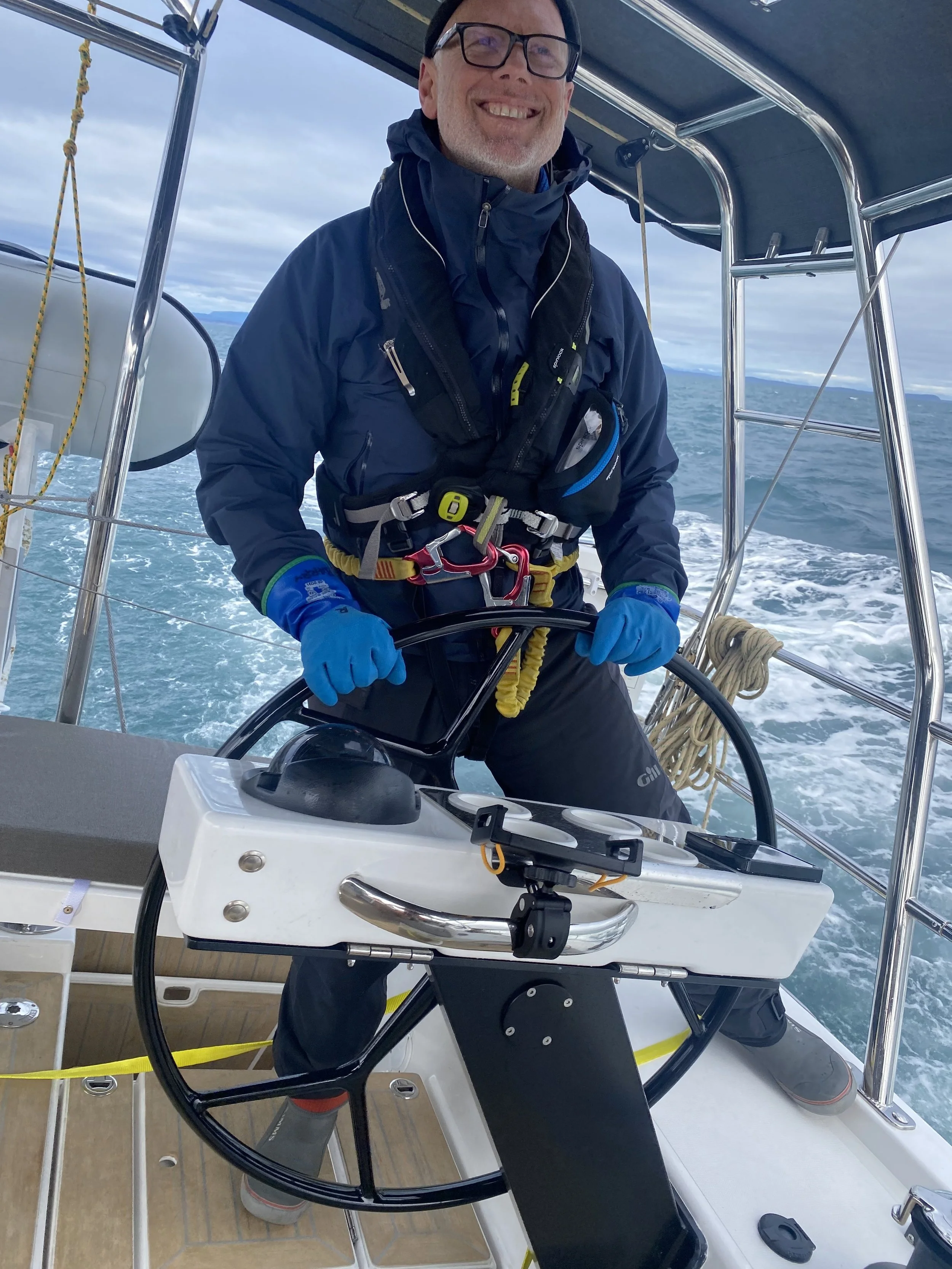
Kitted out!

Conditions and wind direction allowing for a nice dip of the toe into rough ocean weather.


Type 2 fun

Sailing in the flat water of San Juan Chanel under headsail alone.
After discussing the experience and the concepts of apparent wind and the development of bailout plans we looked at the forecast ahead. At this point, the wind was dying but the next wave of weather was going to be hitting the San Jauns as we would be returning, so we created a plan based on what we had learned about the boat’s sailing characteristics and the wind. Our trip back was mostly uneventful and the only challenge was maneuvering around the commercial traffic in the Victoria area. Instead of returning the way we came through Cattle Pass, we chose a more conservative route over the top of San Juan Island. After enjoying some fun sailing in the flat protected waters of the islands we anchored in Parks Bay for a three-hour nap followed by another take on the now-famous omelet. We did some talk about emergency procedures and discussed the boat’s return to “A” town they dropped me off in Friday Harbor at 3 pm. Some lessons can be learned through reading and study but some lessons require getting your feet wet. Hopefully, when tackling dreams as big as this we can do the due diligence necessary to be prepared for the new scary world of big water sailing and hopefully, we can take the time to organize shakedown sails like this one where we can practice before we put ourselves and boats into situations that we can not retreat from. This was a hugely valuable experience because we learned about what the boat likes and doesn’t like, what modifications need to be made before the big trip south, and most importantly where everyone’s comfort and resilience levels are. Getting seasick sucks and I would say that in weather like we were in not taking medication is not an option. There are no passengers on a boat like this. Everyone aboard represents a liability to one degree and they need to work to counter to whatever degree they are a liability with their different respective abilities to help. Coastal cruising and blue water cruising can all be done without sailing in “bad weather” but extreme patience that we moderns are not practiced in is necessary to avoid putting the boat and crew into the rough stuff. Unfortunately, the harsh realities of work schedules and life tempt us into these inclement weather situations and we have to be prepared to deal with them.
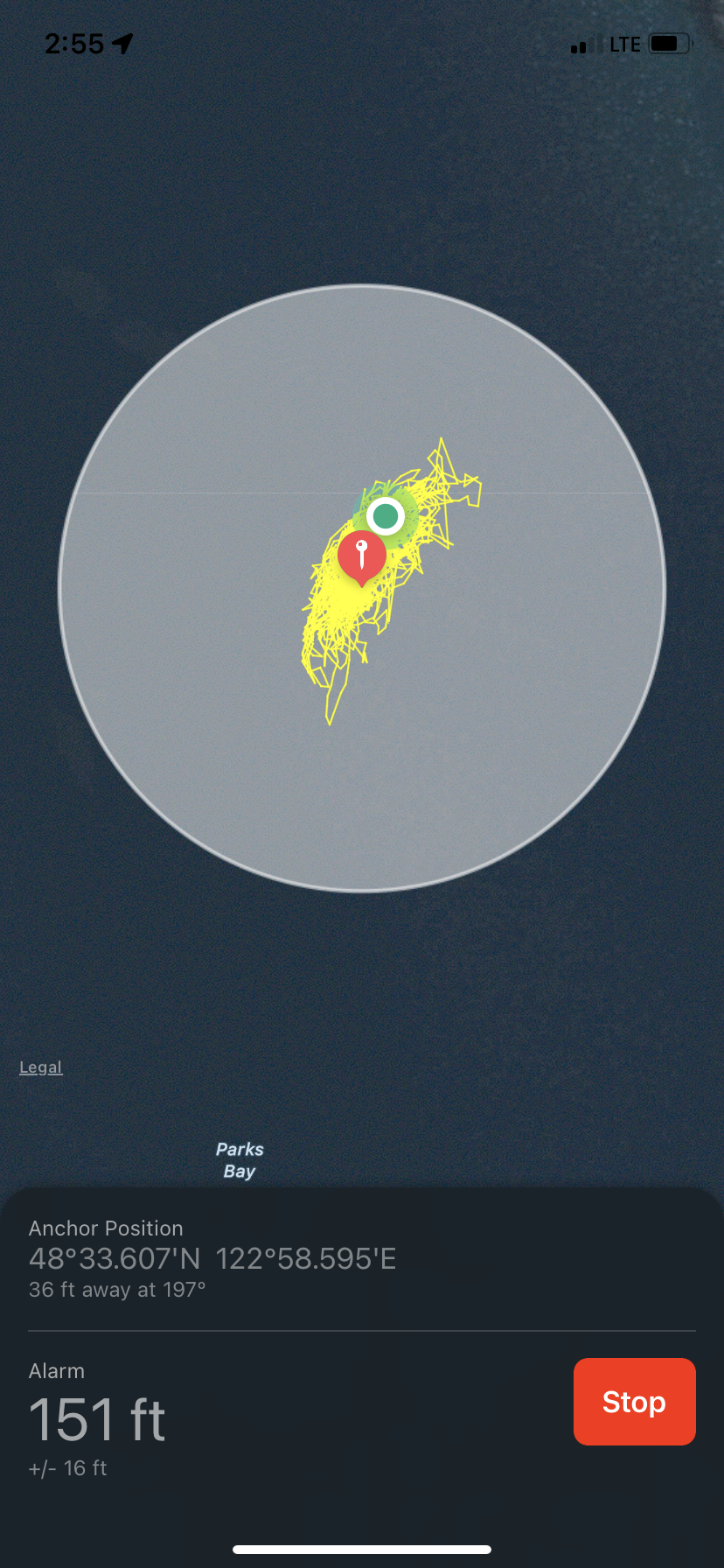
Anchor alarms apps are one of the coolest new tools we have at our disposal.
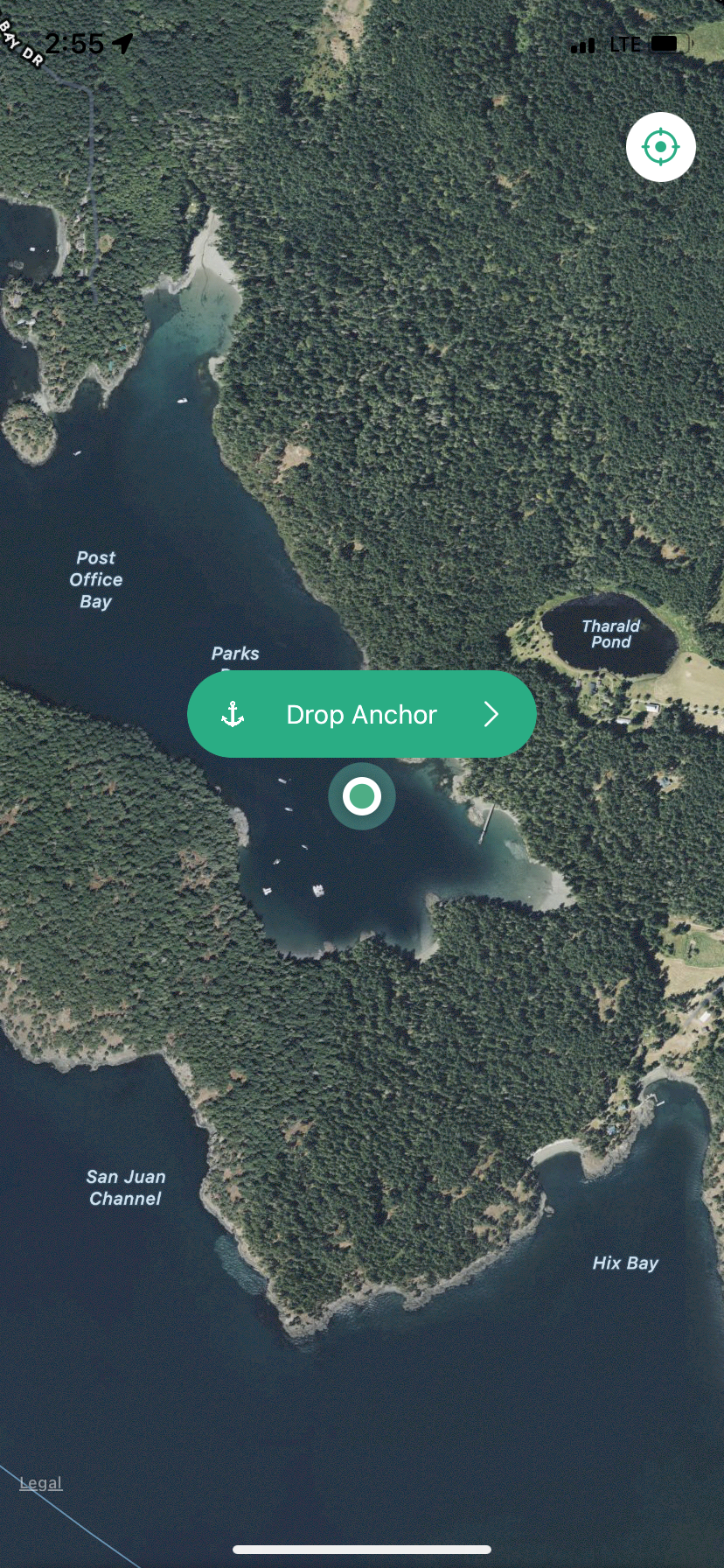
“After enjoying some fun sailing in the flat protected waters of the islands we anchored in Parks Bay for a three-hour nap followed by another take on the now-famous omelet.”
Takeaways
Boat design - flat bottom light boats are great downwind but upwind in waves need to be slowed down and cracked off the wind due to hull slamming.
Gear - Hard to be too warm in these conditions. reports of some crew getting cold showed a need for either a backup dry set of gear or more layering. This would have been worse without a dodger and awning.
Sea sickness meds are a must in your kit and on the boat.
Boat Prep - A boarding ladder is essential for these high freeboard boats.
I would have liked to see another set of reef points in this light a boat’s sail plan. This is a light displacement mainsail-driven boat with swept spreaders. It’s all about controlling that power and keeping the boat balanced.


Winter deliveries can be a wonderful challenge and on the right boat and with the right crew the variable wind directions and weather windows can make for wonderful passages. I saw an Easterly in the forecast and scrambled to get a crew capable of moving this solid sailing craft from Portland to Orcas Island. As it turned out two former Advance Coastal Cruising alumni of GBA classes from years ago would be able to join as well as a new sailing friend from a neighboring island. A crew of four is a fine number for a delivery like this and even in a worst-case scenario (failing autopilot. rough weather etc). The only concern was that these hearty sailors who signed up for a suffer fest were in for a beam reach in a fully enclosed heated cockpit on a boat with as much luxury as you can fit into a 37 foot sailboat.

Things always come up though. The first thing to challenge the mission was that the LPG tank was expired and the filling station wouldn’t fill it. The tank was a rare and an odd size so buying a replacement would be impossible. We headed to West Marine to see if we could buy an adapter hose that would allow us to buy a cheap refillable steel tank that we could mount outside the tiny propane locker but no luck. The next idea and best idea was to buy a few green BBQ-style cans of LPG and an adapter that would allow us to run the stove off them. West Marine didn’t have them but “Sextants” a small chandlery and the last remaining place to buy used boat gear in PDX did have the adapter and was open for 30 more minutes. Crisis averted.

River navigation should be taken seriously
The day after the crew are aboard, my liferaft was lashed to the deck, provisions were stowed, and we were on our way down the Mighty Columbia toward the Graveyard of the Pacific. A quote from Commander Wilkes, US Navy (ca. 1860) describes this bar on a bad day: “Mere description can give but little idea of the terrors of the bar of the Columbia; all who have seen it have spoken of the wilderness of the ocean and the incessant roar of the waters, representing it as one of the most fearsome sites that can possibly meet the eye of a sailor.”
“The Columbia River Bar has swallowed more ships, about 2,100 at last count, than any other location on the Pacific north of Mexico.”
Sounds awesome right? Well it’s not that bad if you cross it at the right time.
The other thing I noticed before leaving was that the threads holding the headsail’s UV cover on the sail were barely holding together. When I notified the owner he said he had taken the sails into the North Sails Loft in Portland to have them inspected and had been told they would be fine.
Once underway at 7 am we found the tachometer to work intermittently and when we turned on the radar it crashed the plotter. We arrived in Astoria at 18:30 and found that the plotter boots up to full brightness at the worst time destroying your night vision which is already badly effected by the 360 plastic enclosed.
The next day we fueled up and found the fuel gauge to not be accurate and the fuel levels to be off from what the owner had told us. At 845 we were out to sea and it was gusting 25 on the bar. By 11:00 the UV cover was coming off the staysail. We turned on the engine when the charge was low on the house bank but had to slow the boat down first because the big nonfolding prop stuck the transmission in reverse. We made Cape Flattery by 7 am with wind waves of 3 feet against a flood. Around noon the head stopped working and I decided to continue into the wind and current and head for PA to pump out and troubleshoot. Found that the wire nuts on the pump were loose and the cabin lights flickered when bumped. Hot wired the pump to test and the pump worked but there was no pressure. Found that contrary to the owner briefing the head was not discharging overboard. Assumed that the duck valves are prolapsed. With no tools aboard capable of doing this job. Sunday morning I rent Max a car in PA and he heads back to Portland.
Before we met I asked the crew to come up with one meal each cook for dinner one of the four days we would be out. This is a good way to do it because if you only have to cook once in four days you can go all out. This paired with the fact that the cook never does the dishes on my passages makes for quite a smooth cruise all things considered. The seas are seldom smooth though so everyone quickly learns that simple is best. You don’t want to lose your lunch making dinner. Past opportunities to pre slice veggies come easily to mind when one is chasing the onion slice as it is caught by the roll of a wave. I’ve often thought that a Mandoline (a hand-powered slicing kitchen tool) would be a great way to allow someone in the cockpit to slice a bunch of veggies into a bowl while keeping an eye on the horizon. The first lunch was Seattle dogs but in tortillas that I cooked under John’s supervision as it is a specialty of his. (Sausage, onions, sauerkraut and creamcheese. The next dinner was underway off the Washington coast and conducted by Max H who had done some preprep and the meal after this was a Chicken soup made almost from scratch by Barry who regretted somewhat not pre slicing some of the veggies as it was pretty bumpy at that time.
I would say that the best meal of all came from our retired fire captain John Palmer. When we were provisioning together we saw some Thai curry simmer sauce and ingredients that would make a rough weather meal easily. Frozen peas and carrots, minute rice, a yellow onion, and precooked grilled chicken in a bag. This meal came together in 15 minutes for a lunch in the San Juans on the final stretch to Deer Harbor and was amazing. This is a great idea for a seagoing meal. It’s very easy to make things more complicated than necessary and find yourself spending too long in the galley and getting sick. Once sick it is very hard to get well again and so not worth it. Anything that is canned or precooked or in a bag that can be added to something cooked from scratch easily is invaluable offshore. Our plan for the meals was to have hearty cold-weather food that would warm everyone up from the inside and provide the fuel to stay warm on a cold night watch.
Other than the boat’s lack of lee cloths and real sea births we fared very well. Being that we were on a perfect beam reach for the whole Washington Coast and got to sail quite a bit it made up for it.

Test thread life on UV covers using your thumbnail.

Didn’t make it. These are much harder to restitch once they have come off.

Max Heckscher GBA alumni turned indispensable shipmate offshore.

Once across the bar and into the beautiful stiff Easterly we were on a beam reach heading north quite happy in the boat’s full cockpit enclosure.
So glad to have Max Heckscher, John Palmer, and Barry Crist aboard. Great work gents.
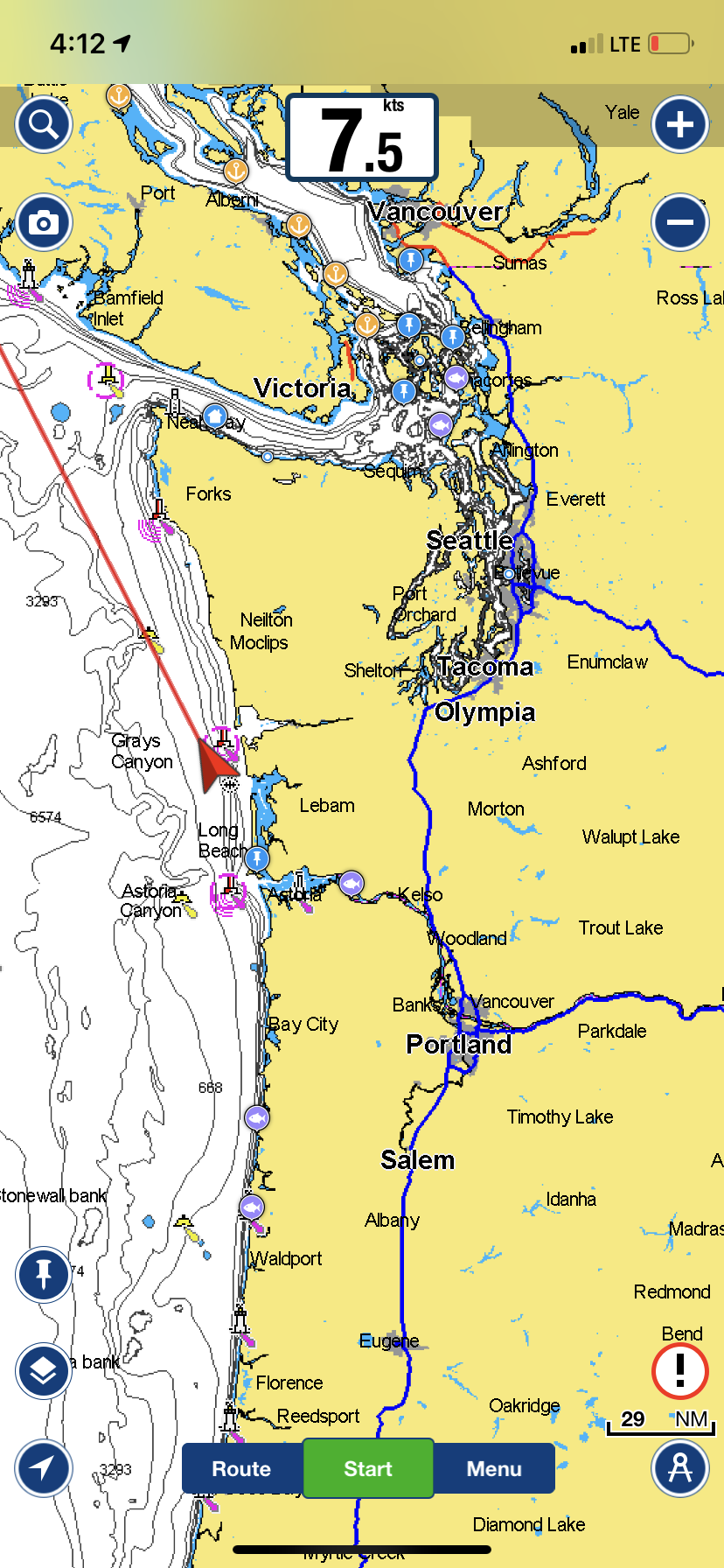
A three blade prop at this speed can not be taken out of gear in reverse

on the button

The boat was documented under the name “Mindful Wake”

Detroit powered spaceship. (busy fuel dock in the background)
When I was contacted by the new owner of this incredible 65-foot yacht I was excited that we had such a good weather window on the Washington Coast otherwise I would have been a little concerned. The more I move boats in big water the less concerned I am about the size of the boat and the more I’m concerned about the complexity of their systems. This boat was a good example of a complicated boat but I was comforted by the fact that Rick from the Salty Boys Boat Works was keen to come along. I’ve worked with Rick quite a bit this year having him and his business partner Jake help prepare boats before deliveries. I thought this would be a fun one and a chance to share a trouble-free delivery as Rick had previously experienced a very dramatic delivery with another captain his first time on the coast years that ended in a Coast Guard rescue.
After he said he would join he mentioned the only conflict was his dad was visiting and if he could come. I said yes and just like that, we had a crew and a great weather window. Now, this boat was quite different from the last powerboat I took south around the corner. The last boat had been a Nordhavn and a very seaworthy boat in contrast. This Pacific Mariner 65 was a very large and fast boat and not what I would call a very sea-worthy craft. The potted plants were fake but the crystalware was not. But there was a bath tub and bidet to make up for it.

If you have to ask how much…


Whats for lunch?
Our first challenge was fueling. During the summer in any busy port with a fuel dock, there is a line for the fuel. The boat was moored right across from the fuel dock but that wasn’t the same as being in line and if we wanted to be “in line” we were going to have to hover. So when the line got down to one last Bayliner filling up we cast off and turned around to orient the boat so as to best communicate our intention to any barging other boats. The bow thruster on the boat was hydraulic and needed the generator running or, I should say, one of the generators running to operate. It blowing about 20 knots so it was going to be a challenge holding this large and new to me vessel on station in what now felt like a small marina. I was glad at least that it wasn’t an electric thruster as those can overheat… The best steering station is on the flybridge and unfortunately, the alarm for the hydraulic temp is not at that helm.. the engines on a powerboat with two screws make a boat more maneuverable when they are further apart because they can twist the boat more easily that way and despite the fact that this boat had an 18-foot beam they did not twist the boat well and the thruster was key to its maneuverability. Im not sure why it took that Bayliner so long to fill but it did and we eventually got our chance to buy a lot of fuel. Now, putting over a thousand gallons of fuel into a boat is a job in itself. Many fuel pumps don’t have trigger locks to prevent spills so you have to hold the trigger for the entire time. We jockeyed the boat to allow the high-flow pumps to reach the two fuel fills and the pump nozzles had locks so eventually we were fueled up and on our way but later than we had hoped after provisioning and getting spare oil. I usually like to do a short run out the strait and top off to calculate the fuel burn because even if I know what the brochure or specs on the boat should burn dinghies on davits causing the stern to drag or dirty bottoms or props will affect the economy and range and with the remoteness of the coast its not something to mess with. All that said we were going to miss Port Angeles fuel Dock given our later departure and may as well run out to Neah Bay and wait for the morning to fuel up there.

We got to Neah Bay just as it was getting dark and at 20 knots SOG no less. Even in a place you know well like I do Neah Bay once it’s dark and there are a few boats you have a very poor sense of where you are in the anchorage. We set the hook and turned on the other generator, with a little guilt I will add. I’m not used to being THAT guy in the anchorage and I have more experience as the “blowboater” enjoying the quiet. What I didn’t know when I was just an innocent sailor is that some powerboats have so many systems that they require the generator to be on ALL the time.

I’m glad to say in retrospect other than throwing a little more wake that I should have later in the adventure the biggest mistake I made on the delivery was over-salting the steaks that night. Ill get over it one day. After dinner, I downloaded the weather and it looked like, what was supposed to be a little southerly in our future, was going to be a bit more substantial and if we waited for the fuel dock to open we would arrive at the Columbia River bar at max ebb (the worst time). I’m sure we would have been fine but my job is all about risk analysis..and a bit of docking…and cooking. And with the new info, it was looking like it would be better for us to head to Westport for fuel and not wait for the Neah Bay fuel dock to open. So at first light, we were off and down the coast of Washington heading to the home waters of Kurt Cobain. Not the best place to spend the night as there was still some crab gear out. We would have to make good time the next day to cross the Columbia bar and get all the way to Vancouver 100 river miles up from the infamous bar. The next day’s southerly wasn’t looking too bad and if we timed the beginning of the flood in Westport it would be the end of the flood on the Columbia fifty miles south… if we went fast.

Dress for the job you want

We did not go fast. I think we were down to 7 knots at one point but as I suspected the outflow north would lay the chop down north off the bar and we would be able to speed up. By the time we were at buoy 14 we were doing 20 knots again. Our fellow powerboats and wake makers were there too. Doing their best to catch the last of the salmon the season allowed and strewn on every heading across the channel no less, forcing us to thread the needle while throwing a wake that only teenagers on jets skis can really appreciate. Starting our way up the familiar and nostalgic waters for me with the leaves just starting to turn and the days starting to shorten I knew the river summer I had just missed.
The convergence of the Willamette and the Columbia can be a busy place for commercial traffic. Tugs pushing four barges at a time and tankers anchored and underway all make transiting this area at night unadvisable even for one familiar with the area. A little further and we were in my old haunting grounds and an area of major silting and depth changes. One has to be sure to have updated charts here and even then deep drafted boats need to use extra caution. As we approached the boat’s new home on the Vancouver side I was glad that there was a little light left. It would be a tight one with an opposing current and wind. Some kind residents of the marina came to grab lines and our three-way call on headphones helped coordinate our efforts and we landed the big boat on the second stab.

3 nuts
Alls well that ends well.
Time to pop in a DVD and order a pizza


GRIFFINBAYMARINE@GMAIL.COM 503-995-3943