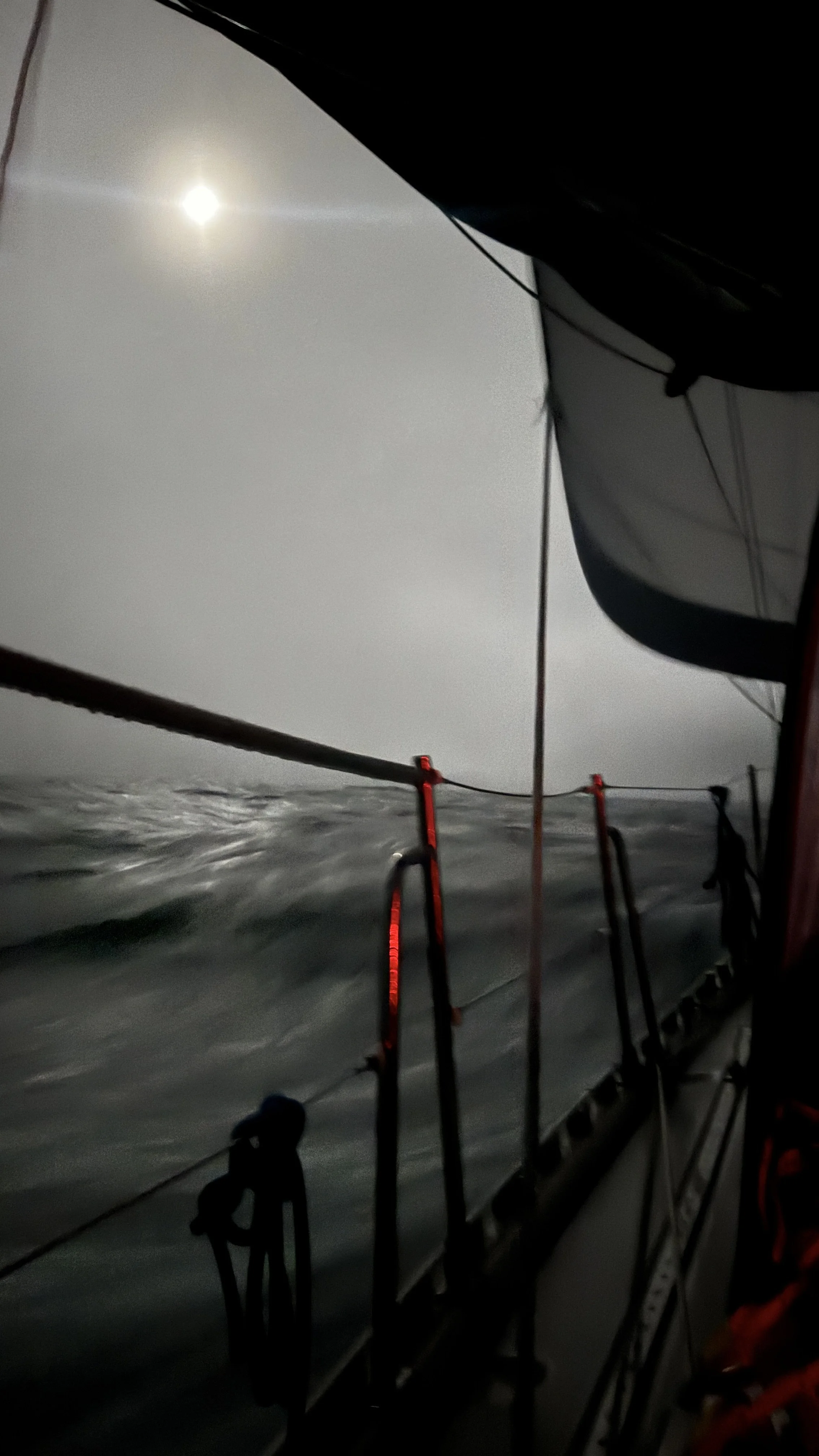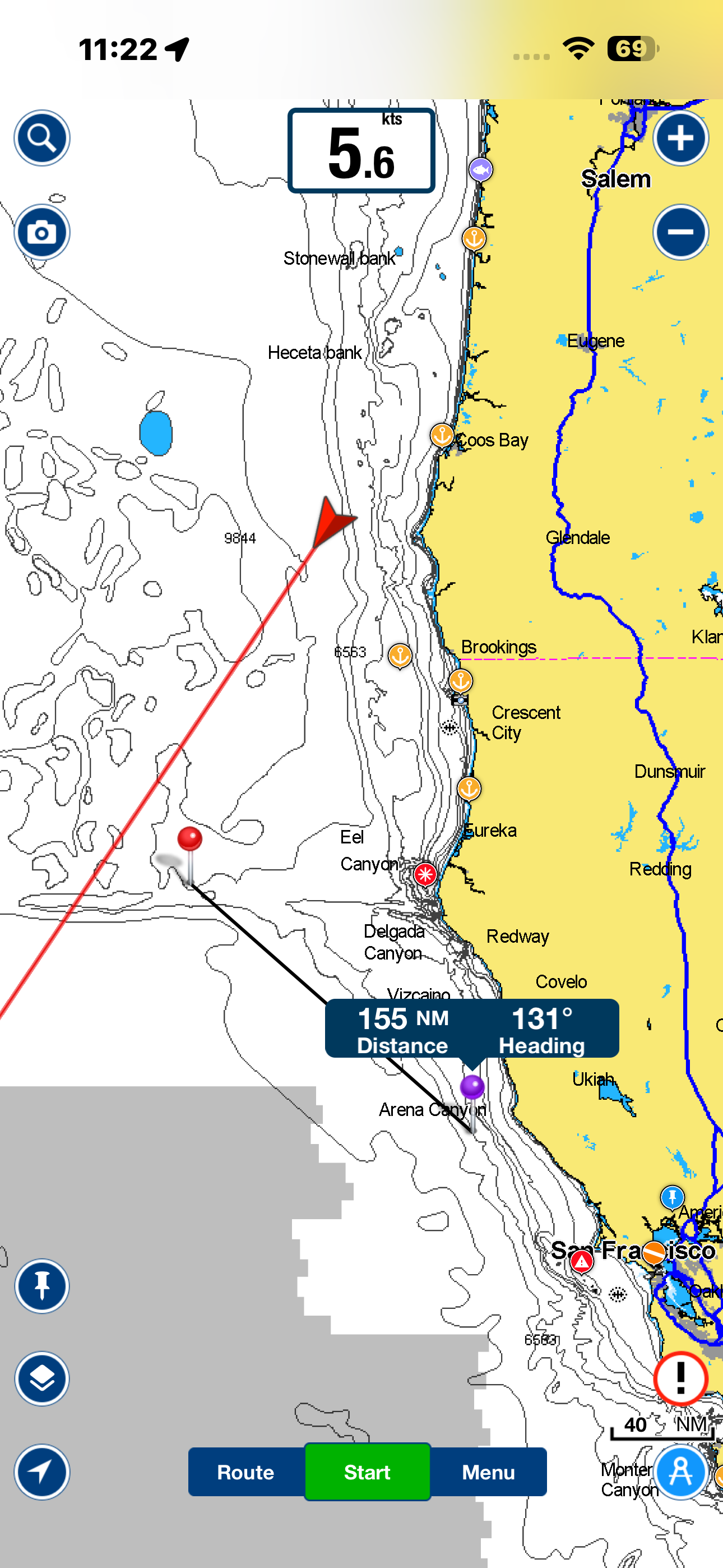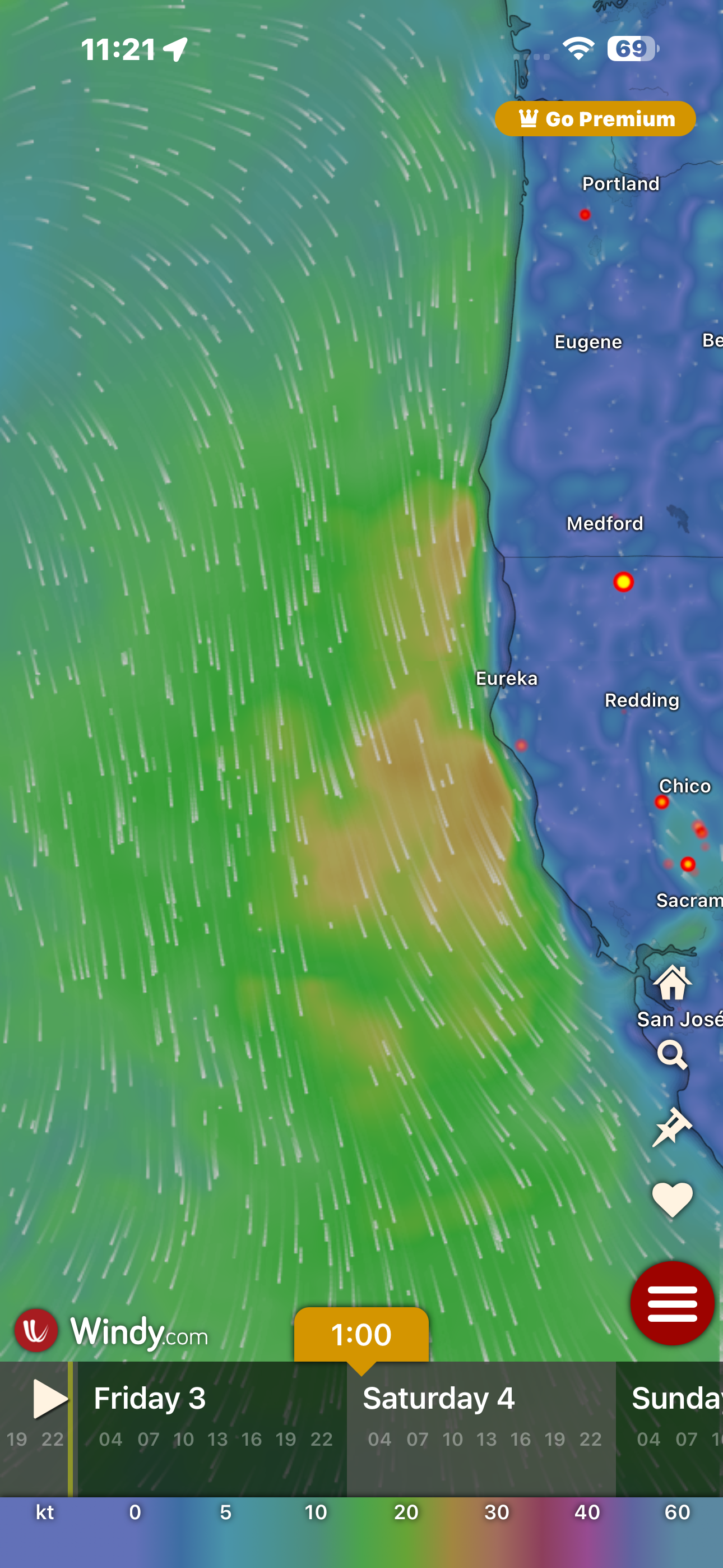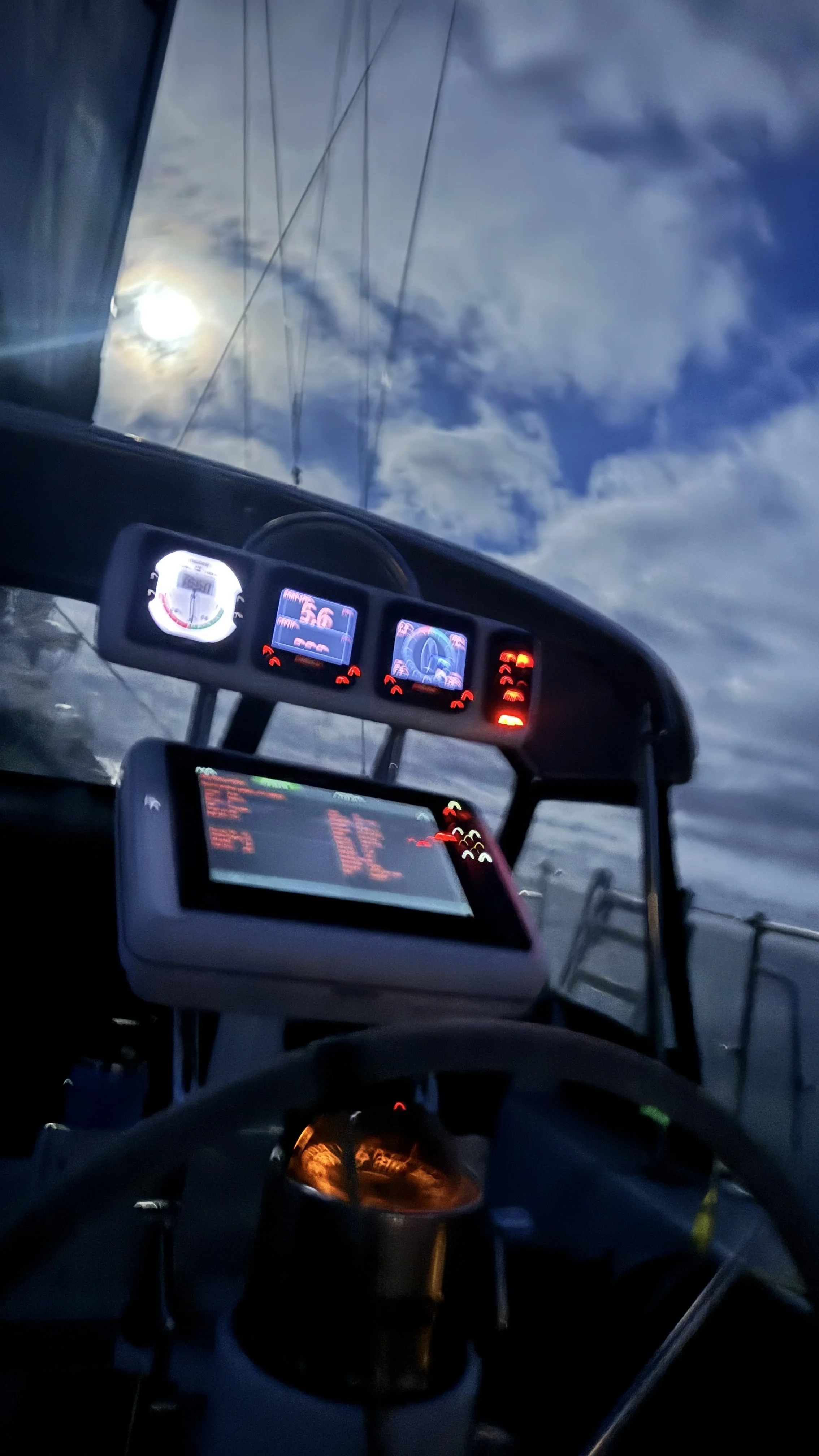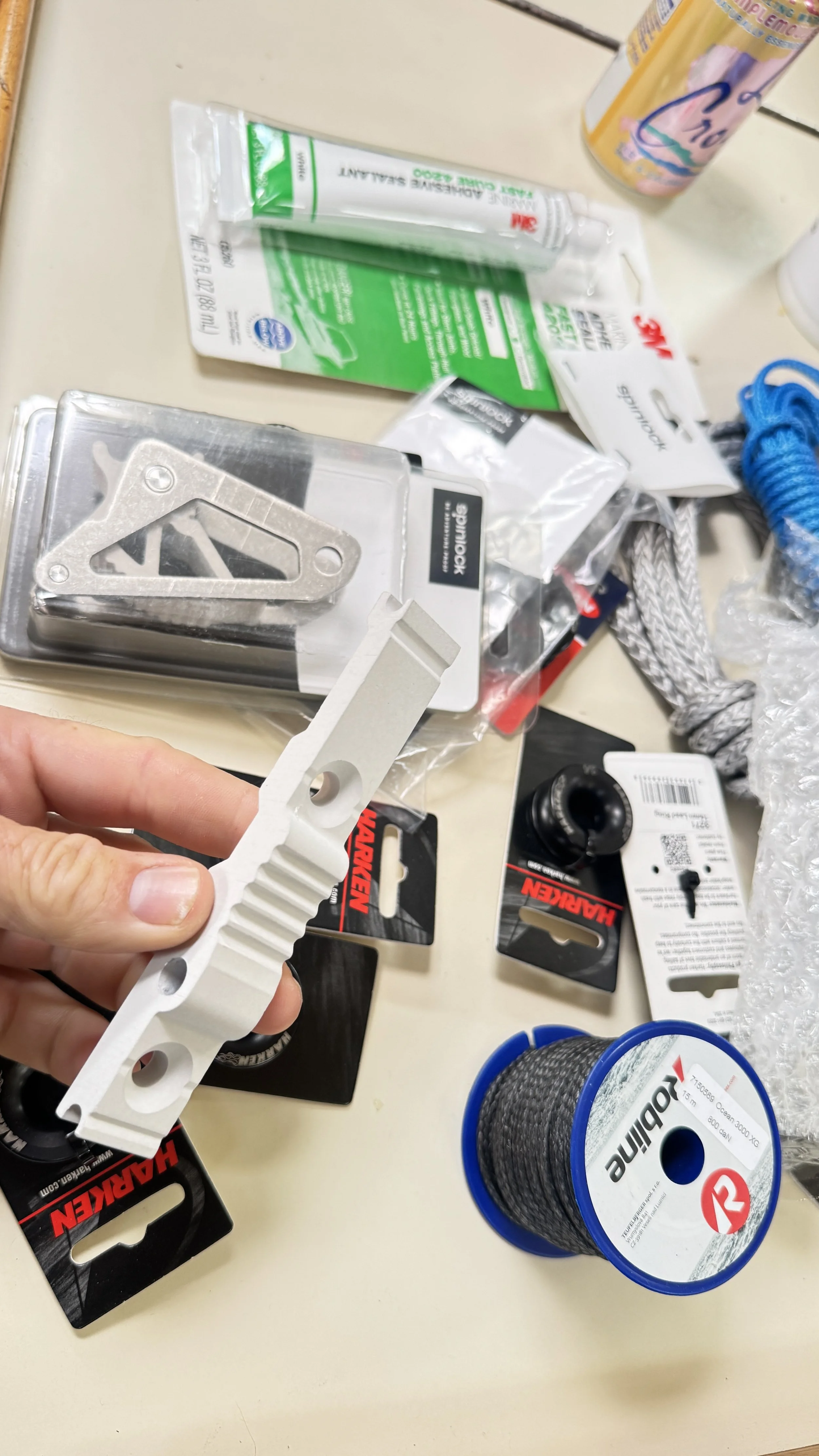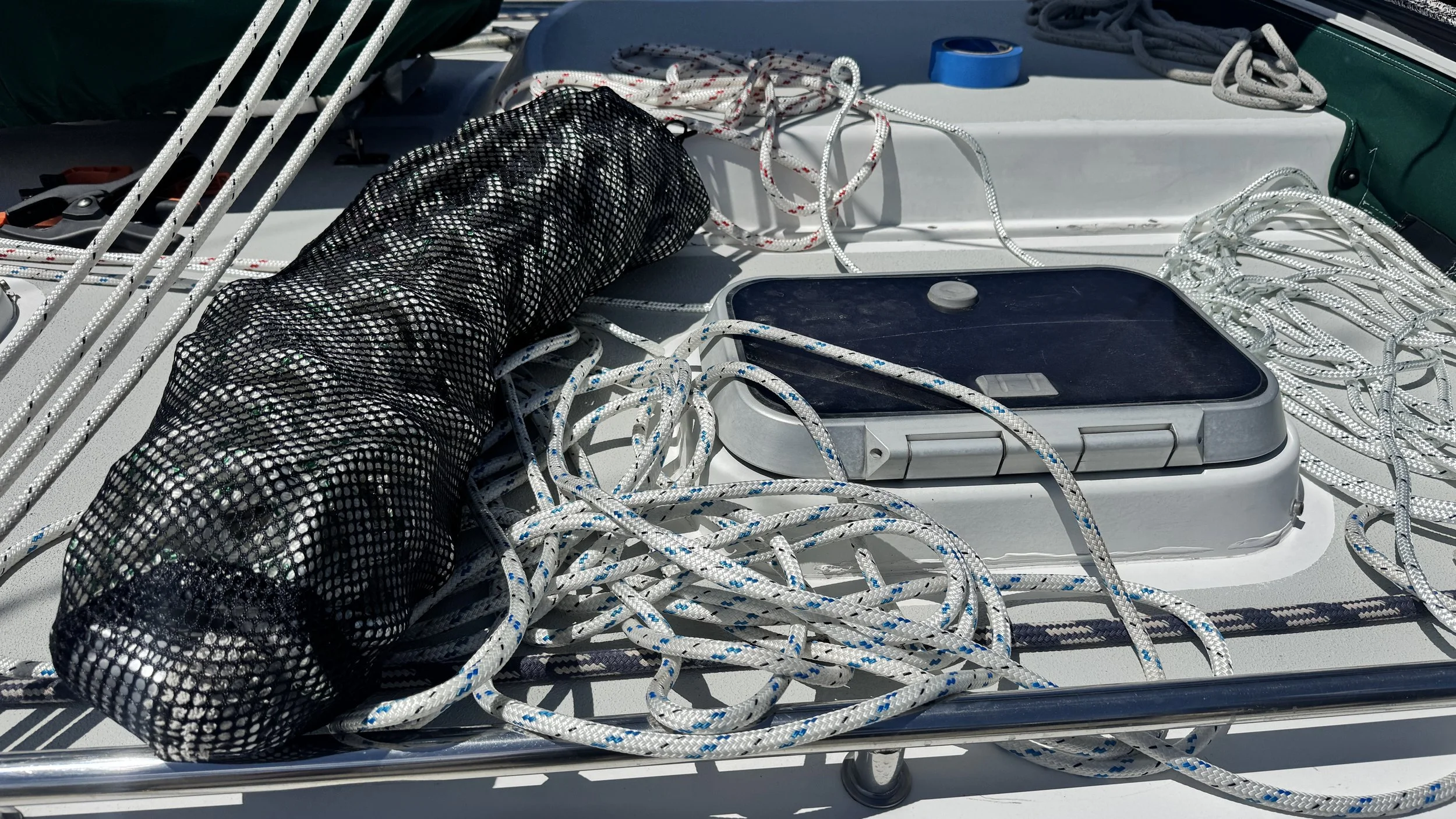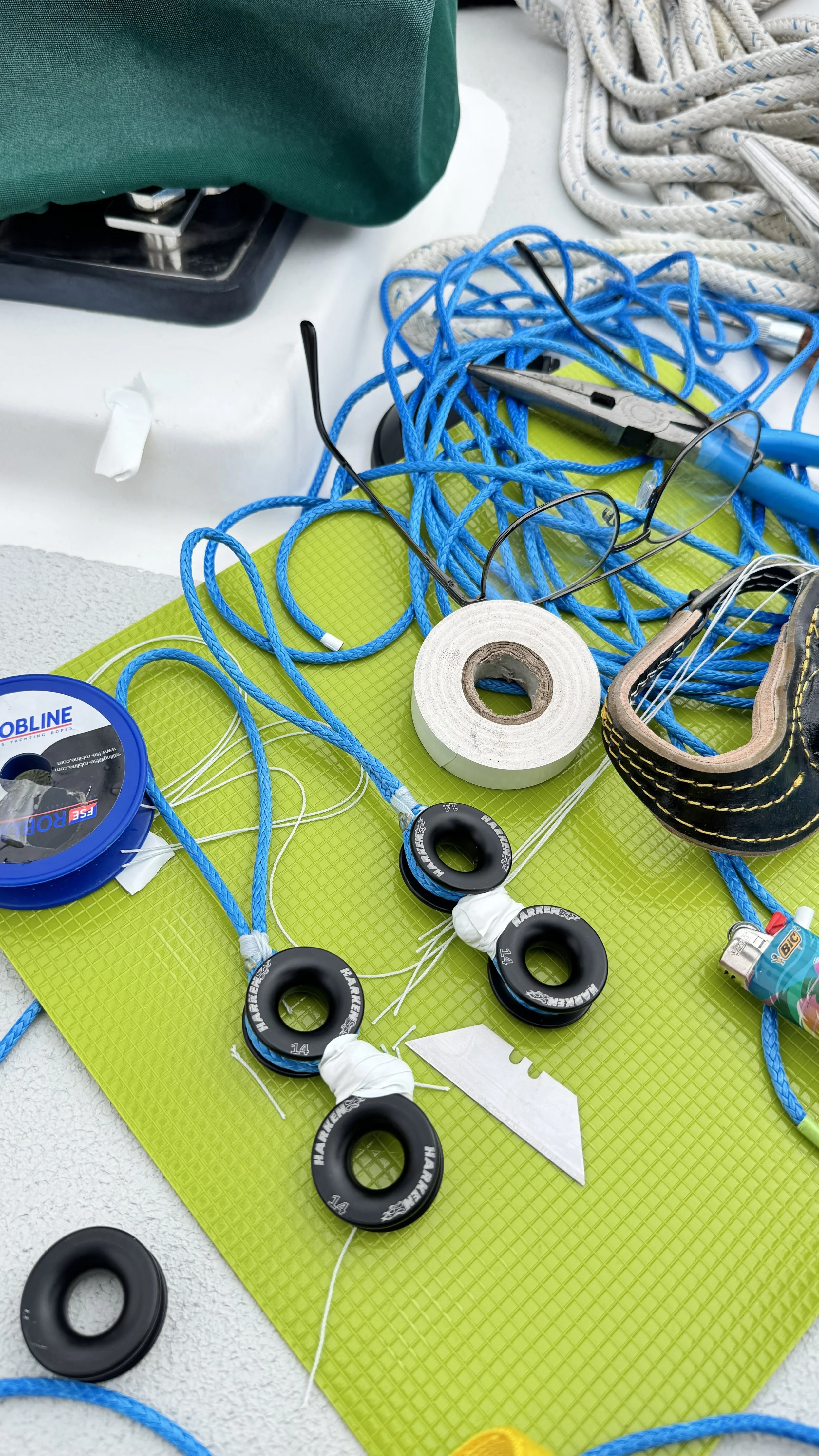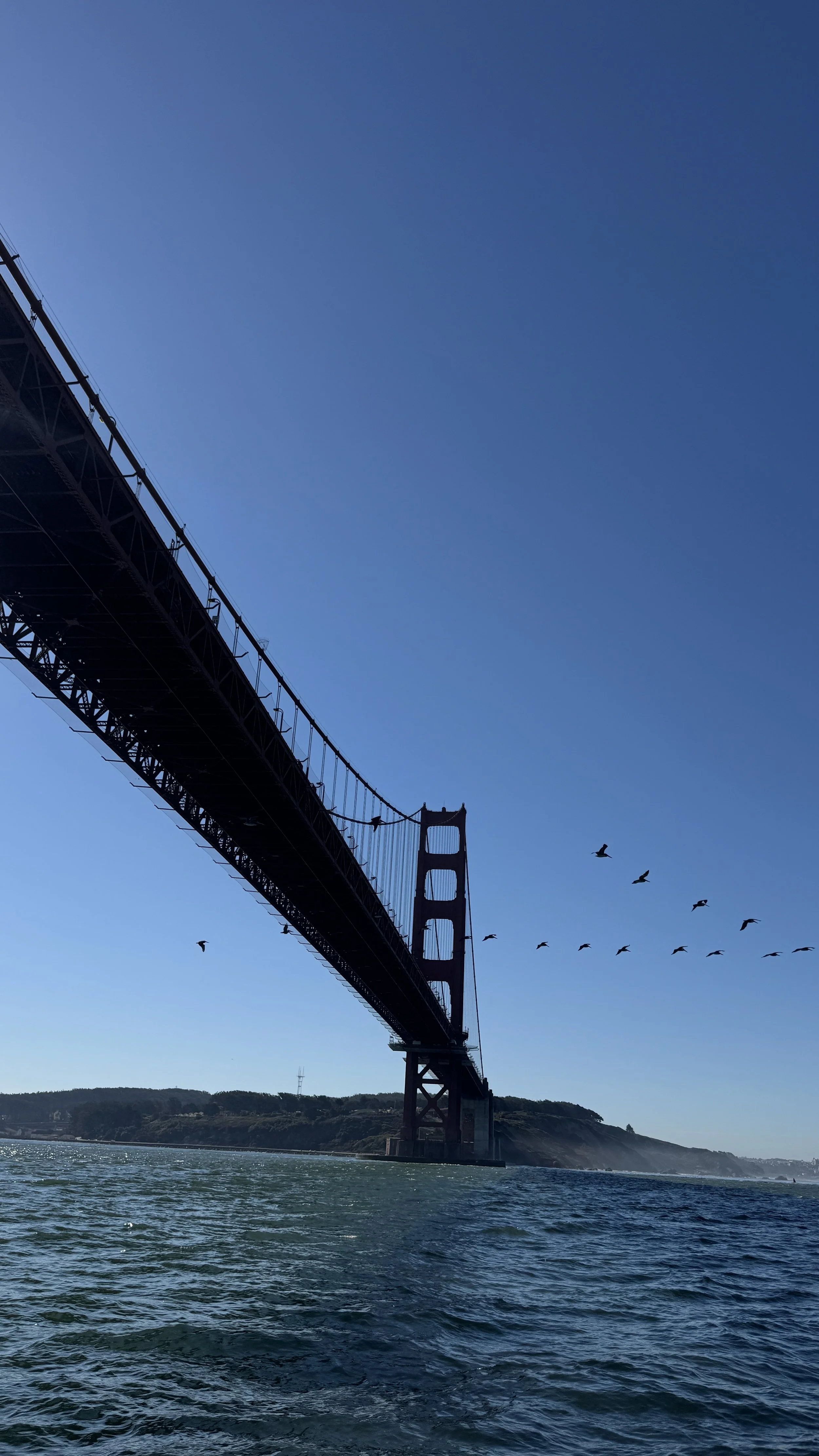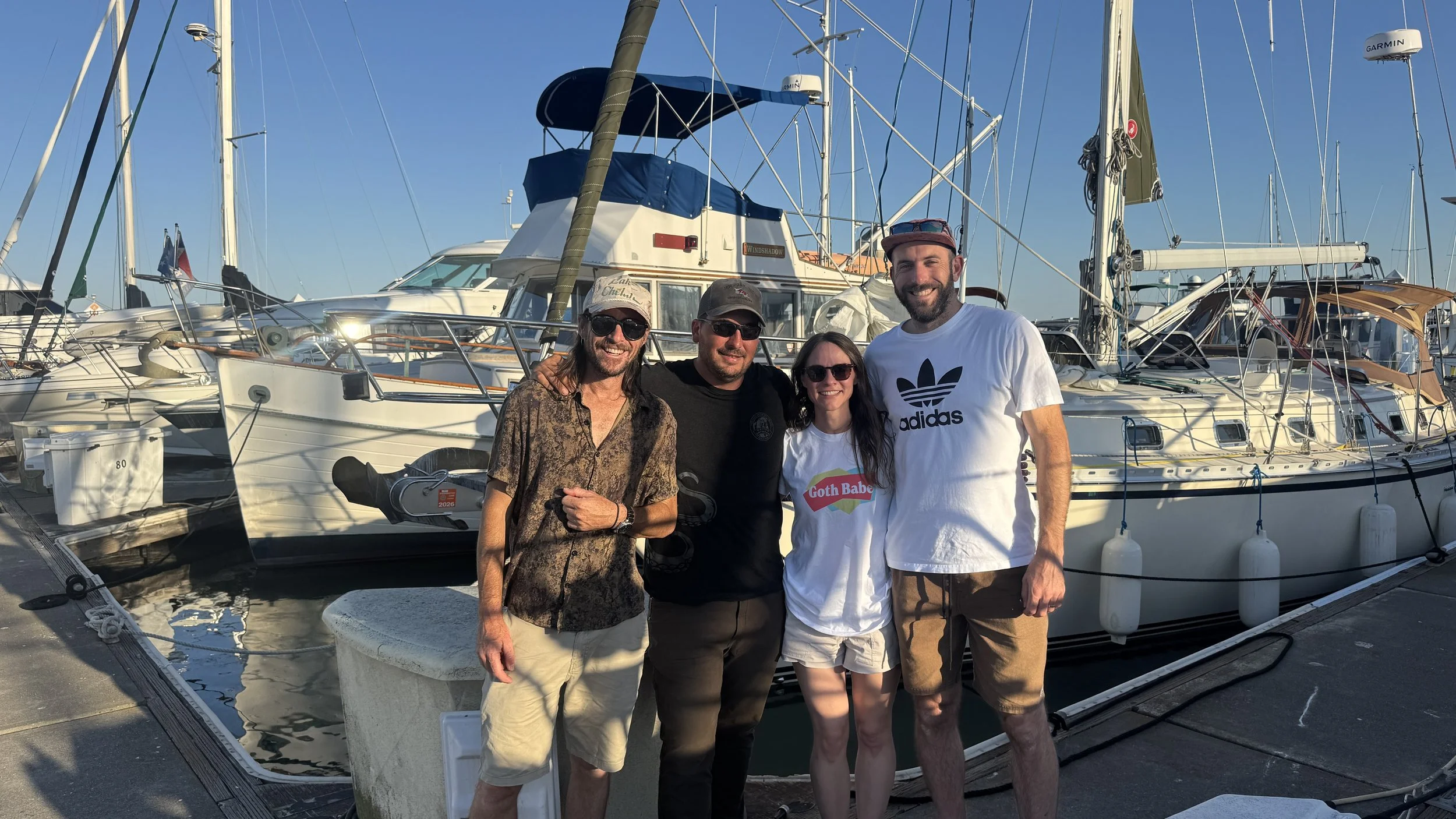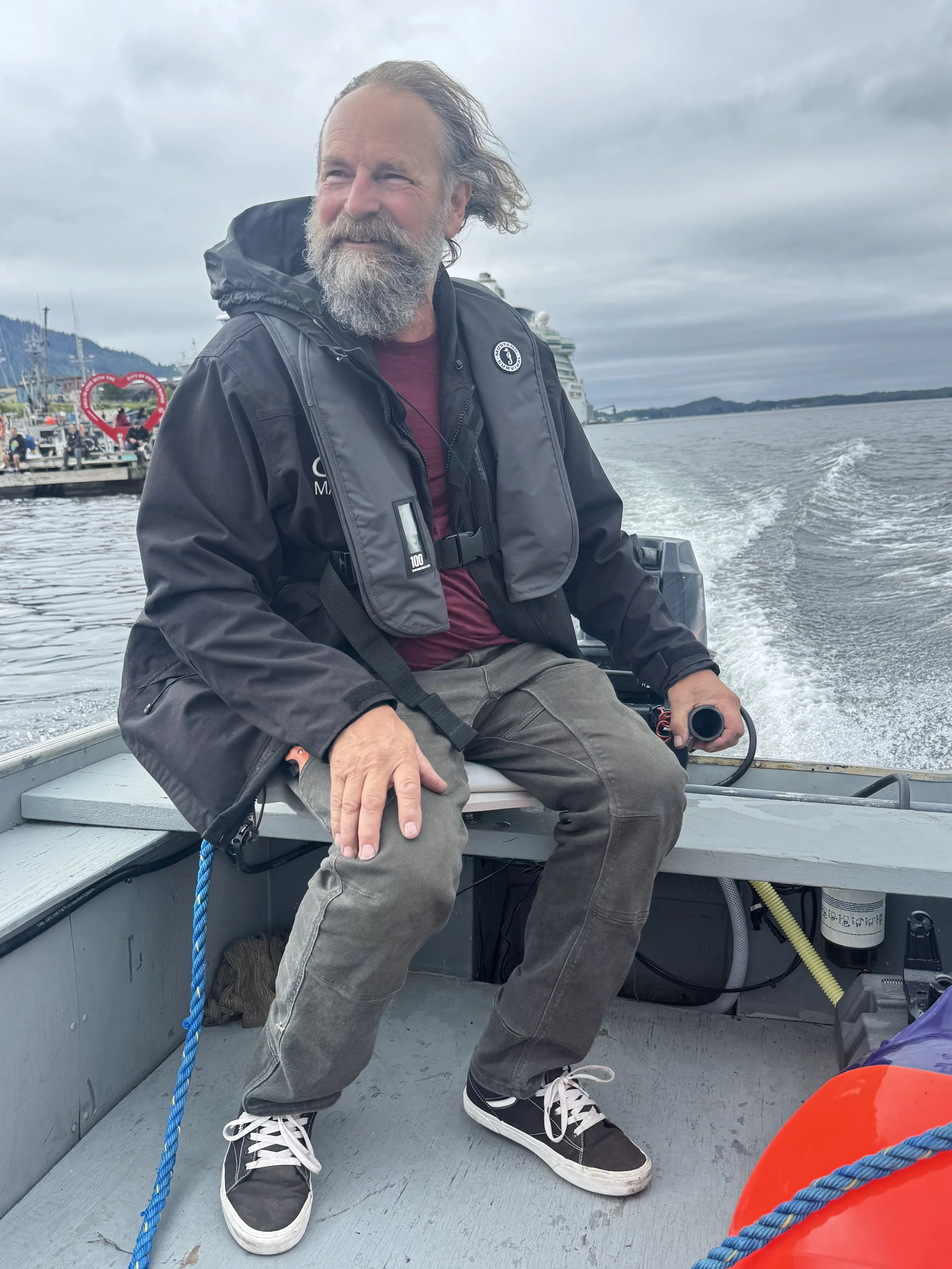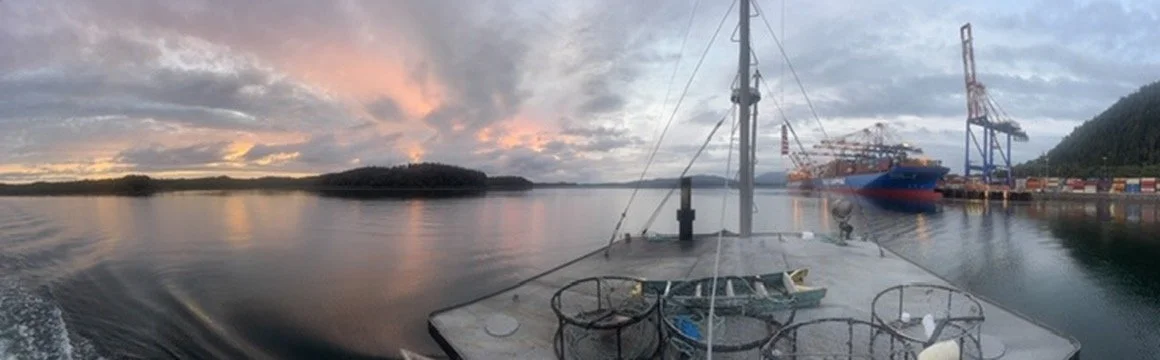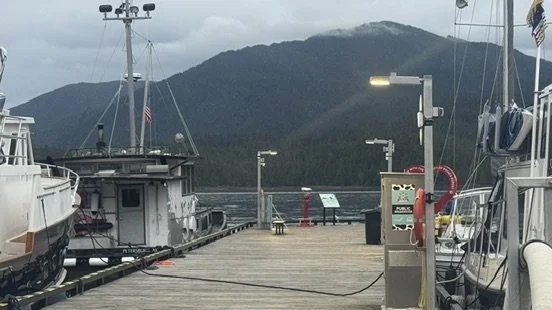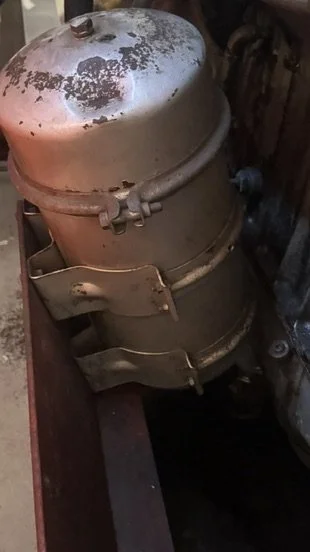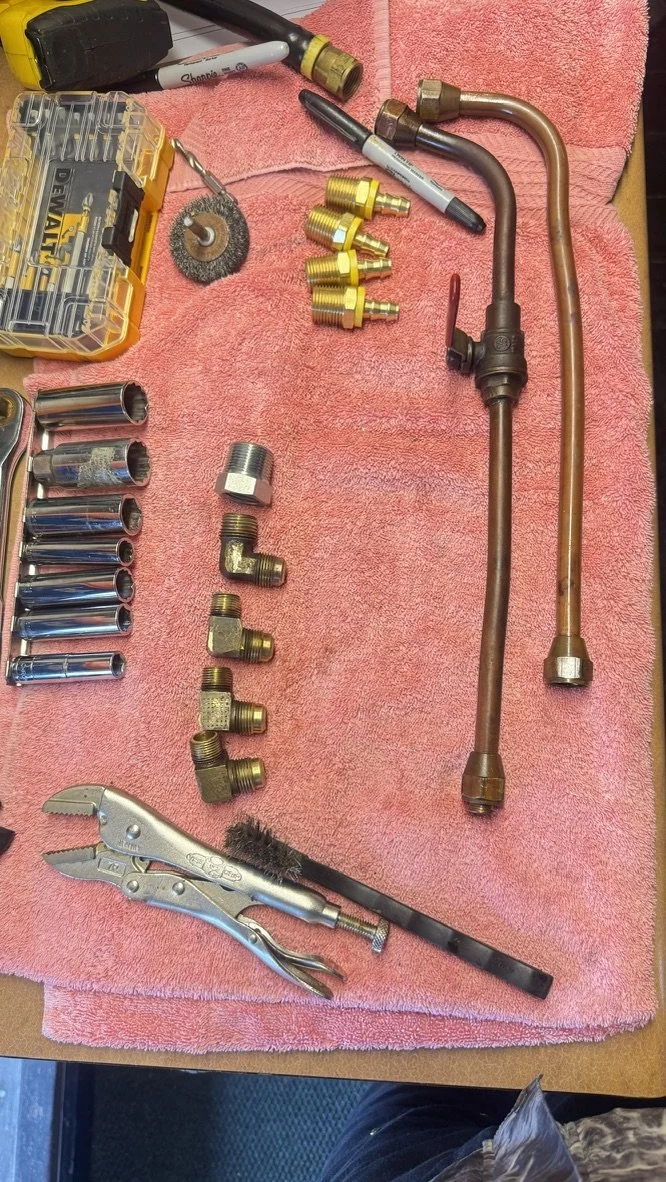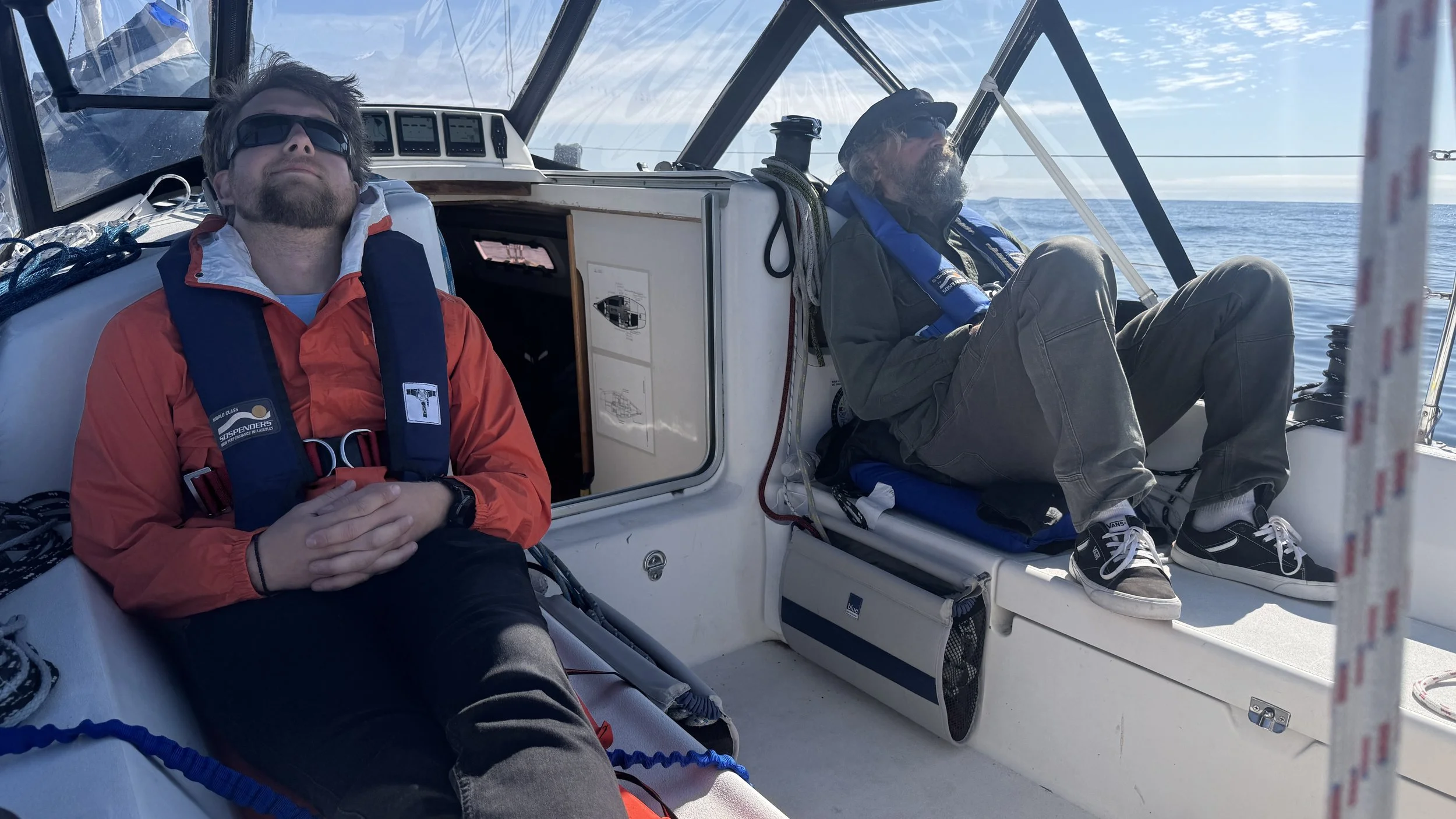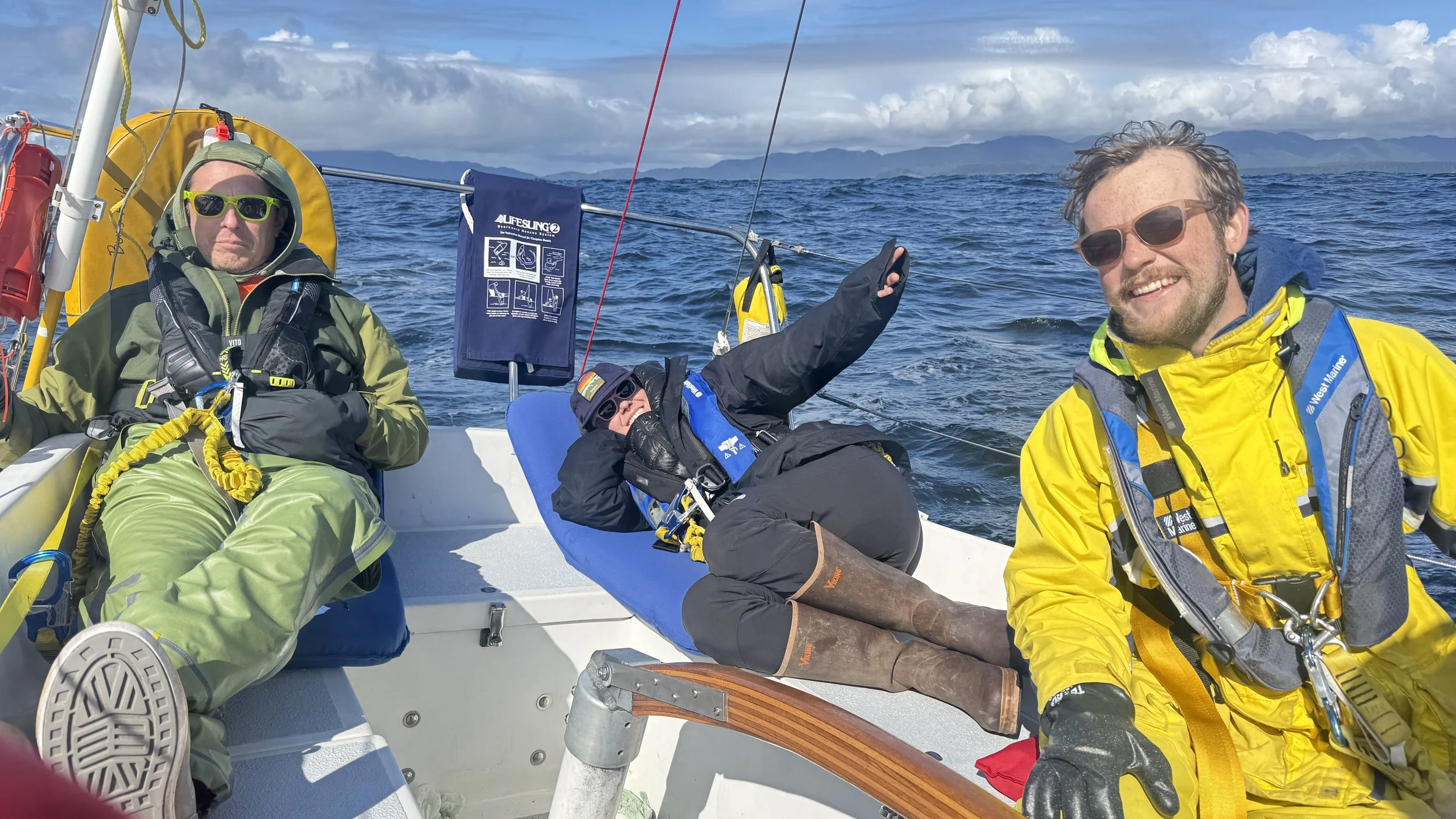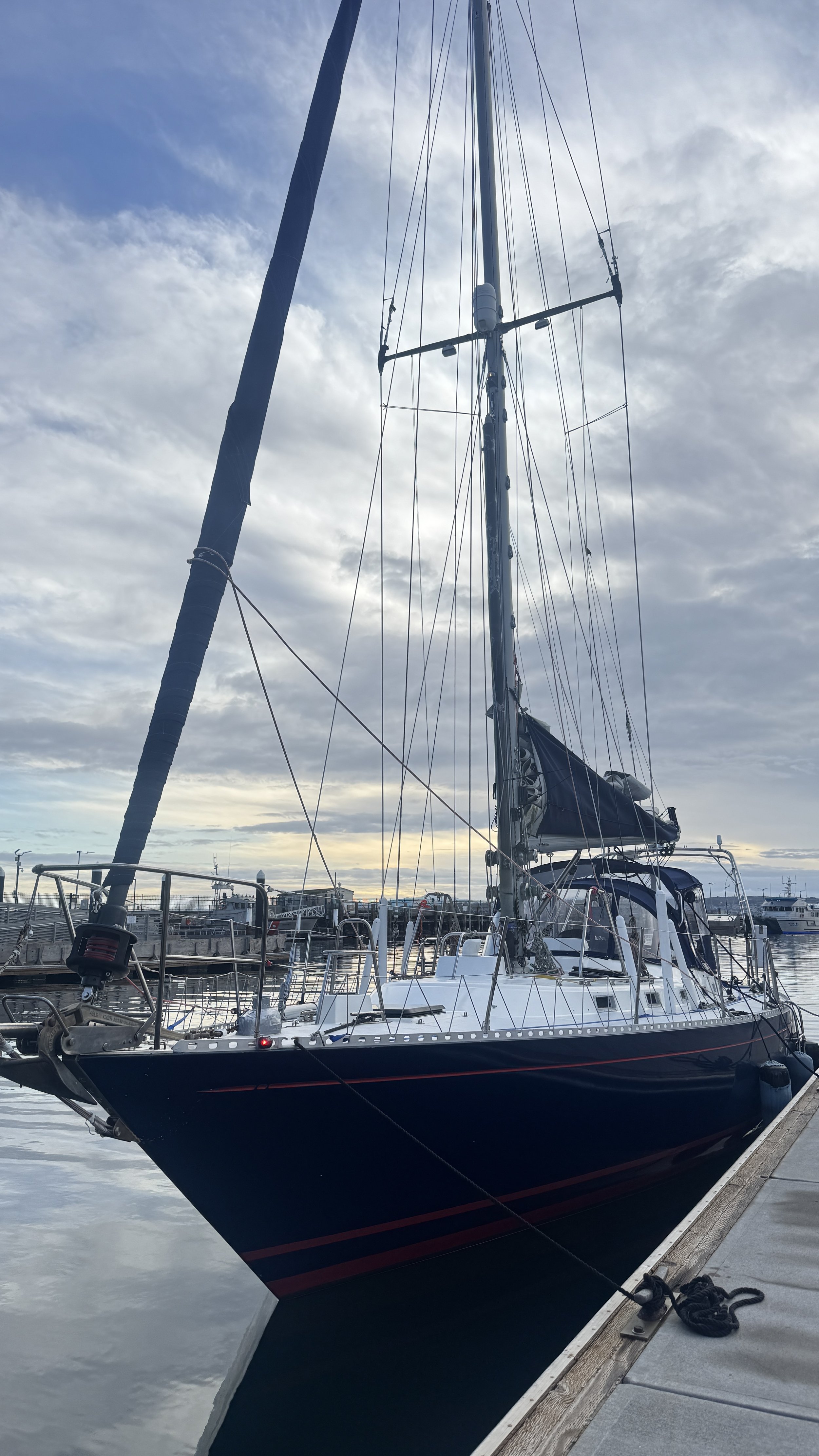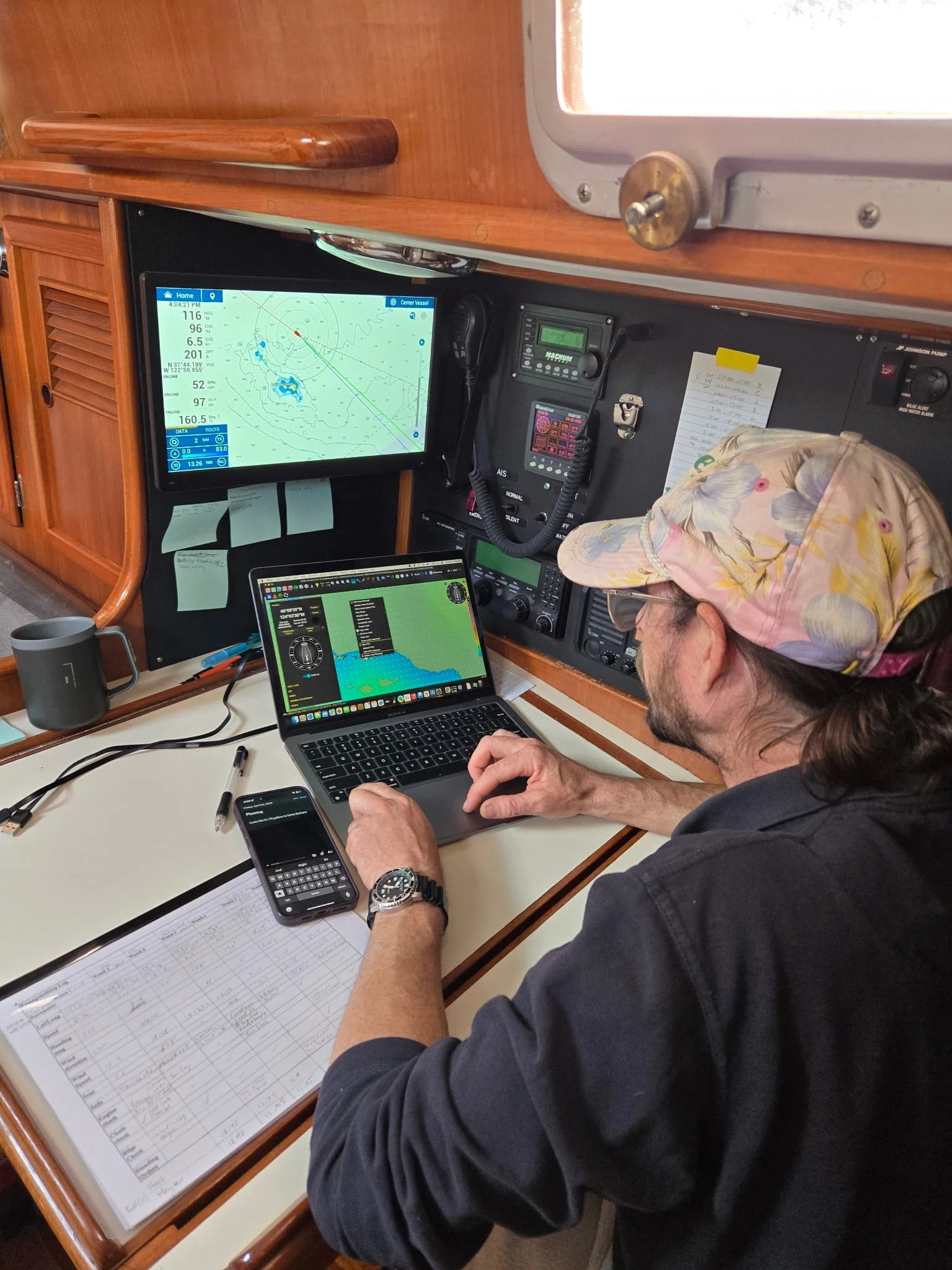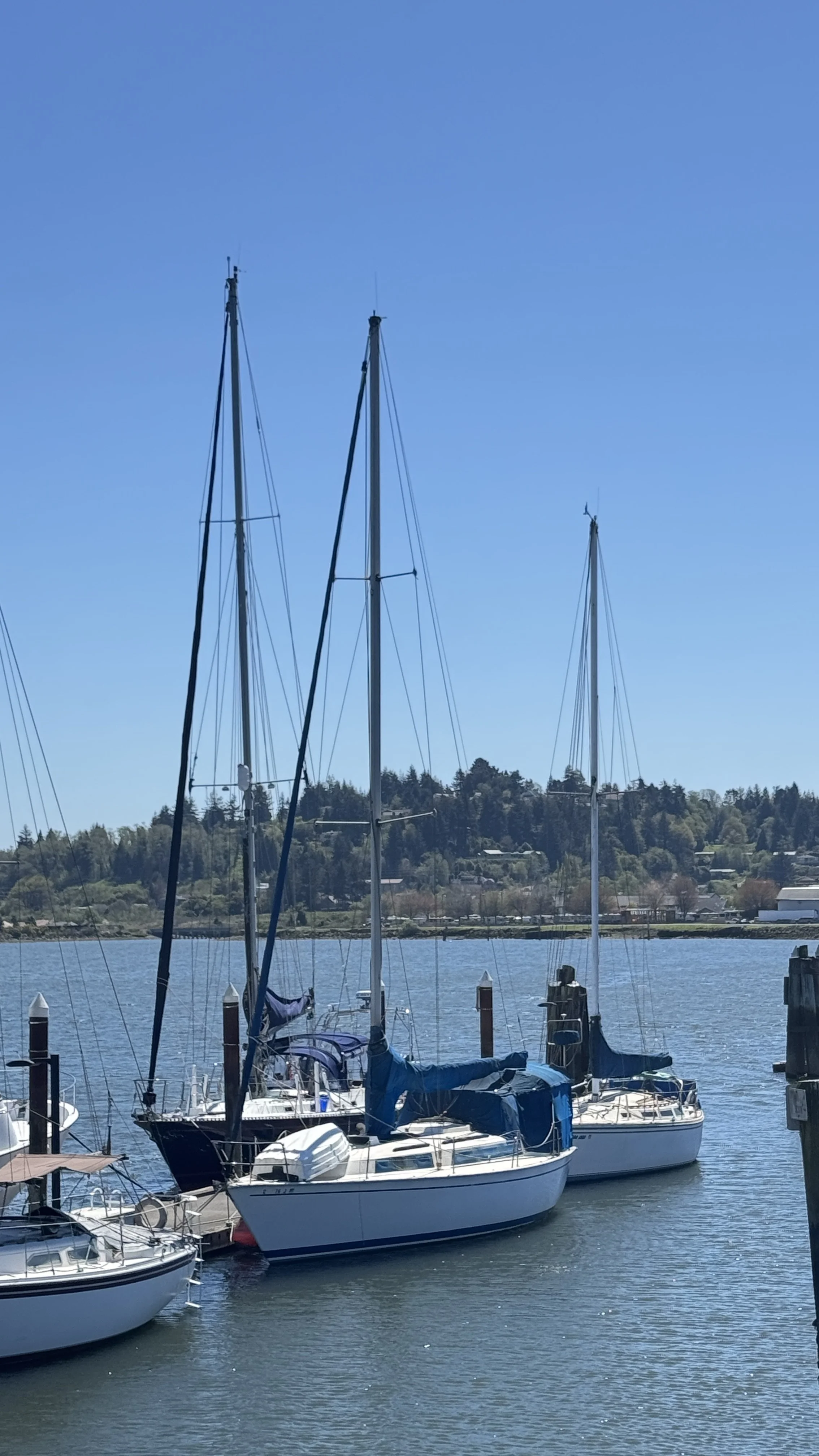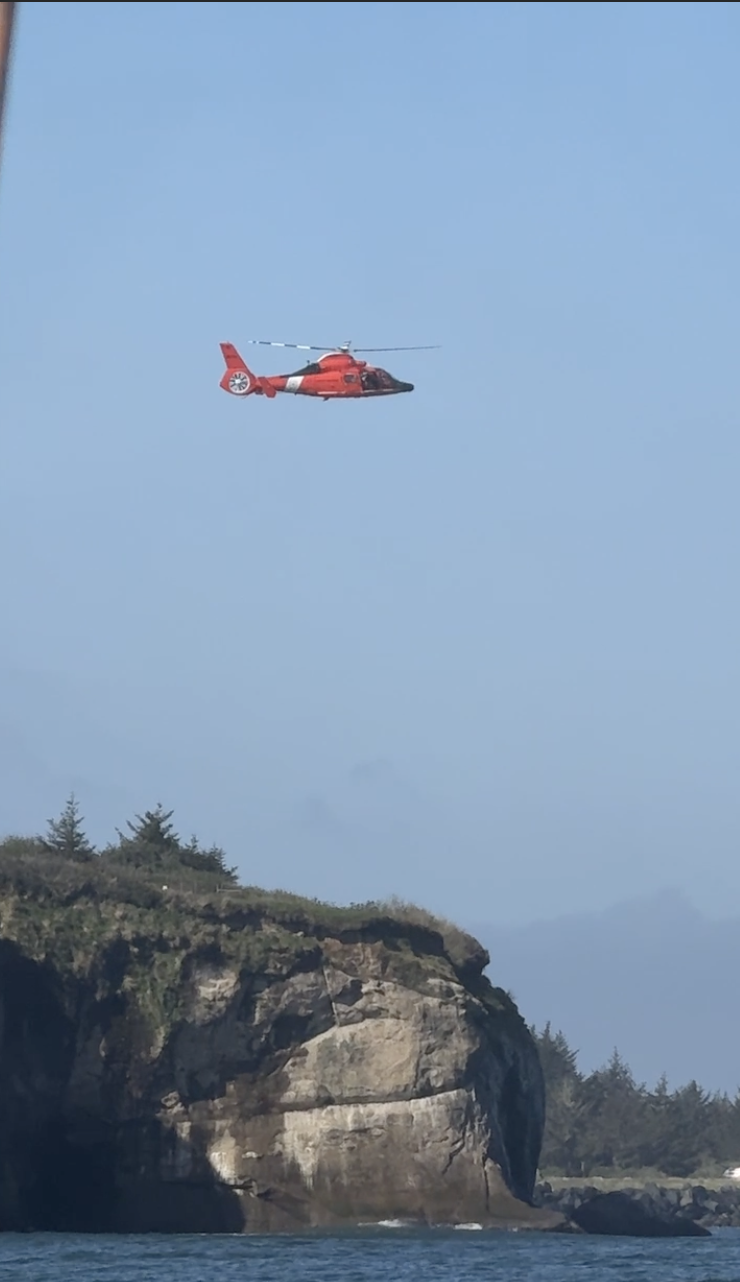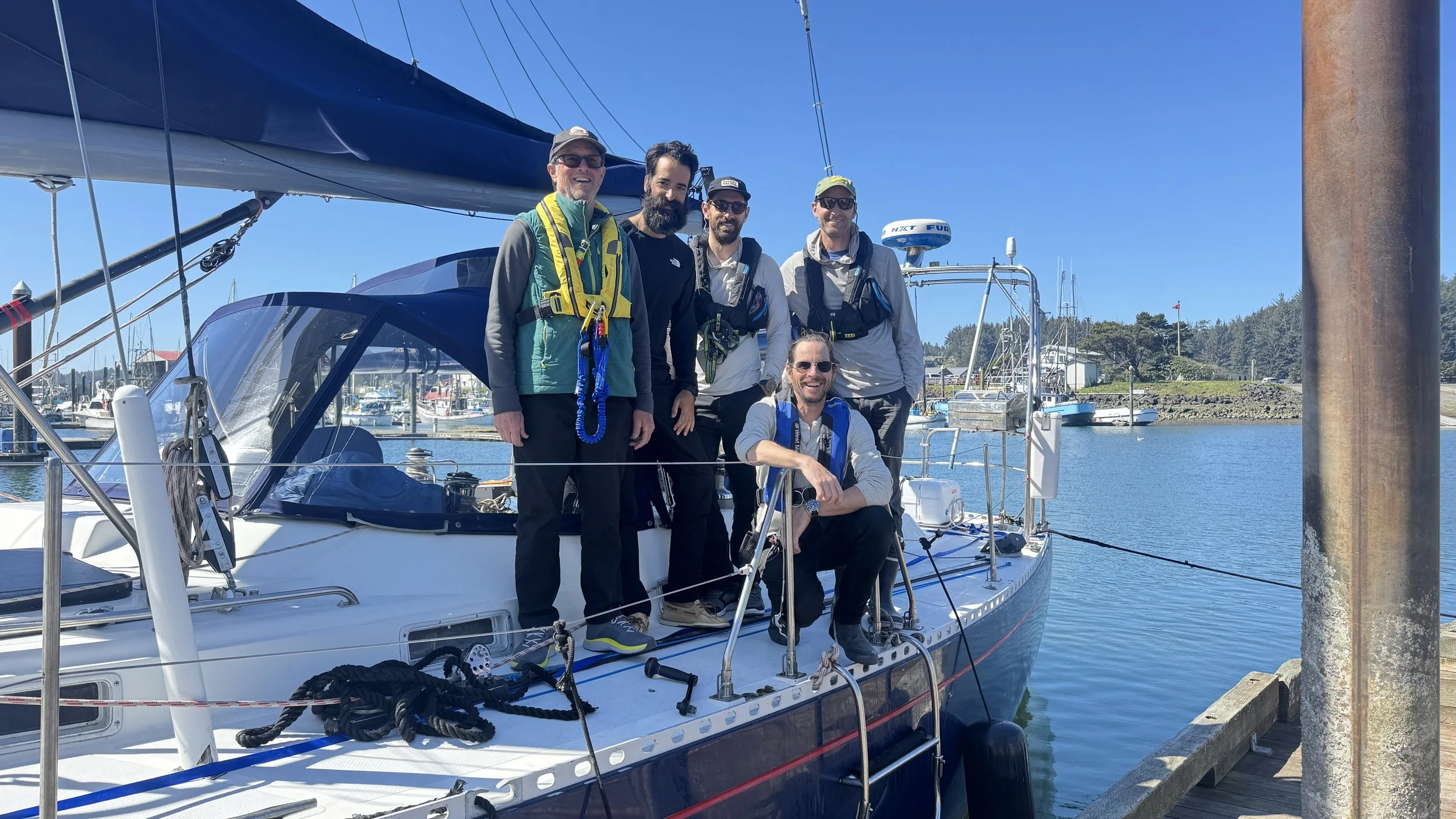
Day four underway

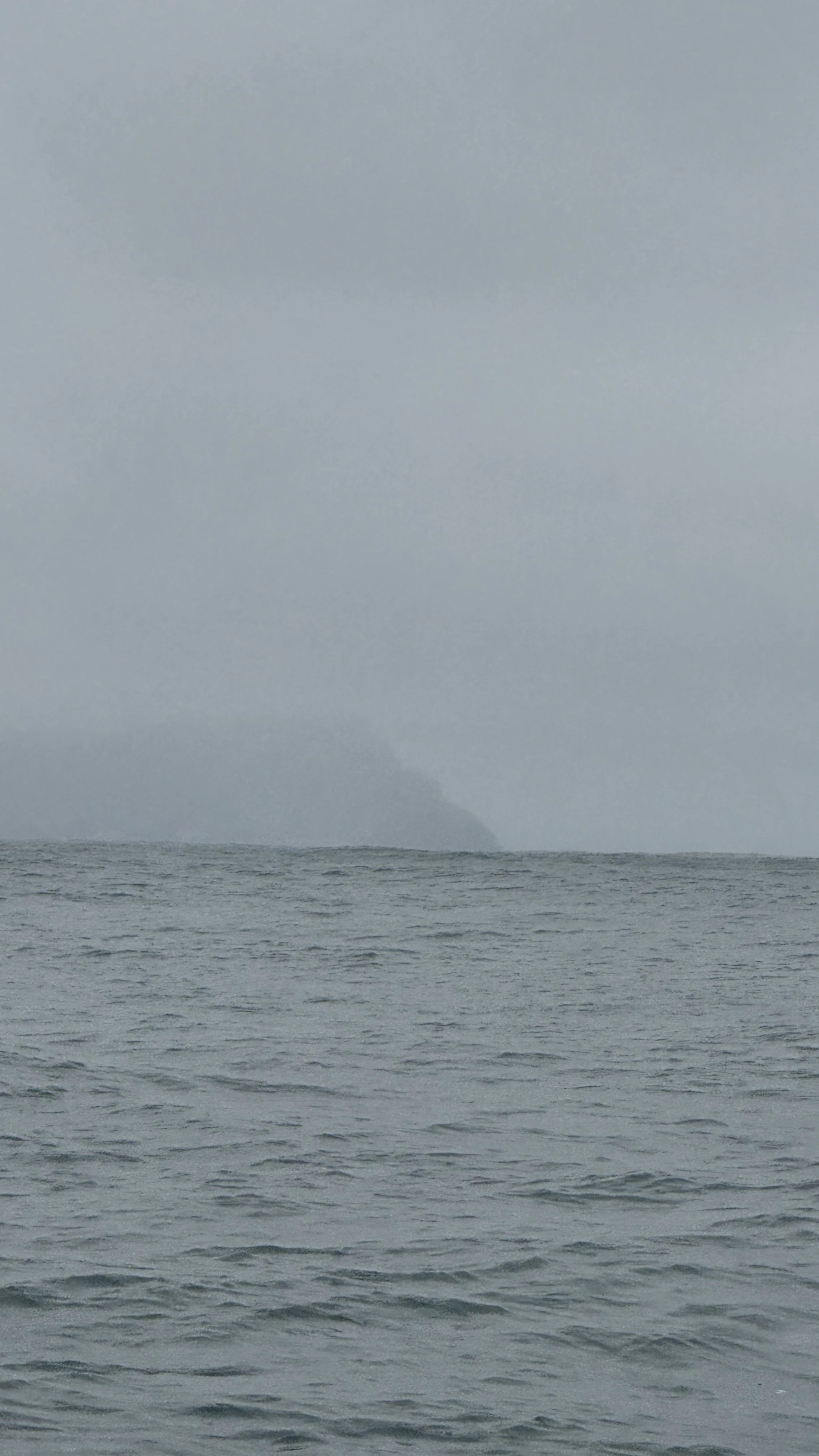
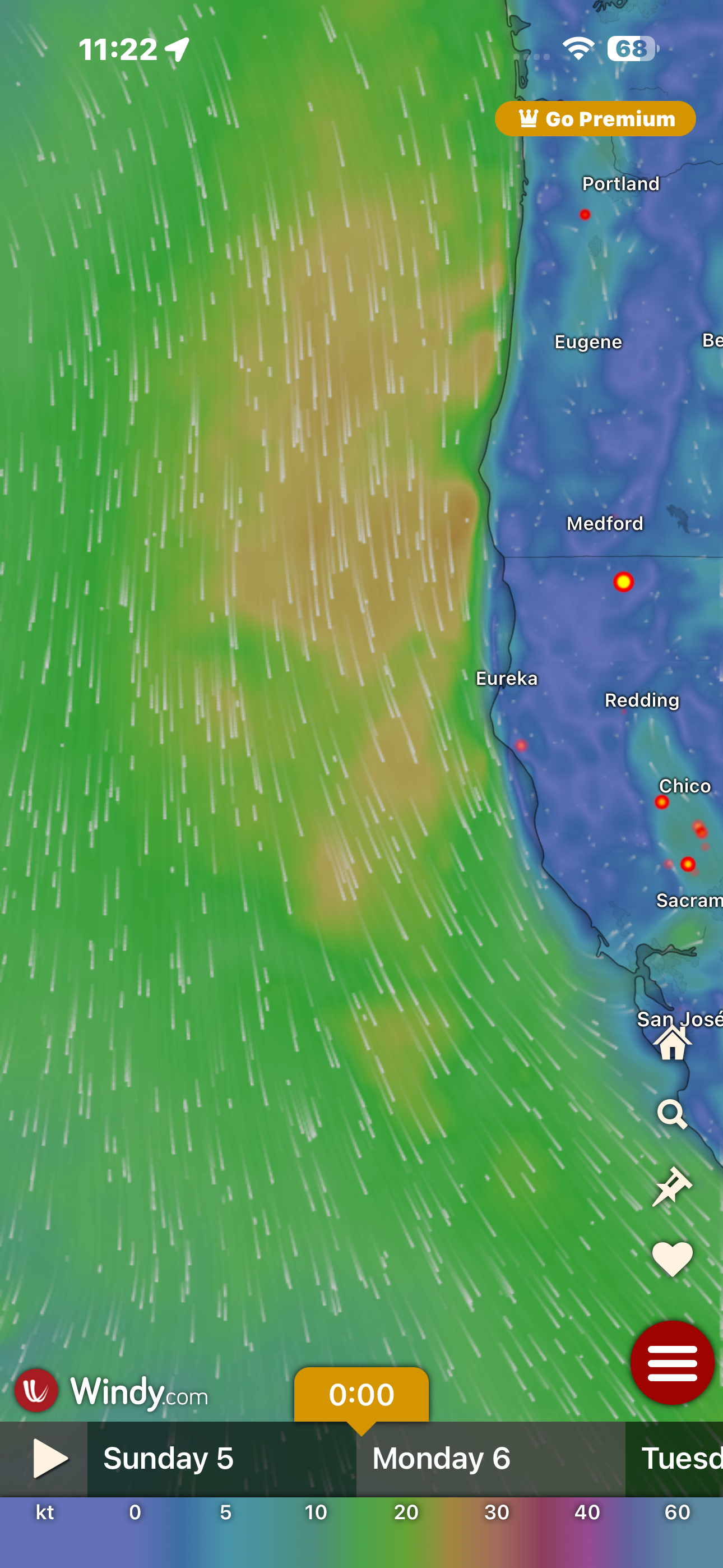
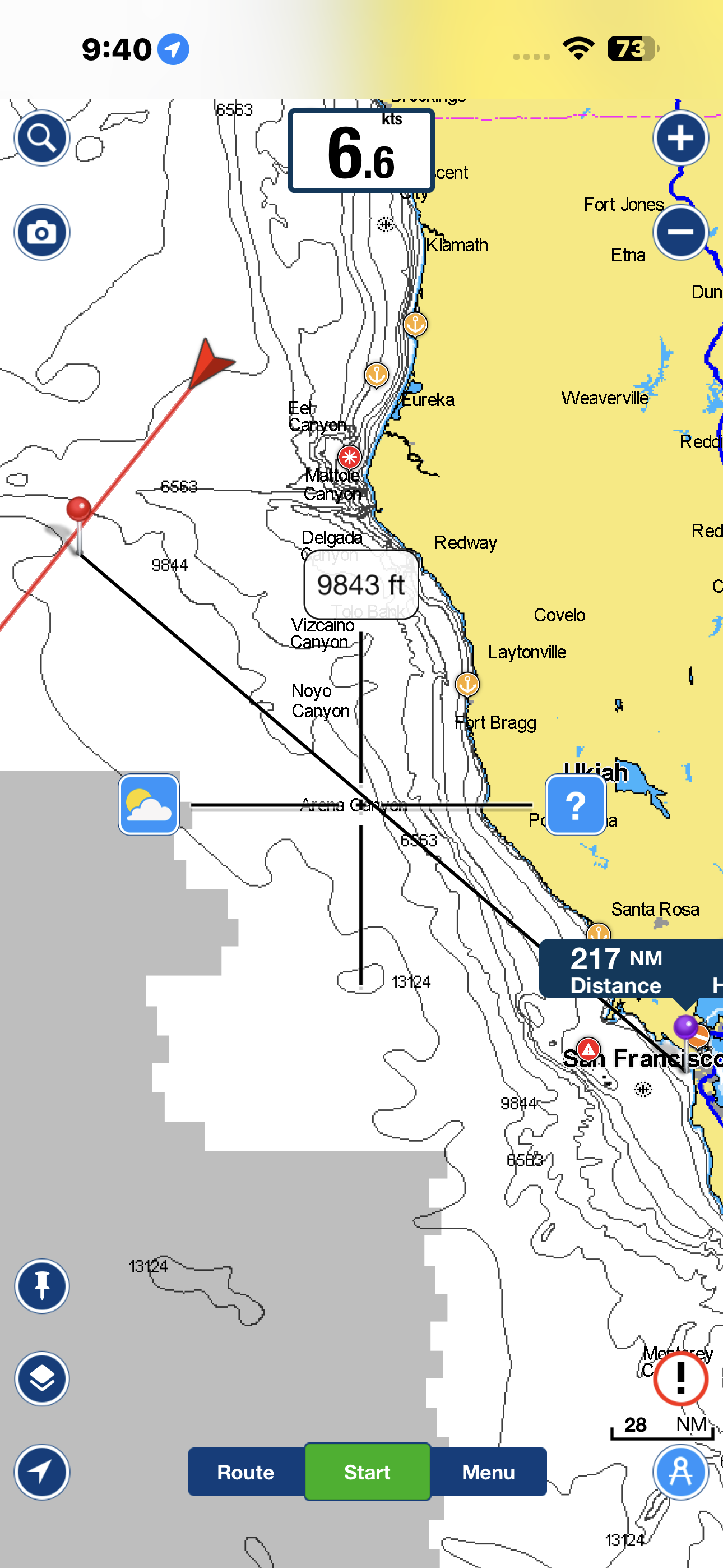
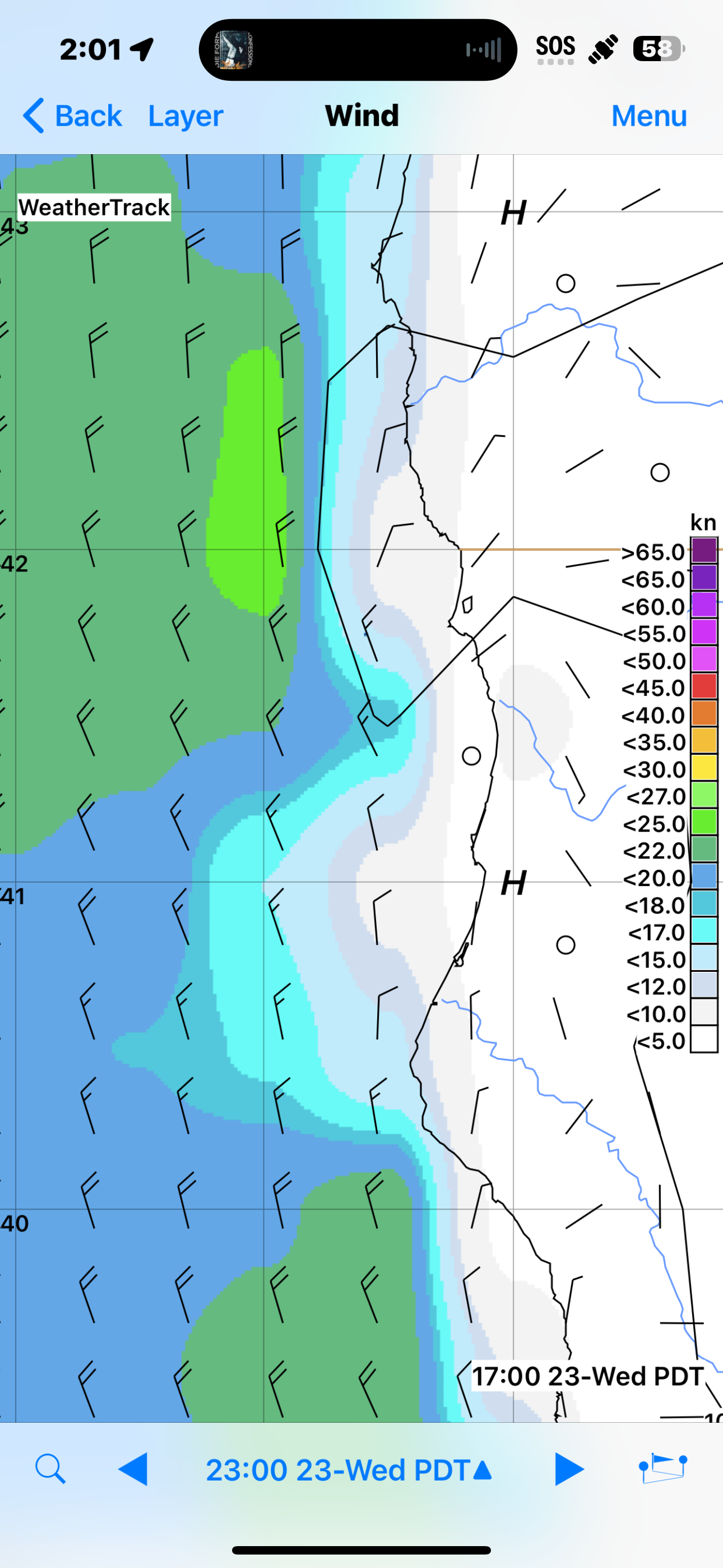
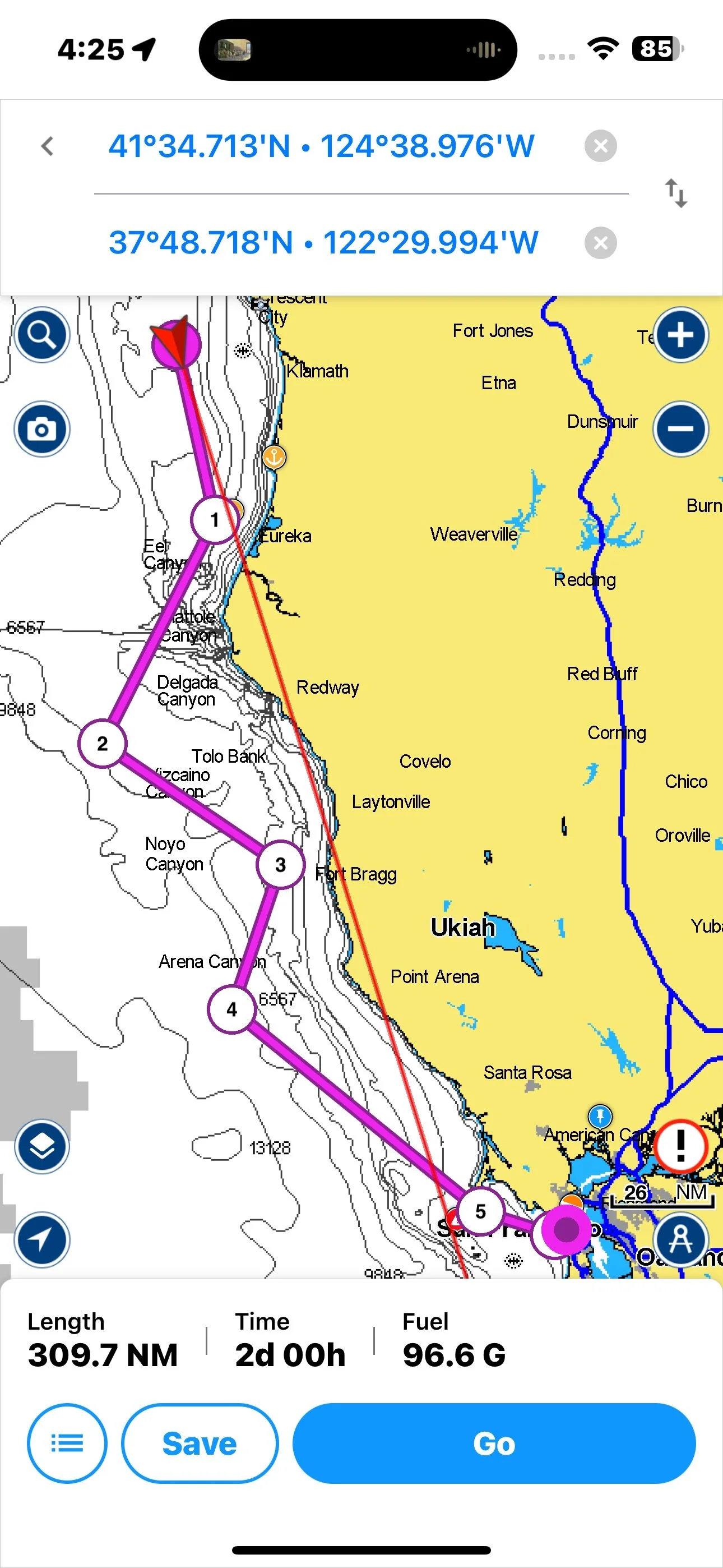
Cape Mendocino is usually the roughest part of the coast and needs to be approached both with caution and confidence. The stretch of water between Eureka and Bodega Bay is over 150 miles. There are options to bail out but they are risky in rough weather so one must be prepared to go without the thought of turning around. The big confused seas often found offshore are really slow to head into and heading into shore and navigate the bar at fort Brag or tuck into a swell filled little “anchorage” is dangerous. Rounding the cape at a distance is a good idea so a long tack offshore makes it more like a 200 plus mile jump.

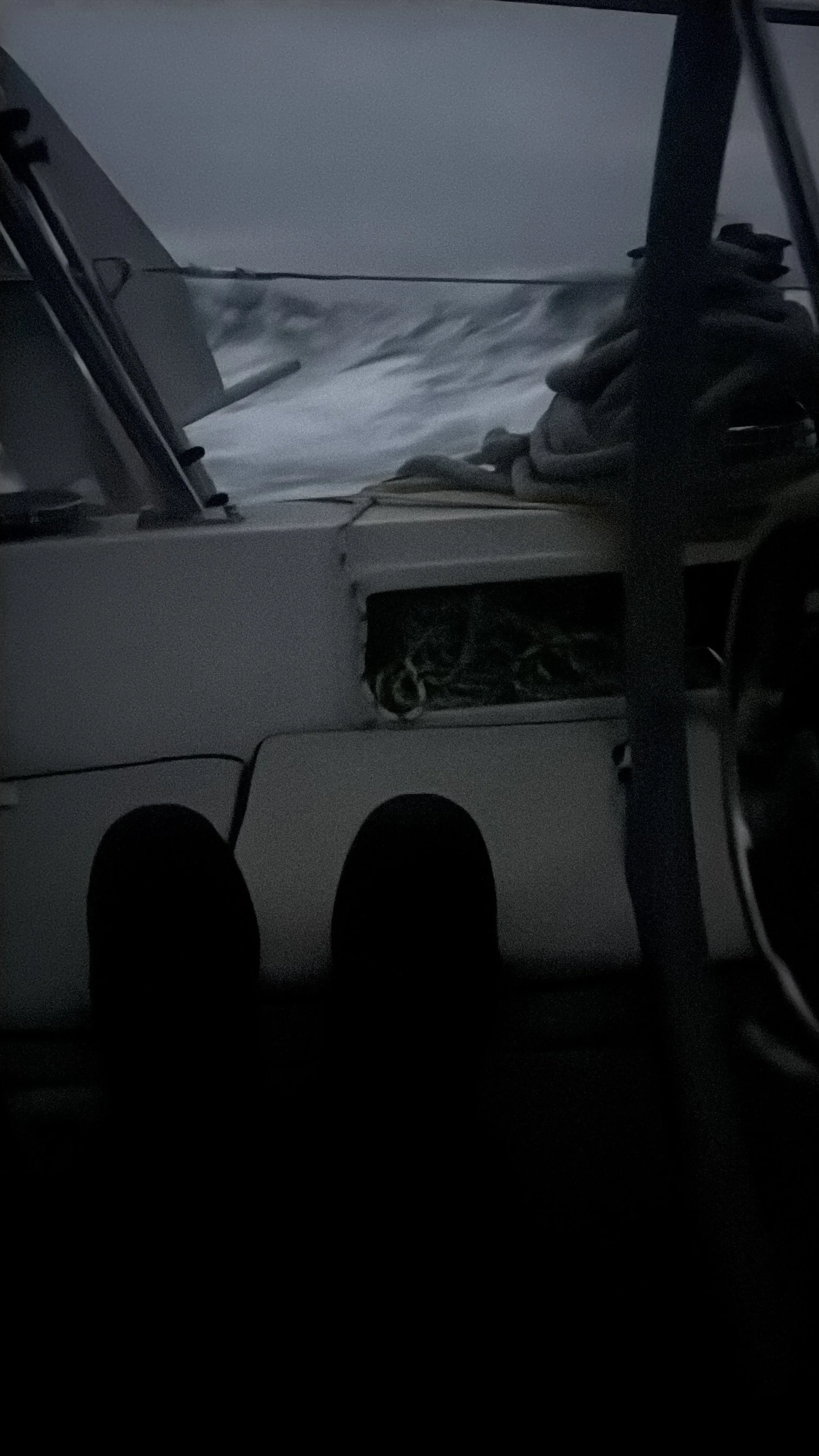
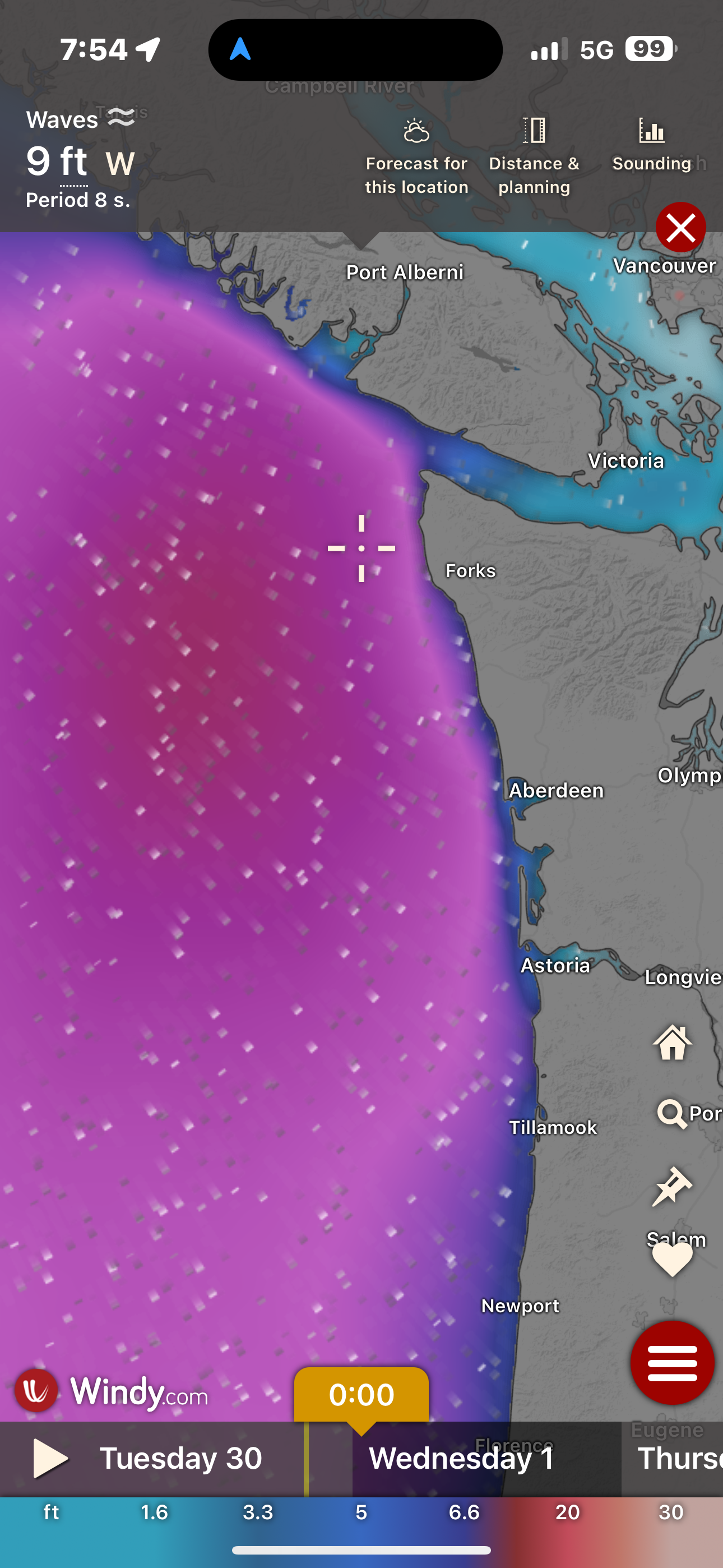
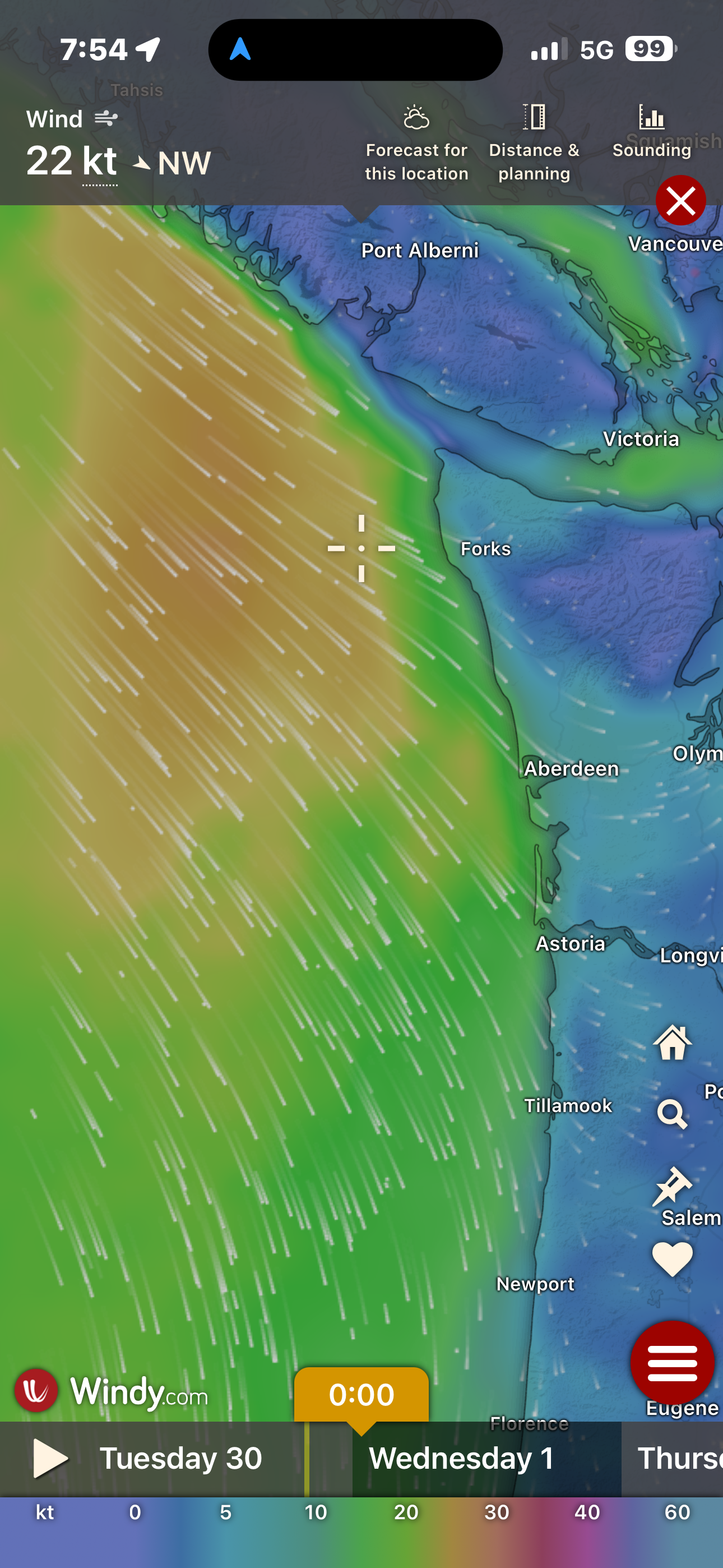
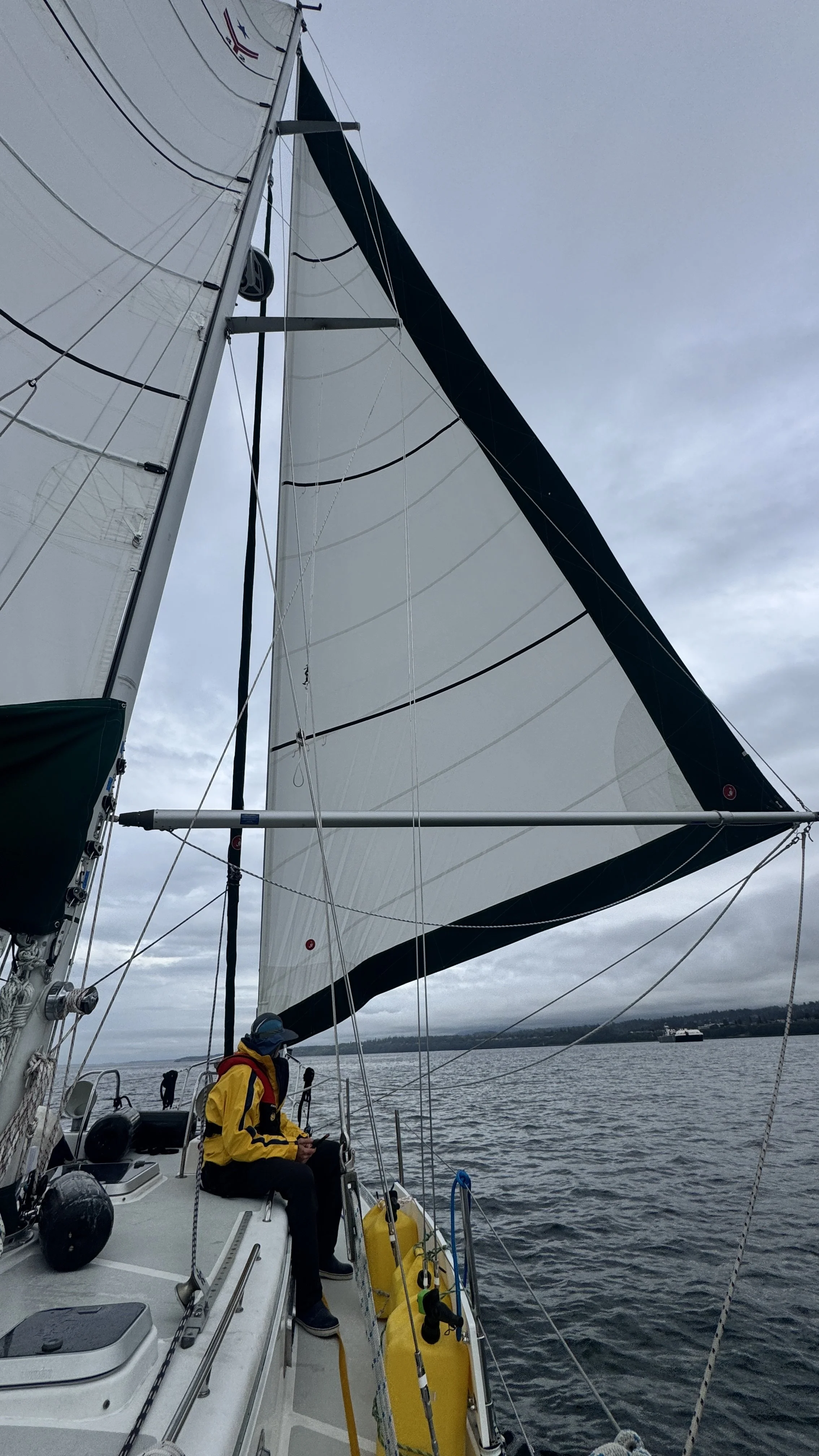
Despite a long motoring section we were looking good on fuel and decided against a stop in Eureka as the wind and seas were supposed to build. We would be seeing 8 to 10 foot seas and up to 30 knots and seas building to the low teens with over 35 in the days following. I wanted to get us around quickly. We approached with a reefed main and headsail and we were “chicken jibing” (tacking instead of jibing) to lighten the load on the hardware when the furled jib got fouled up. Cutter rigged boats are great for long passages because, among other things, they have staysails that act as heavy weather headsail ready to go. The disavantage is that you cant tack the genoa throught th fortriangle with out furling it at least partialy. It was durring this furning and tacking that the lazy jib sheet dropped below the furler drum and fouled up.

I clipped onto the port jackline and went forward to deal with the fouled jib sheet.

(We do these with all hands on deck so it is best done on a watch change so as to not wake the resting watch. This means these longer tacks can set you past your desired lay lines but it is a another exaple of risk benifit one has to run in their head. I choose rest with green crew becasue they often take longer to go to sleep than relaxed and expirianced crew. )

When I was on the bowsprit dealing with it noticed a cotter pin holding the clevis pin and asosiated forestay was about to come out. Typically the clevis pin and the forestay it holds has a lot of load on it however when you have 25 knots abaft the beam the backstay loads up and the forestay looses up and in conjuntion with the ossolating load from our patialy furled geanoa it looked like the pin might shake out out so I called for some needle nose pliers and my watch mate clipped on the starboard jackline to join me. Ether the wind or the gofer resulted in a miscommunication and a large pair of large channel locks came up to the foredeck. Needless to say not the ideal tool for the job but I didnt feel comfortable taking my finger off the pin and walking back to the cockpit and communicating the entire situation to the crew. The time that it took to bend the pin properly resulted in more furling issues and the upper portion of the sail managed to unwrap while the lower portion seized up. This could have been addressed without my prompting after I cleared the jib sheet from the furler drum and set about the issue with the cotter pin but the cockpit wasnt hearing my commands and wasnt seeing the situation as the partialy furled genoa continued to flog and unfulr.

After there hours from initiating the jibe on the watch change the sail was out and we were on the next board (tack) all be it past our lay line and it was my watch again. I had been up since 3 am and was tired. This underscores the importance of getting rest on your off watch. Sometimes we dont feel tired when we go down for our watch and some people (owners especially) have a hard time getting rest but when you loose a watch the sleep deprivation can result in delayed motor skills and cognitive impairment and we need out bodies and minds in good shape with “gas in the tank”. This is one of the many example of giving yourself and crew “leeway”. We must make allowances for the unknown. Even lying in your bunk helps bring on the parasympathetic nervous system’s recovery process. At one point just after a following watch change making some coffee to contend with the sleepiness I noticed the off watch on their phones in their bunks. Because we sleep feet forward I could see their screens. One was starting a game of solitare and the other was looking at the weather.

At the next watch changed I brought up the importance of sleep again and in this case when one watch has jumped on a grenade and missed their entire off watch and rest there is an understanding that the down watch is using the rest that the other watch gave up. We could have just as well restarted the watches once the “fires were out” but we would have been off that rotation our bodies clock’s were on and it would have been hard to get into a different sleep pattern.

We also discussed meal prep on watch changes. The watch about to go down cooks with one on deck. This cooking is done in gear ready to come up and help their watch mate. This is especially important with green crew who often need all of 30 minutes to get their gear on before coming on deck. More experienced crew can come on deck much faster and still be fully prepared.

It took us a week to get the clipping on before getting into the cockpit routine down. After the meal the on watch taking over can do the clean up.


Engine off Day three underway

July 3rd

N43’12.8

W125’14.7

SOG 6.5 COG 182

We are approaching Cape Blanco and the first of two serious capes we have to contend with. We have been motoring for a few days through a lull and are are now getting the beginning of what will be a gradual increase in wind and swell that will carry us to SF without too much trouble. 

Other than the incessant noise and some sea state coming on the beam the motoring is relaxing and the vessel and crew are doing well. Serious napping begins in preparation for night watch after a wonderful dinner of  barbecued chicken and artichoke served with rehydrated mashed potatoes was served by oour resident restaurateur. The only concern coming from the on watch is trying to stop the slight squeak coming from the wheel. 

Cape Blanco and a plan around Cape Mendocino

Pick your time and line if you can.

Day two motoring

Engine on (from notes)

12:30 

Looks like we have some motoring ahead

We carry 80 gallons in the boats two tanks and 15 in Jerry cans on deck. We motored out the Strait and may go into Crescent City to fuel up. It’s is a good place to do that as there is no bar to have to time the tide around.

Only issue would be the lost time going in will allow wind and seas to increase off Cape Mendocino.

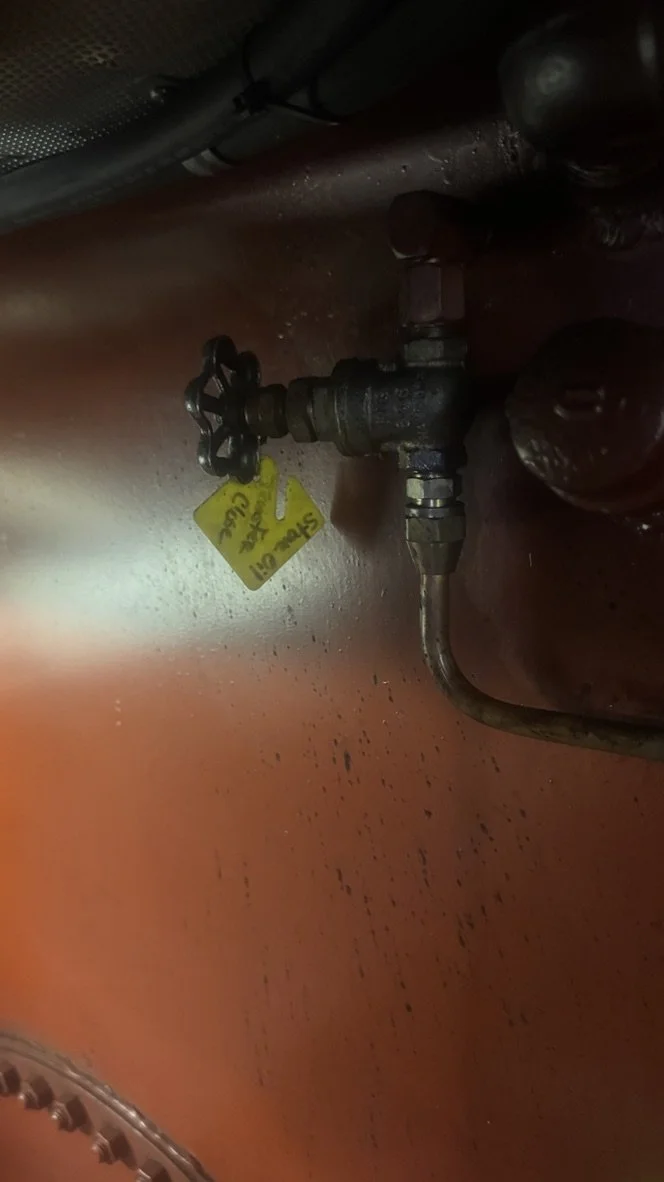
The black water Y valve is seized closed and we need it open to empty holding tank. Currently has bolt breaker on it. Fingers crossed.

Day one underway

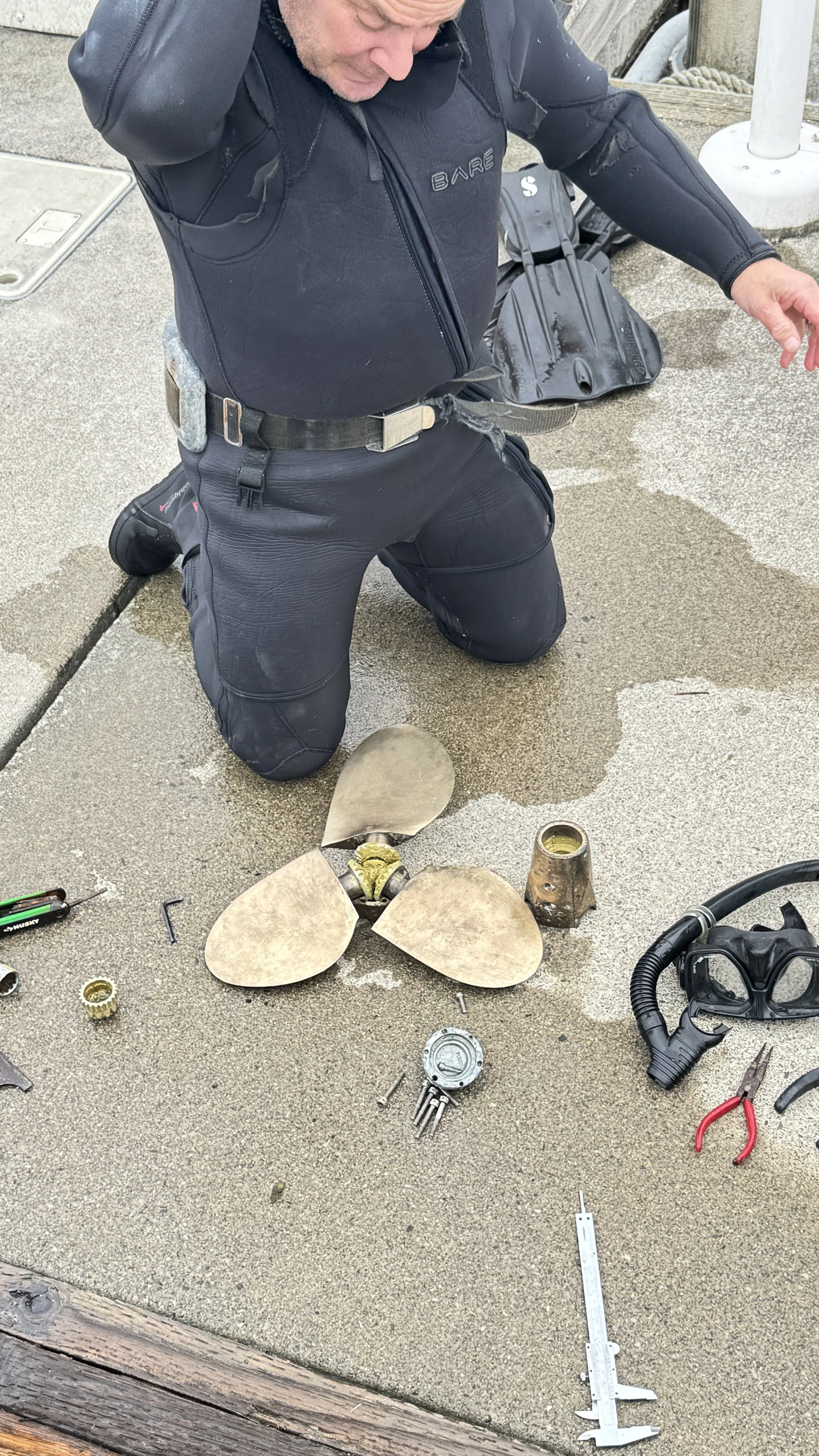
In the morning the diver arrived to finish the prop job. I have never see a pro marina diver not use a hooka rig or air tanks. This guy was amazing.

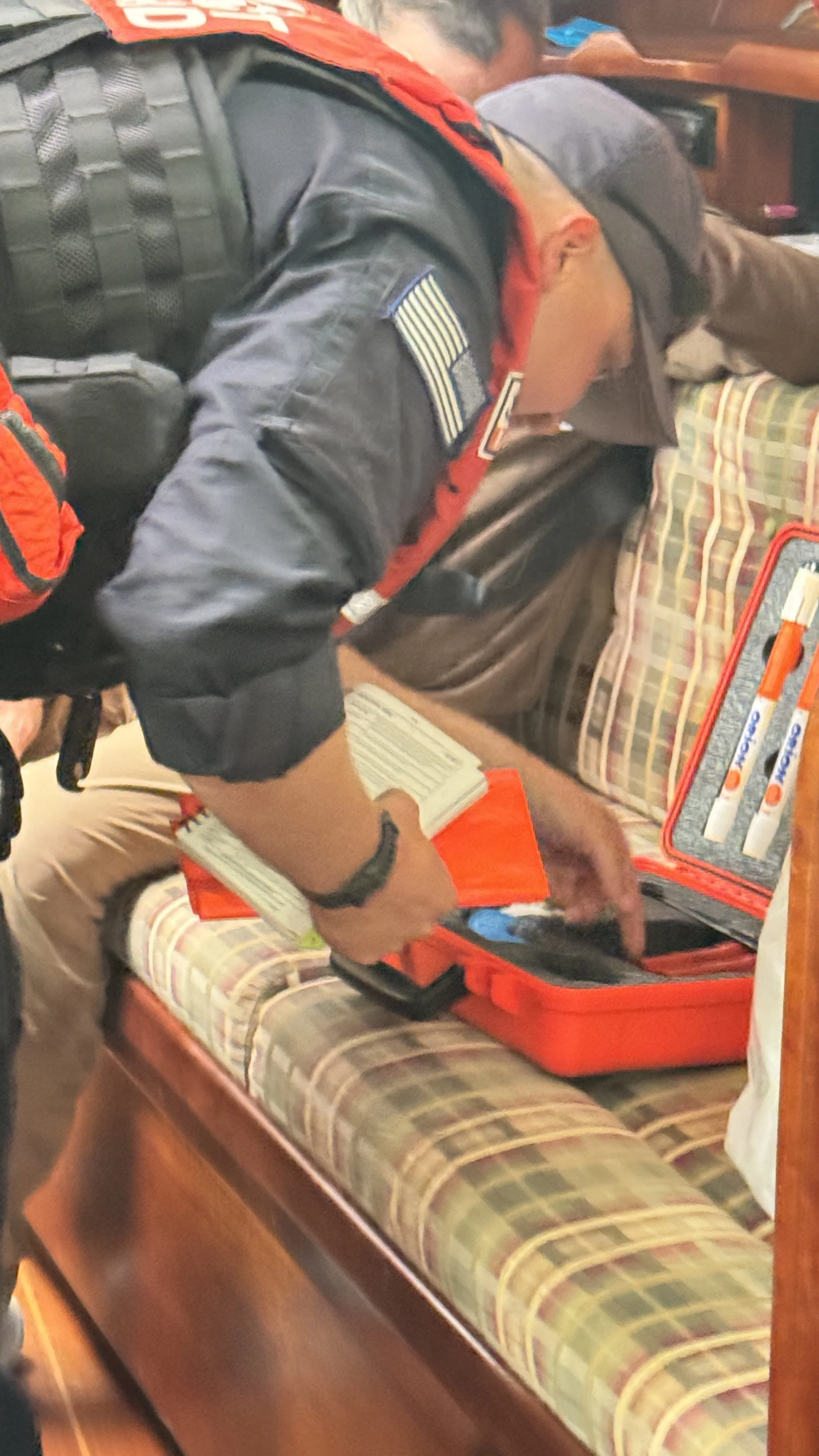
Once the prop was on and tested we fueled up and got out of there. We were just getting in to positive current riding the ebb out to sea and a USCG fastboat came alongside asking to board.

Looking though the boat for safety gear is common practice. I asked if we could keep our weigh on and use the tide and also if they wouldn’t mind boarding on the port side where the gate was easier to open under weigh. After a brief hesitation but they acquiesced. I think it is important to remember went you are being boarded that you are still the captain and to never assume these young men know what they are doing. A GBA alumni was pulled over on a similar inspection and lost track of the vessels drift while answering the inspection officers questions and when breaking off hit a rock and totaled his boat.

We passed with flying colors and we continued west to what was forcast to be a dying 10 foot sea.
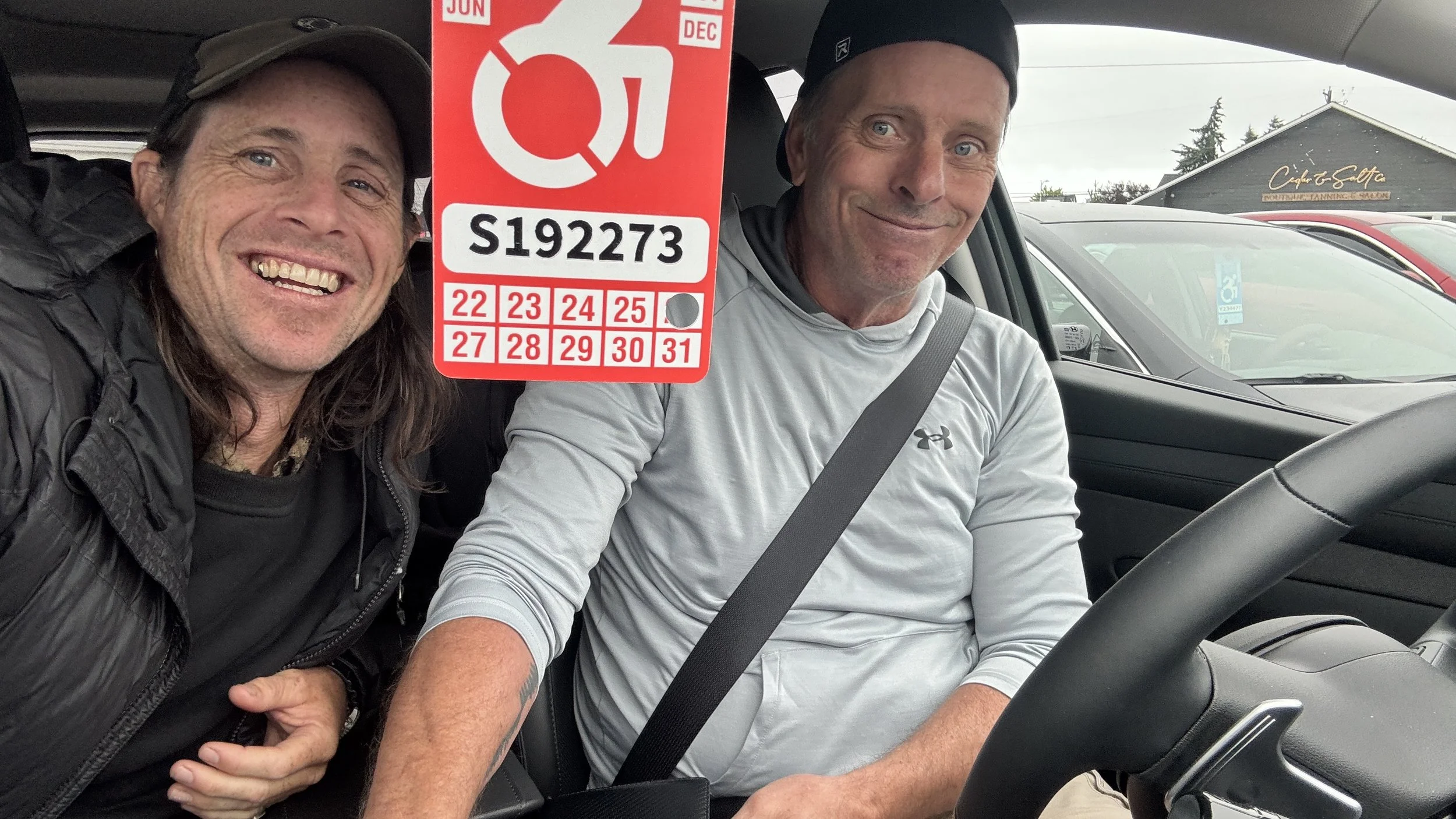
We said our thanks to PA as we went. We were spoiled for sure and I told the crew that you cant expect treatment like that on a wayside usually. Thanks to John and Kristopher for driving us around. Thanks to Jerimy and Blue Water Welding for the deal on their fine work on our solar rack and the canned tuna, smoked salmon and fresh crab..oh and the fishing rigs and advice!

Jon Palmer of past adventures and PA pits stops. Good to know some locals!

Mer man diver

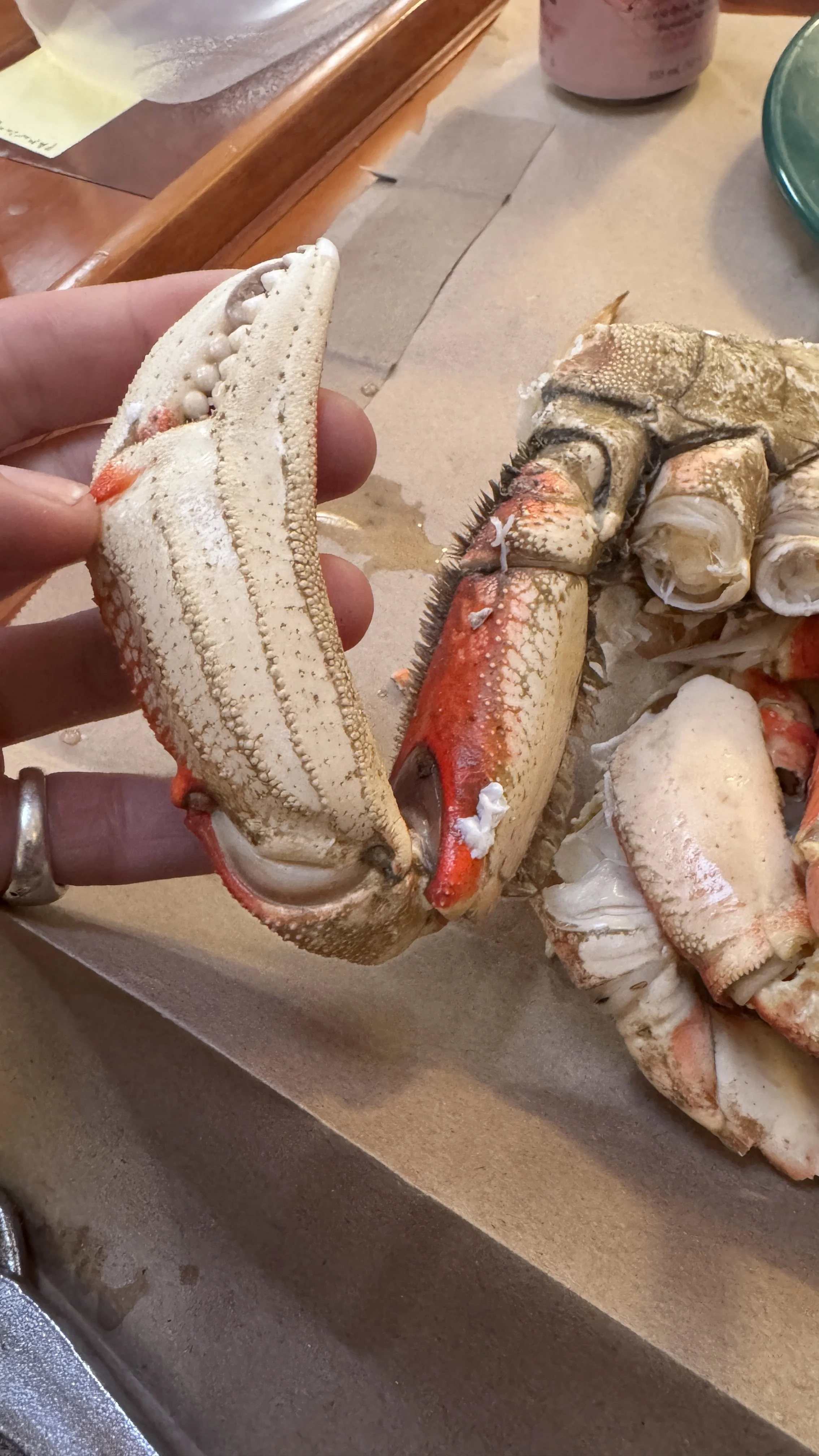
Big Dungies for dinner and two breakfasts.

Not sure what we did to deserve all the generosity PA but thank you

Valiant 42 Port Townsend to Hawaii via SF Shakedown

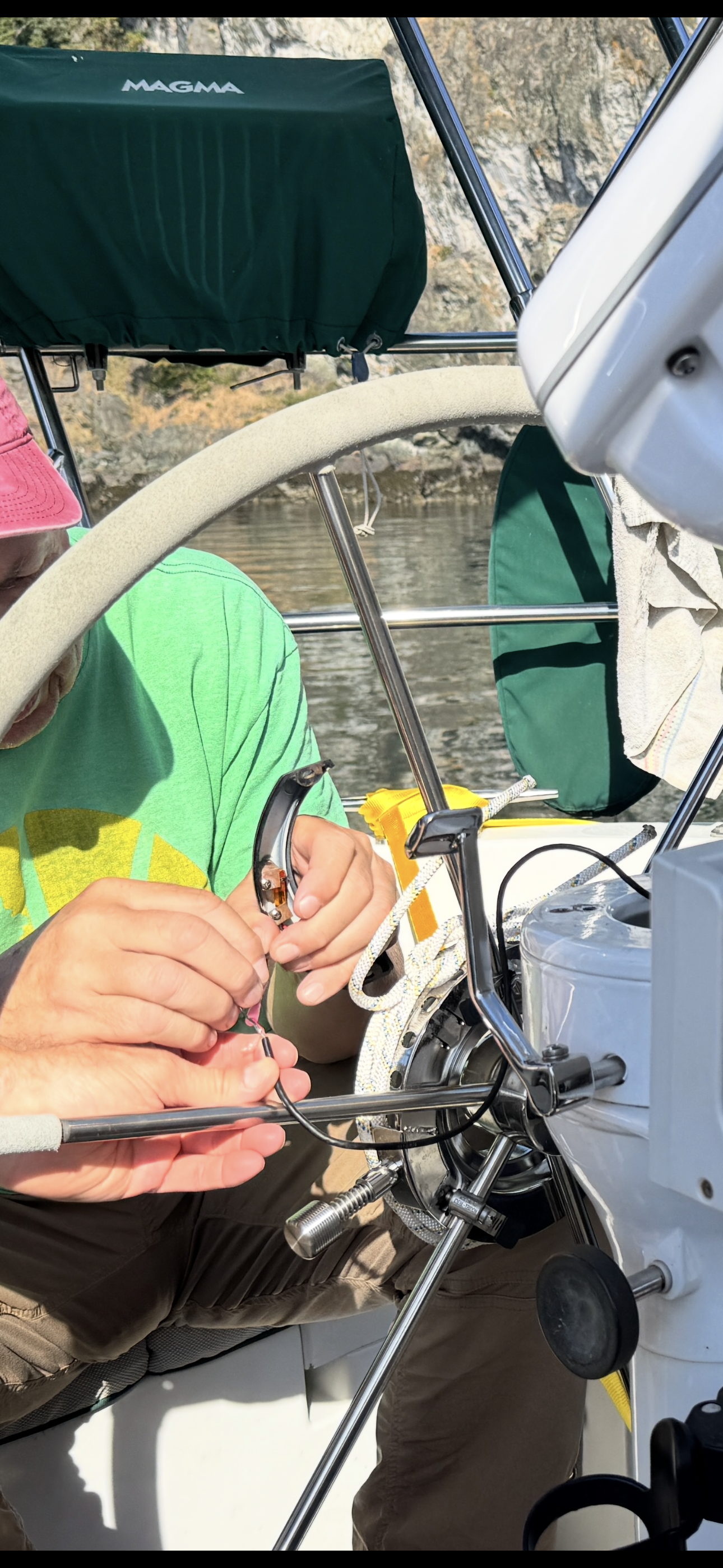
There was no compass light so we dug through the boat’s copious spares boxes and found a low power bulb to wire into the binnacle.

We cast off from Port Townsend and headed to Lopez Island’s Watmough Bay. On the way practiced setting and dousing the kite.

Later on a mooring w dropped genoa to practice hoisting and dropping incase the furler fails and to inspect the shackles. This turned out to be a good idea as the shackles were finger tight and didn’t have mousing (zip ties) holding them closed.

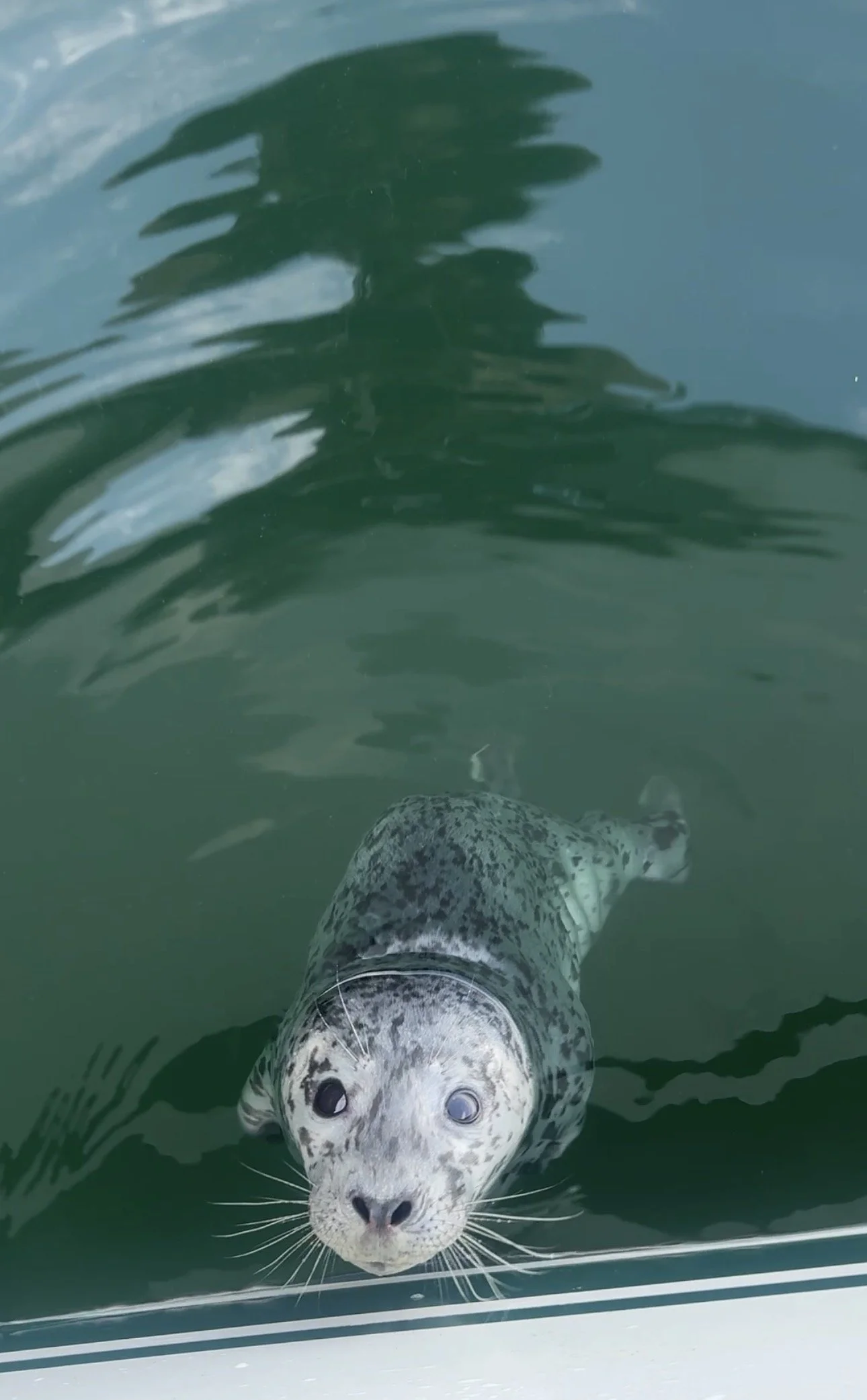
A baby seal nursed the side of the boat. and the guys went for a dip.

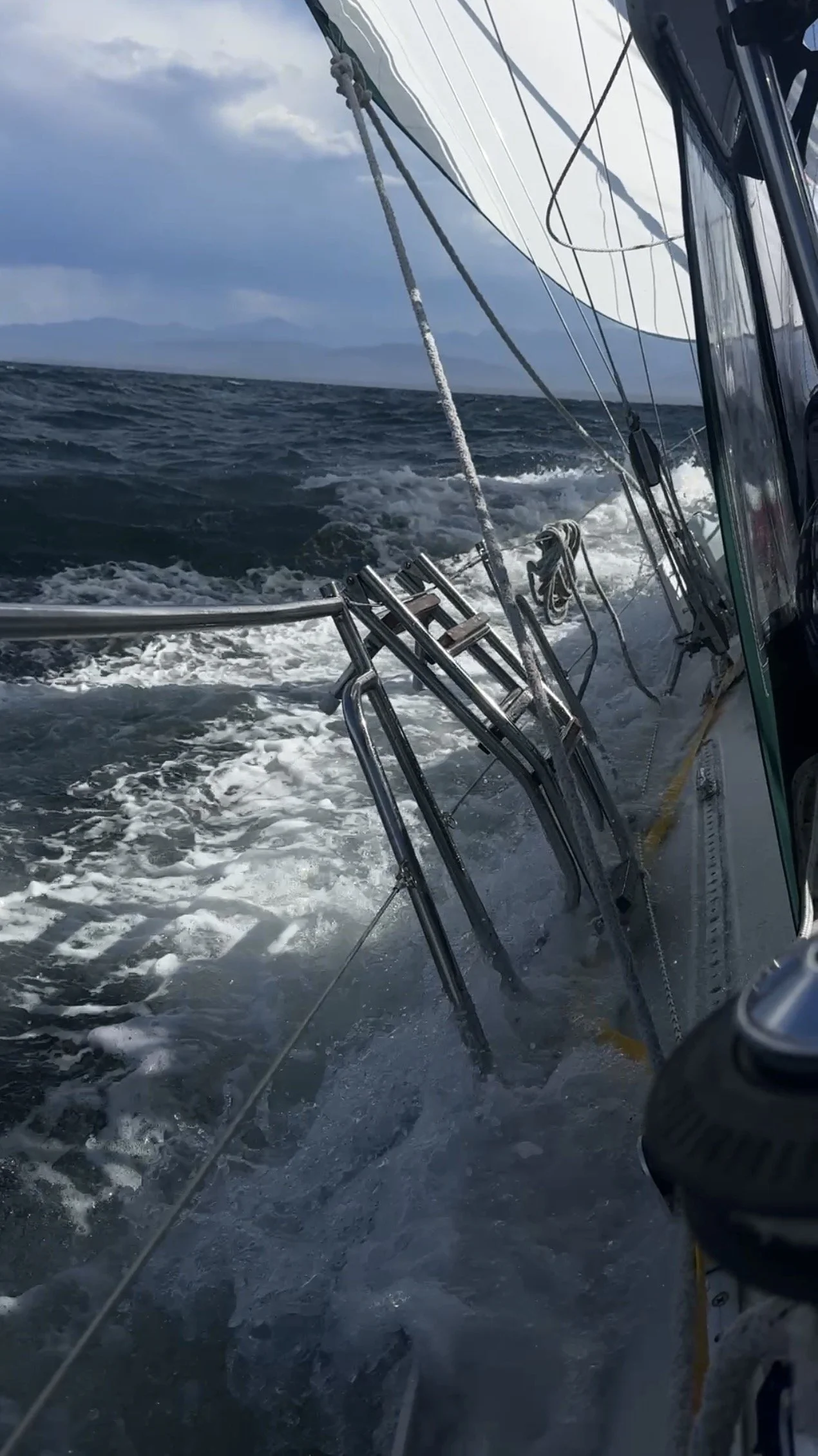
Wednesday we headed for weather and Port Angeles to see what the boat and crew could take. The solar panals tried to take off with the jerry cans and some how the solar shower stayed aboard.

There was some seasickness and thanks were given upon landfall. Reefs were practiced as planned and went well.

The sturgeon medication was not enough to keep breakfast down for some.

A propane leak was sniffed out.

Unfortunately the biggest issue was the engine. Unable to power into the wind and chop we began to have doubts about the propeller as it was the only thing that could be the culprit after the recent repower. Some calls were made underway to see about a replacement. Not great for our plan but we were not too far from the manufacturer and there was a chance we could get a replacement without too much delay.

Everyone was glad to tuck into the one of the “meat cubes” for dinner that night (one of the 4 bags of frozen pre cooked pot roast stew). A very welcome meal after a wet crossing.

Lots of time aloft this spring

One of the services Ive offered over the years but not advertised is rigging. I worked at Ballard Sails years ago now and learned so much on top of the years I’ve spent doing my own rigging. I remember quite clearly the seeds of this inspiration to work aloft. I was about 15 and my folks hired a gentlemen named Craig Shaw to help us convert the club footed self tacking jib the family boat came rigged with to a overlapping genoa and staysail. Craig drove a vintage yellow hot rod pickup. He wore an old faded Mount Gay regatta hat, a trophy from some past race and something I later learned the significance of when I started collecting my own red hats racing my boats. Craig had a braided ponytail down his back inspired me to do this work one day. I still remember Craigs advice to always tie a bowline to your bosun's chair and to never trust a shackle.

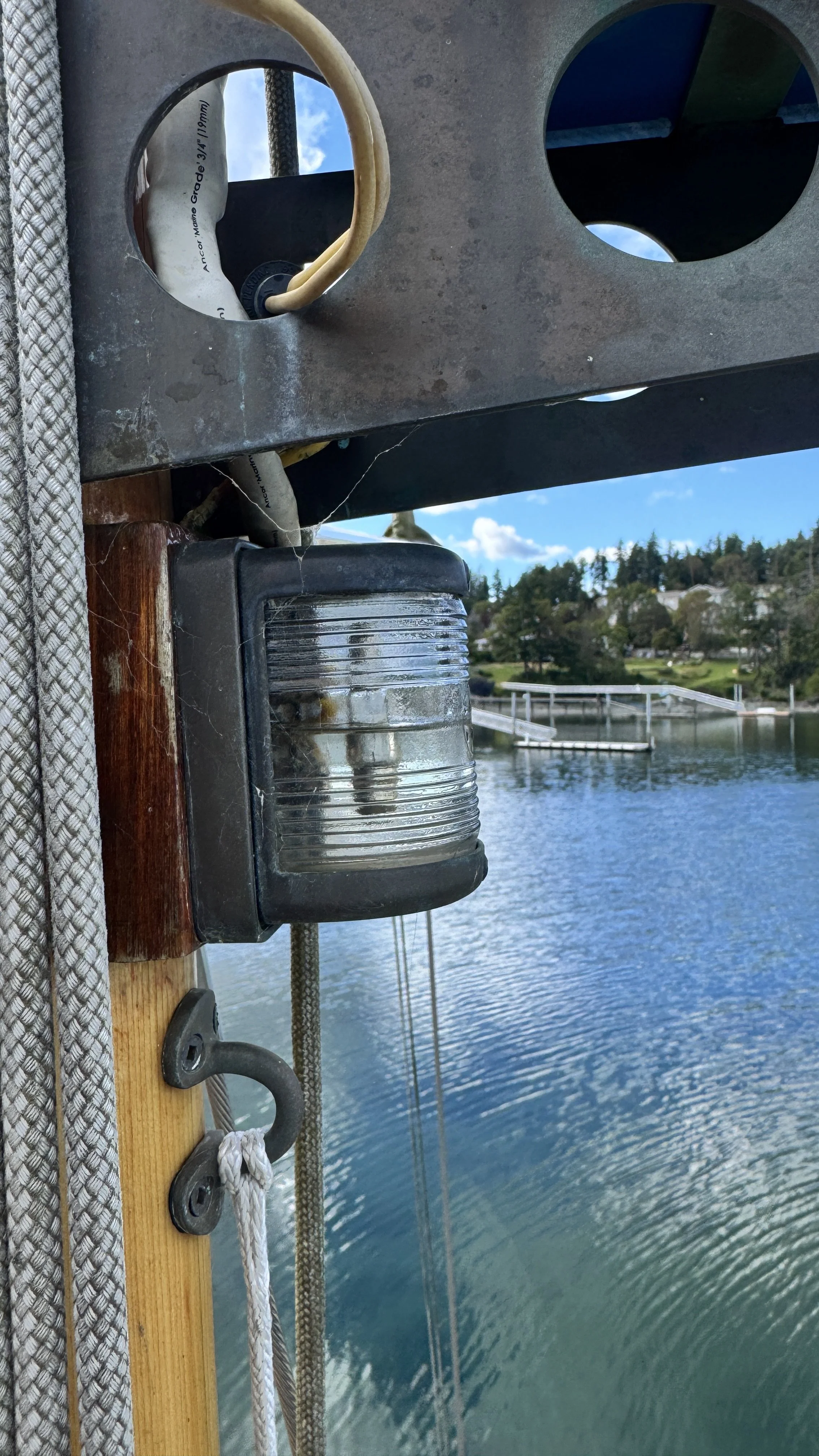
Yesterday I went up the mainmast of a one off Ketch rigged Bristol Channel Cutter to run a new radar and wiring for spreader lights.

Here are some pictures. Yes that light is half full (or half empty of water)..


Friday Harbor to SF Caliber 40

This was a wonderful passage with some great folks. I can’t always say that but this one was fun.


My friends at Ballard Sails mentioned they had a customer for whom they were building new sails, who would be a good candidate for GBA’s help. I reached out and was surprised to find that these blue water initiates were younger than me! It’s easy to understand why most of the folks who hire GBA are older, which makes it so refreshing to see some youngsters pursuing their bluewater dreams.

These folks were in the process of quitting their work and preparing their beautiful Caliber 40 to sail around the Pacific on a multi-year cruise. On a trip to Seattle, I asked to stop by the boat to see the project, and I was instantly impressed when i got to the boat. The boat was a bit of a mess due to projects and the highest quality black water hose was about to be used to replace the old, and there was what looked like 1000 watts of solar installed on and around a newer dodger enclosure. I didn’t need to see much more; I knew that these guys were doing it right. Before I left, I said that they might want to unplug from the dock and make sure the systems were working before casting off for Mexico. The response? It's already unplugged. The cord is for the drill.
I was sold. We shore up the billing details and scheduled some Zoom calls, and I told them that I would find a fourth crew member to make the passage to SF in September.

To make things even better, my shipmate Tom Meester, who races with me on my boat, Elsewhere in the San Juans, was going to make it!

We were set, all I had to worry about was catching that tuna I promised Tom.


Fast forward, and I head down to the Port of Friday Harbor to meet them with my go bag rolling behind me. Tom arrives on a ferry from Orcas Island, and we are off.

After we clear Cattle pass into the eastern straits the weather is a little bumpy (30+), and Nate is queasy and quiet (not a great sign), so we tuck into Port Angelies for one last shore meal.

Fog most of the day and motoring. The engine is louder than usual. Yanmars, newer ones at least, run at higher rpm as I understand it, but are efficient and vibrate less than their predecessors and some competition. The noise is a product of sound deadening or the lack thereof in this situation.

This is where noise canceling headphones really help with the noise fatigue. I’ve put earplugs in under them before to double up. I used to bring shooting ear protection because they have tech that turns them on and off when there are loud sounds. I think all boats should have some muffs for engine checks, and all sailors should pack at least earplugs.

This is boat we heard on the radio talking to the CG about their damaged steering. Seen here under emergency tiller heading into Neah Bay.

Going in and out of fog with a fishing opener gives us some good practice in discussing how the radar works and how to negotiate this kind of traffic.


Day 2

More motoring and some motorsailing. The SUP rack mounts are catching the jibsheets on jibes. These and bikes on deck are a pet peeve. Some lashing is employed to cut down on these snags.

The furthest NW corner of the lower 48.


Day 3

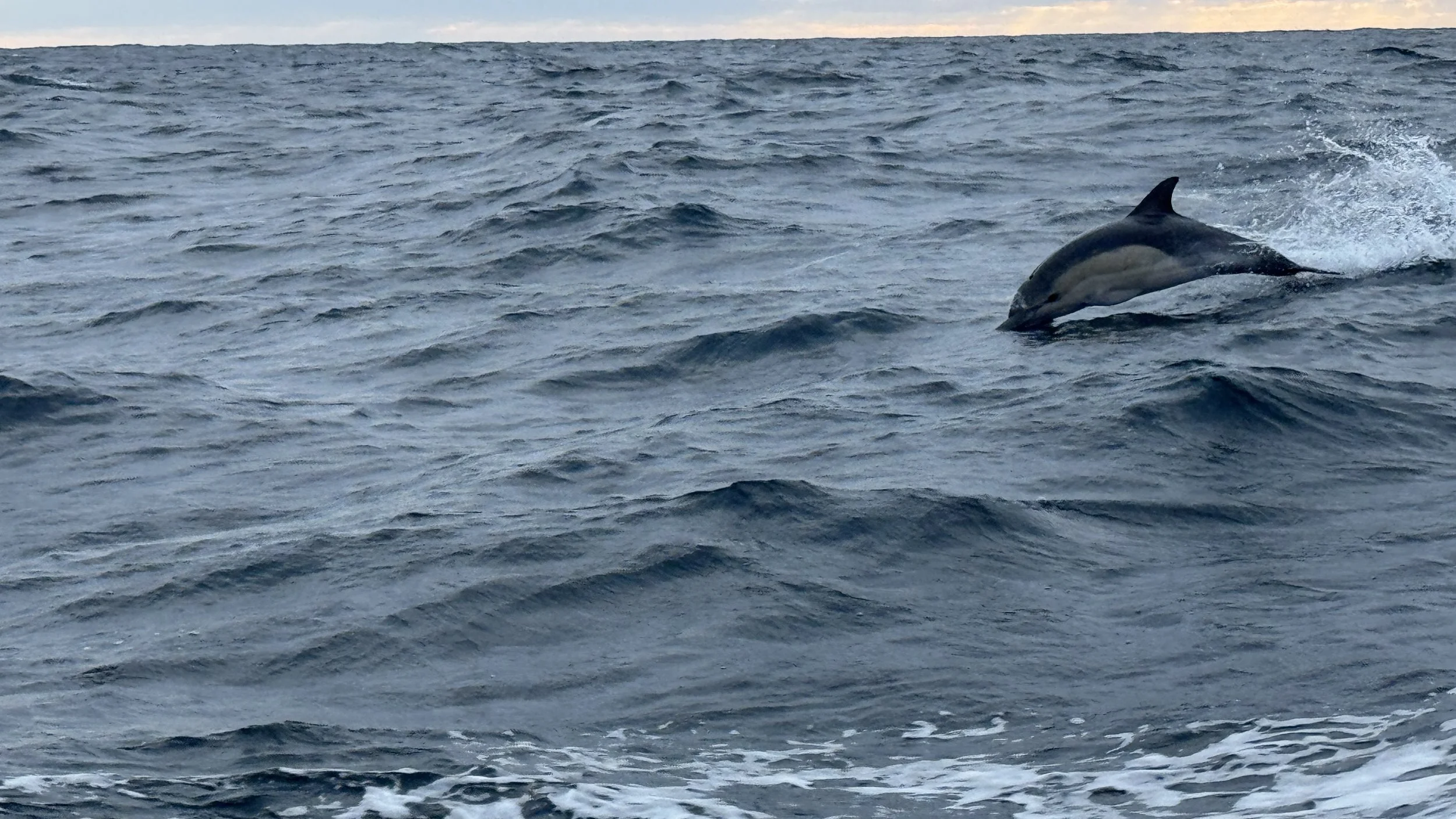
Jesse is sick, but some dolphins cheer him up. Jesse and his wife Chelsea, are on a watch together, and she’s having to take up the slack, but she’s doing great. I’m monitoring the situation and preparing Tom for me taking Jesse on my watch if it gets rough. So glad to have Tom there. I’ve sailed with Tom for years and know he and I can handle the whole thing if it comes to it.

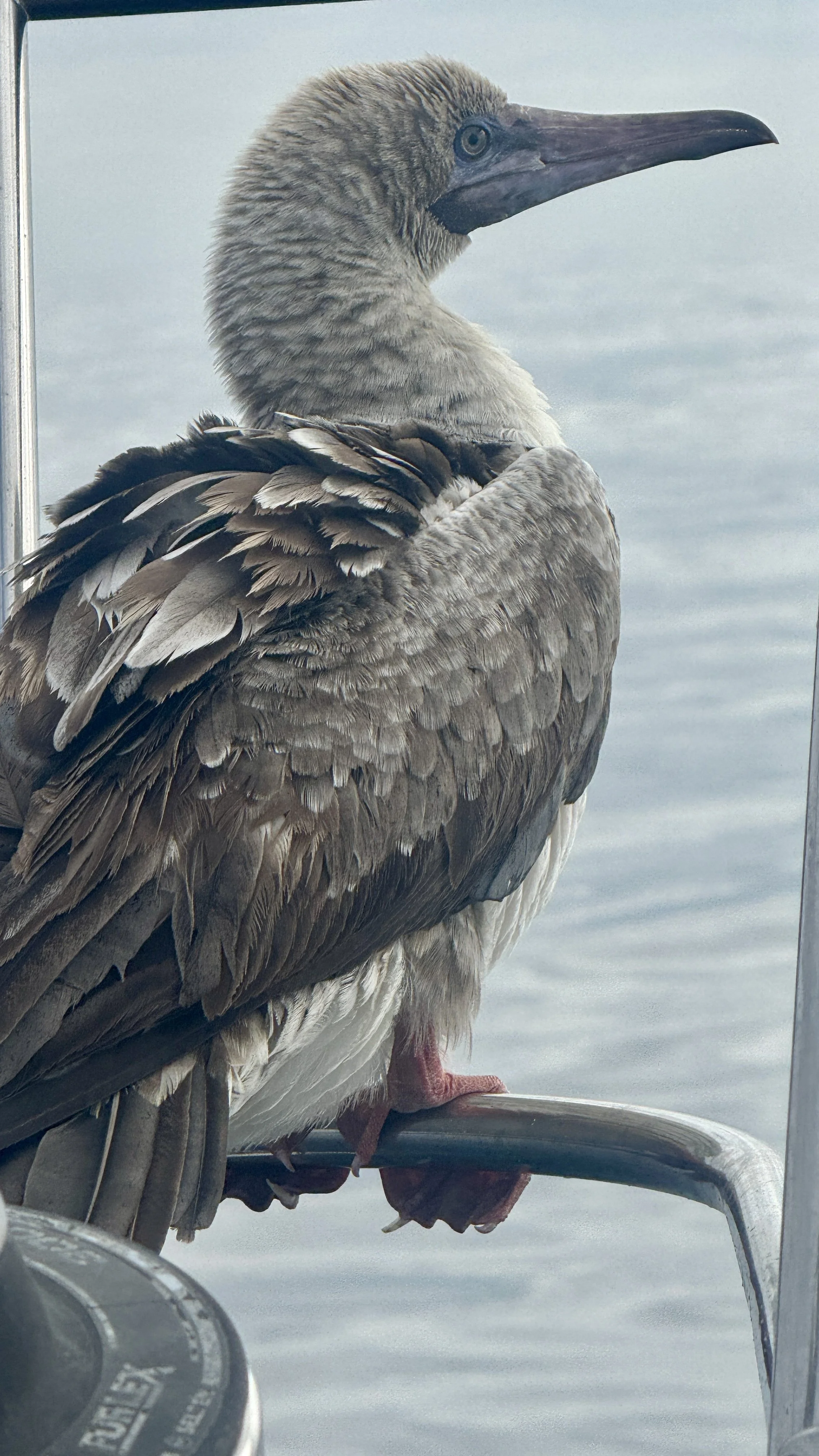
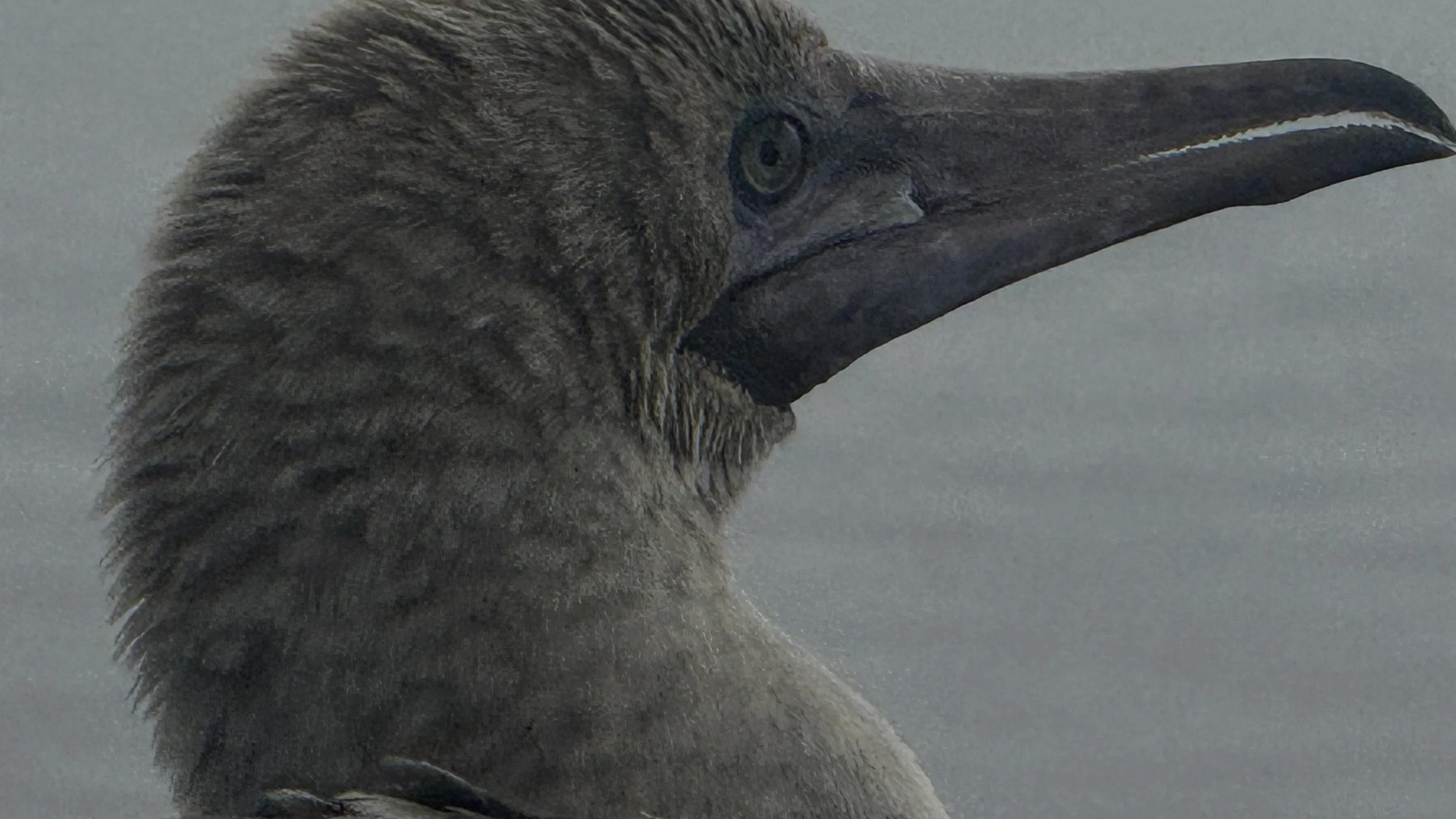
That afternoon, a strange thing happened. A fairly large bird landed, and that is generous way of describing what looked like as ungraceful a crash landing as possible into our bow pulpit. I have given many land birds rides that have been blown out to sea, but never a sea bird like this aside from a Sooty Petrel in forest fire smoke at night. The other strange thing was I couldn’t identify it. This strange bird sat on the pulpit for maybe as long as 10 hours. This was enough time using our Starlink to ask around and look at pictures online to get an ID. I sent a picture to my sister who is quite a birder and who lives in Estonia and she said it was an immature Red Footed Boobie. This couldn't be because we were way out of its habitat. Well thats what it was, and in our research, a friend of Chelsea’s, suggested that we could submit it to a bird watching site in Oregon and perhaps win bird of the month because of the rarity of the sighting.


Day 4

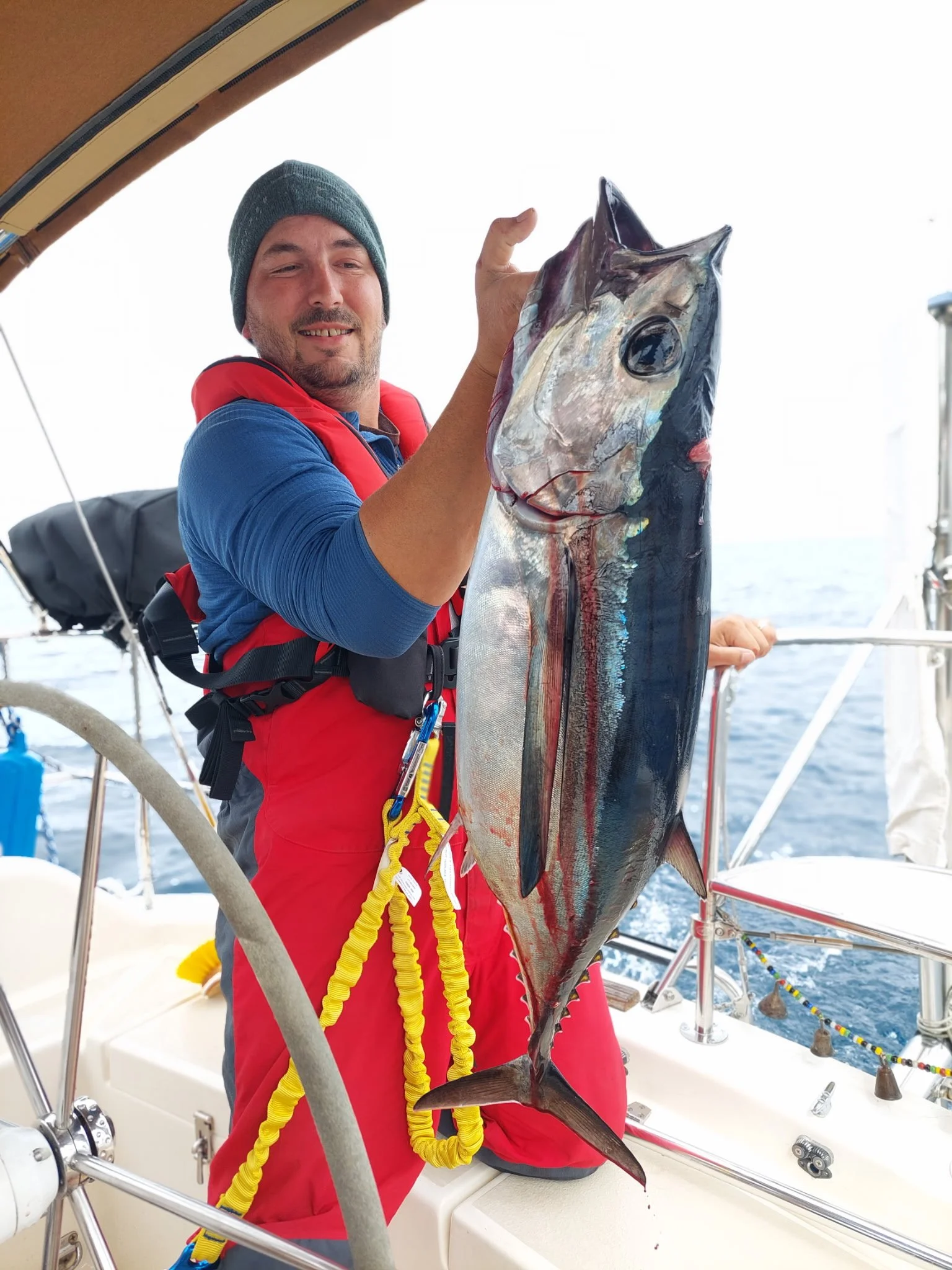
And the fish I've been praying for is in the boat. The only person not excited is Jesse. This is understandable because fish, especially tuna, have a fishy smell, and the only thing worse than diesel exhaust for someone teetering on the edge of puking their guts out is fishy smells.

Before all this, I had noticed a few “bait balls” on the horizion so I put a handline (what cruisers call a “meat hook”) in the water and was adjusting course to pass through these patches of disturbed water that the birds were clouding around.

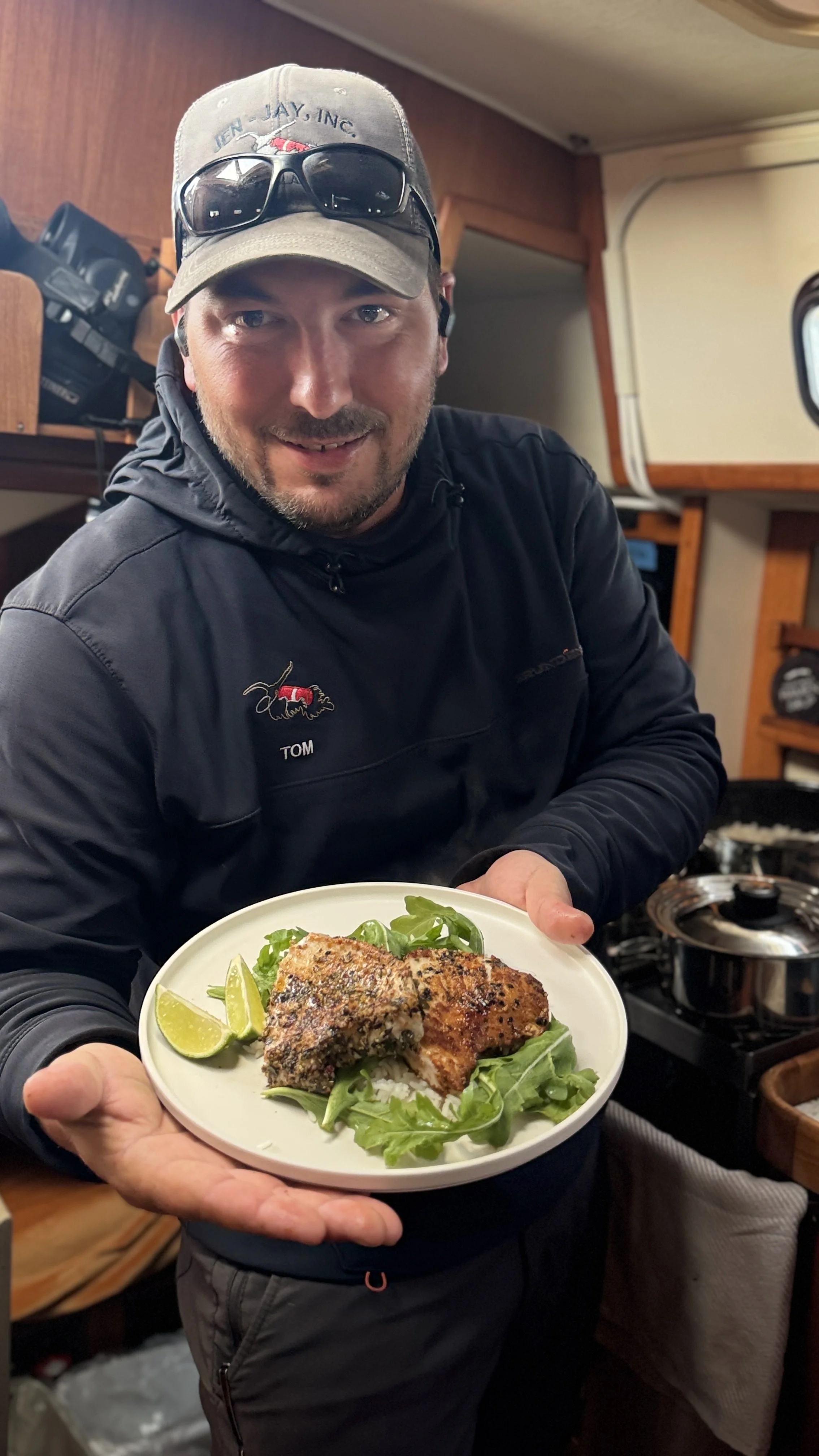
Tom thought we ought to increase our chances with another line, and right after he put his line in my line, hooked a fish, then as I pulled it in, bang, Tom had one too! Unfortunately, my fish got off, and as he was pulling his fish in, I asked Chelsea if they had a bonker, and was blown away to be passed a brand new gaff! I got the fish in the cockpit and said my thanks, and we got about bleeding and cutting the fish into steaks. The only downside was that the fridge was full, and we were down one eater, so we had to cook some right away. Everyone got a chance to try their tuna recipes eventually, but Tom, who cooked first, blew everyone away right out the gate, and we had a wonderful lunch. Seasoned blackened tuna on rice and arugula. Did I mention Tom used to own a restaurant and is a chef?

It was so good that even our sick sailor started to perk up and decided to have some after the good smells got to him.

We could have kept fishing and I’m sure pulled out hundreds of pounds of fish because we just kept going through bait ball after bait ball.


Day 5

And calm, so calm, Jesse felt up to making breakfast. Its amazing the apatite of a sailor who has shaken off their seasickness. We are staying ahead of the weather at this point, and I’m glad we got south before the 15 knot southerly was forecast for the area.

Happy boat. Chelsea vacuumed. Tight ship.

Looks like 20 plus NNW by midnight for rounding Cape Mendocino. Headed straight for Eureka to set up the broad reach out and be ready for the 25 knots there, but nothing but rolling so far.

Tried to sail and gave up


Day 6

Wind filled to 30 for a bit on the last watch, and the main got loose. Inmast furling requires a mandrel inside the mast and a system where, while the outhaul is pulling the sail out, a furling line controls this unfurling. There is an auto-release in the system if it loads up too much, where, if reefed, it will undo and furl out. There is an additional locking device on this system. Unfortunately you have to go to the mast to do it, which in my mind almost cancels out the advantage of and inmast furling system where its main virtue is that can be “furled from the cockpit”


Beautiful conditions for entering the bay.

Got in before happy hour ended. Perfect.

Ketchican Alaska to Seattle on a 50 ft Steel Scow

When I was first contacted about this and looked at the survey I thought it was a really cool boat but that I would not be able to find crew. It was as “un-yacht-y” vessel as I could imagine but after looking at the additional pictures I realized that there was one person who could appreciate it.

Doug Simmons checkin out our ride for the next week.

I dont know many sailors that could have started this old 2 stroke Evenrude.

I met Doug and came to know him during the pandemic when I saw him on his boat out on Griffin Bay when we were not supposed to leave the dock. He was in his 70s Islander 28 sailing out of Fisherman’s Bay on Lopez Island and I was on my Moore 24 and we both were flying our yellow Q flags as a quiet protest of the lockdown. I instantly recognized a fellow feral scallywag who would not be kept from sailing on Sunday. We have since gotten to know each other over many Sunday raft ups off Turn Island half way between our home ports. Doug used to run a piledriving crew who were responsible for building many of the piers and ferry docks in the Salish sea. The fact that this was a work scow was probably more appealing to Doug than if it had been a yacht. Doug hadn’t cruised the waters north of the San Juans so it wasnt hard to get him aboard. I do feel a little bad though because I promised a scenic summer cruise through waters of the Great Bear Rainforest, Broughton Archipelago, and Desolation Sound but it turned out to be a week of working in an engine room.

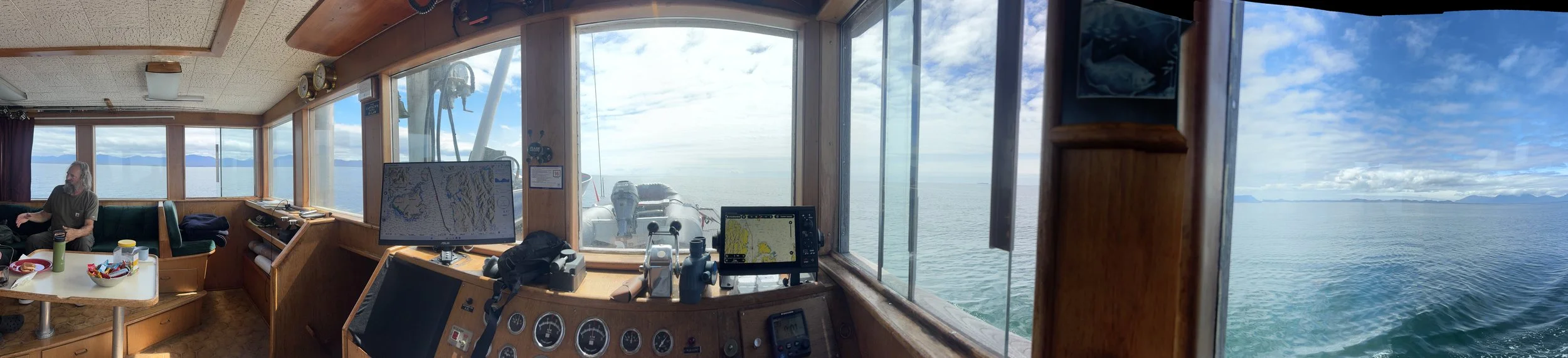
Its whats on the inside that counts sometimes. Having lived on a sailboat for years in the NW I have come to appreciate the light and views you get from powerboats. This vessel is a great example of the joys of a great view while inside.

The other crew member was David English who I’ve known my whole life was the older kid that lived next door when I was little. Dave is a brilliant engineer and adventurer had also never done this passage. I figured these two would get each other and be good for conversation but also good with comfortable silence..and if it came to it.. be a very handy team if we had to fix something in remote waters.

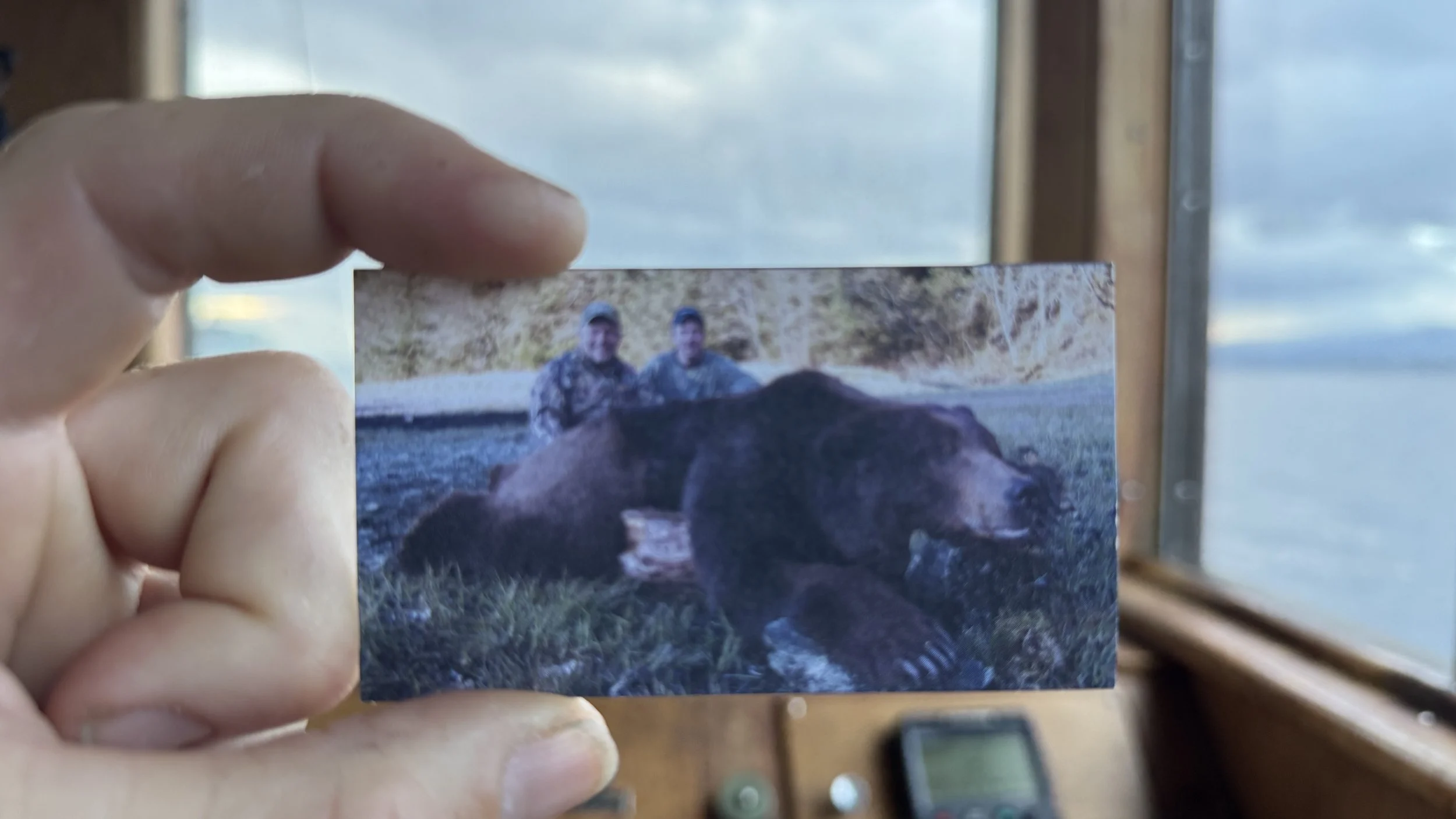
The new owner was planning to live aboard the boat on Lake Union in Seattle part time. Kind of like a apartment in the city. Quite a different life than the boat had seen with its former owner where it served as a platform for Bear Hunting Business. This may sound very strange but it isn’t as unusual as you might think in Alaska. I was once hired to deliver a boat to Valdez Alaska for a guy who had a similar business.

The business card of the former owner and the work the boat did under its last ownership.

I asked if the owner wanted to go before I agreed to do the job and found crew and he said no but then invited himself aboard at the last minute when he met us at the boat.

Its hard to explain why this is frustrating. He was a nice guy on the phone but it changes the dynamic and although the crew said they were okay with it we had to share a cabin and after days of not cooking or helping work on the boat it was beginning to test my patience. When he originally said he wanted to go I asked him if he was going to participate with shipboard duties and he said yes. He did not even do dishes..

Ketchican is a wonderful Alaskan town and well stocked as remote towns go. We provisioned and looked at the route ahead to negotiate weather and tides. The low freeboard and flat bow necessitated we avoid rough stuff and the border crossing would require that we head quite a way out of our way to Prince Rupert.

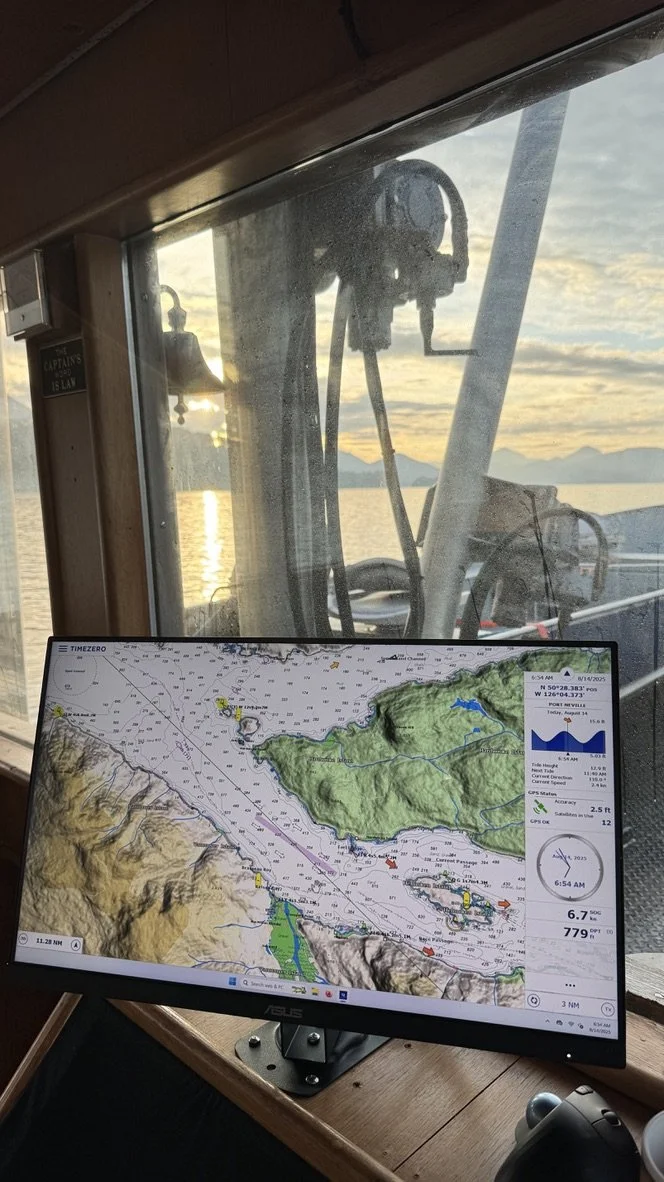
TimeZero

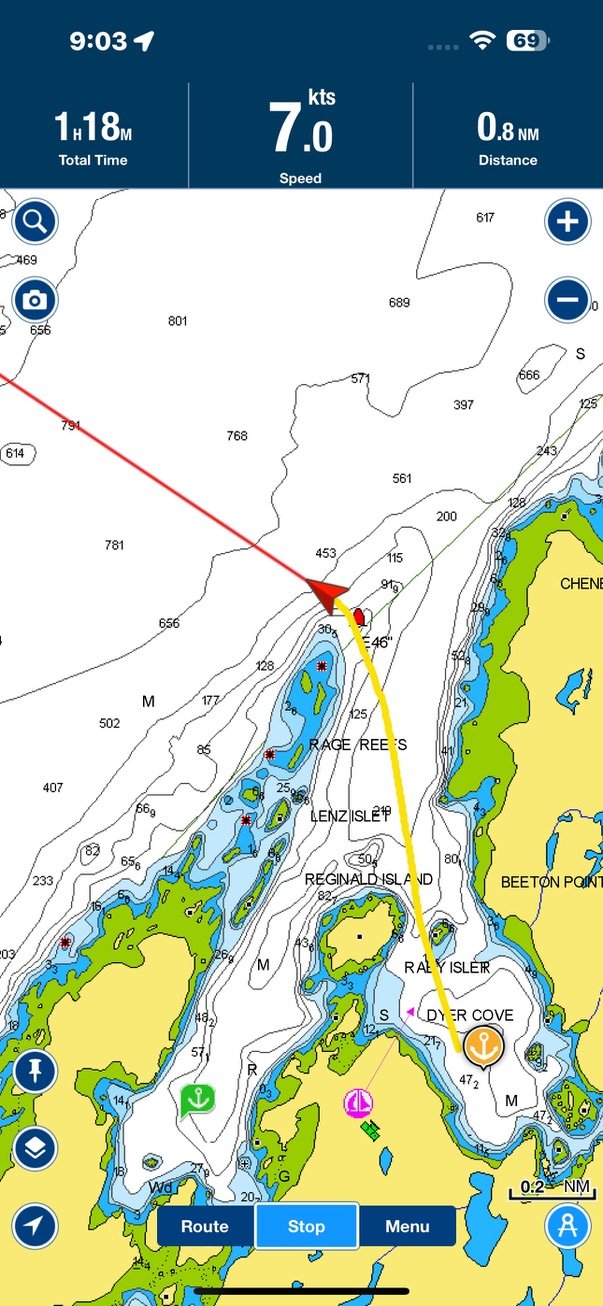
Underway to Prince Rupert to clear into Canada and do the rest of provisioning we get accustomed to the nav software “TimeZero”.

It is a newly installed nav system and displayed on a computer monitor. This is typical with commercial vessels, not so much with smaller private vessels. Setting way points isn't something I do often as I think it is better to have the crew as ‘hands on’ with the autopilot as possible. These waters call for a different approach. The courses we lay meander through fjords and archipelagos where there are many twists and turns and it is easy to lose your bearings. Also the tides in this area are powerful and need to be negotiated with careful timing so planning ahead and plotting in the morning is key. I brought about 20 pounds of cruising guides with me so we could be sure to have the best understanding of our options for layover and anchorage. I chose not to navigate at night because of the number of trees and logs in the water. The days are long this far north in the summer so the down time would be short. This means that we had to try and get as much distance in light as possible everyday. And as many anchorages as there are in those waters there are still long stretches with no options to stop. This and we needed to time a few tidal gates. 

We were coming into Prince Rupert just as it was getting dark and clearing customs isnt as straight forward as you would hope being that this is the only port to clear back into US waters. Navionics shows a dock on the approach that has been defunct for a while and the actual clearing dock isn't clear. The bata suggests a series of docks that allow clearance. When I came though on my race boat returning from the Race to Alaska the only spot available was past town a ways and a long walk into the stores. 

Prince Rupert is major hub in an otherwise

We lucked out and a breakwater tie at the end of a dock was available. I called the customs number before landing to get advice and announce our arrival and was met with the words of the least informed Canadian customs official i have ever spoken to. She told me a few confusing and conflicting things, the most confusing being that we needed to report every time we dropped anchor on our way through Canadian waters. The exchange ended in our clearance without inspection. 

Unfortunately as we were docking the port engine died. 

It started up but it did not bode well in the beginning of a 700 nm trip though very remote waters.  

The most likely culprit for a situation like this is fuel filters clogging up due to old fuel. This was very likely because the vessel had a 3500 gal fuel capacity. 

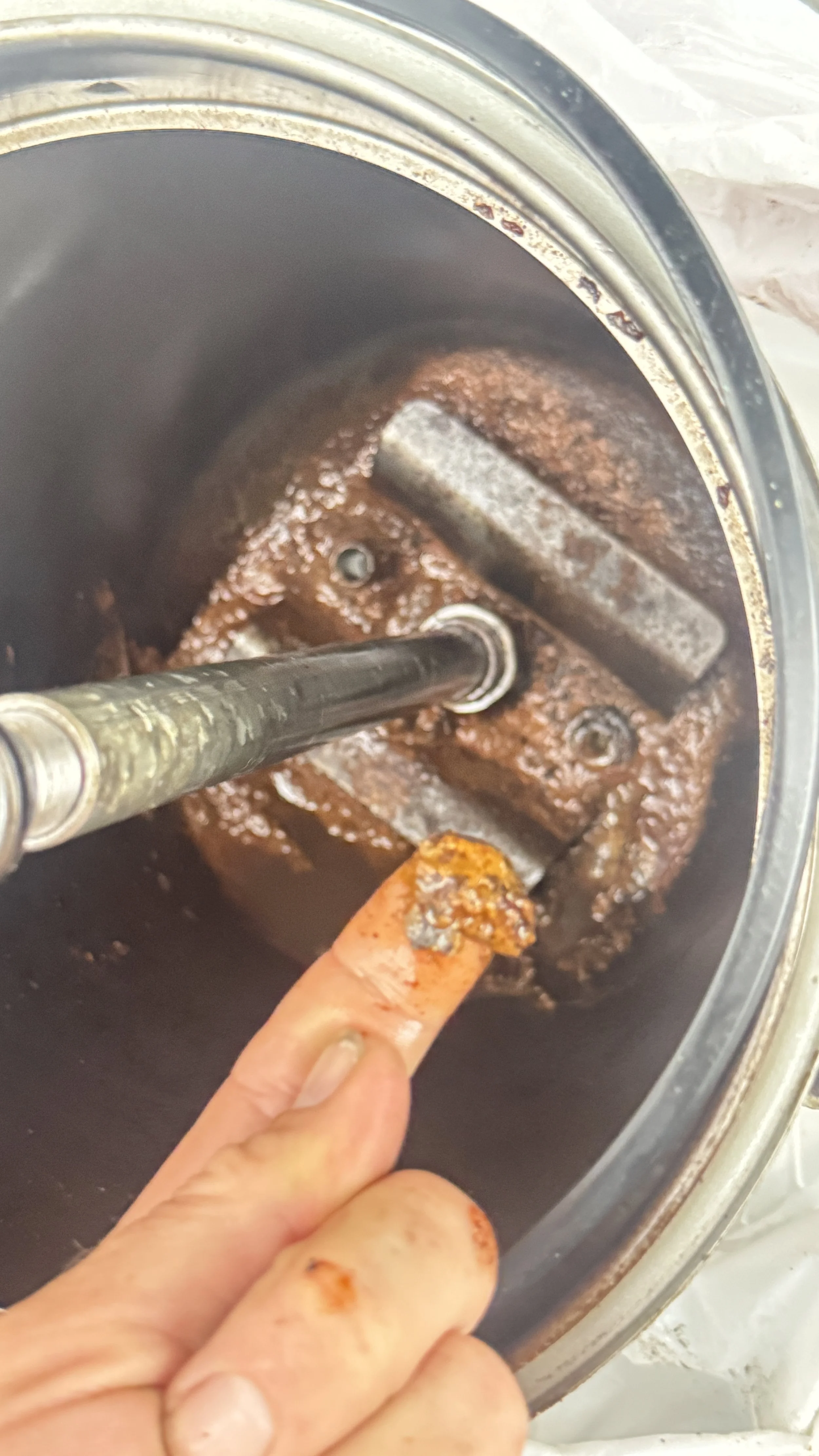
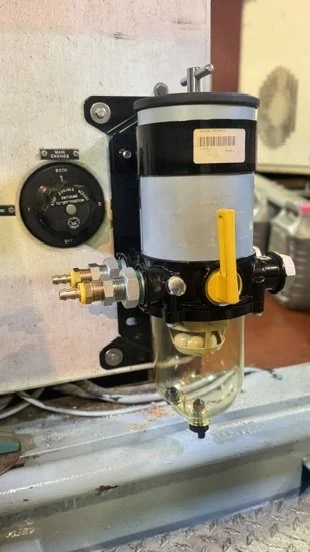
Unfortunately the fuel filters on the vessel are very old housings and there are no spare filters aboard or available anywhere but ebay…There was actually very little info on these filters. 

My delivery application asks customers to list the equipment aboard and the owner had said there were spares. I remember following up asking specifically if the vessel had spare filters, belt, impellers and fluids and was told that it did. This is a serious problem. There are no spare filters and there are no filters available for these housings in PR. 

I discuss with the crew and we decide to buy new Racor housing and filters before heading south. The problem with caring 3500 gallons of fuel is the fuel gets old and in addition to growing critters it collects water from condensation with eventually sings to the bottom of the tanks where the pick up tubes are and once you get in rough water this is stirred up and causes the filter to clog and engine to die. 

I have too much experience doing intensive engine work on boats I'm supposed to just be moving so there is as much built up frustration about this as there is savvy. First thing i have learned is that despite the time pressure you are under you have to remember you are not in a city and things do not run quickly or efficiently however one of the great things is that because you are not in a city your problems are a form of entertainment to the locals and these locals are very resourceful people. So the best approach when trying to tackle a job like this without waiting for things to be mailed in is to take the time to explain the entire situation (without the rush) to everyone you can. The guy working at the hardware store knows the guy that makes the custom fuel hoses and knows that he is in a nearby town till tomorrow but that he would come in on the weekend or stay late to help out some wayward southerners like us. 

A few days of running around and conflicting info and people digging around in the back we have the parts to install two beautiful new Racor filters in a convenient location (as opposed to the former location). 

The owner has asthma so he doesn't want to be exposed to any fumes so me and the crew do all the work. 

Once underway we try to figure out the fuel tank routing. We are getting info from the new owner, the former owner, and eventually the designer and builder. 

Mislabeling 5000

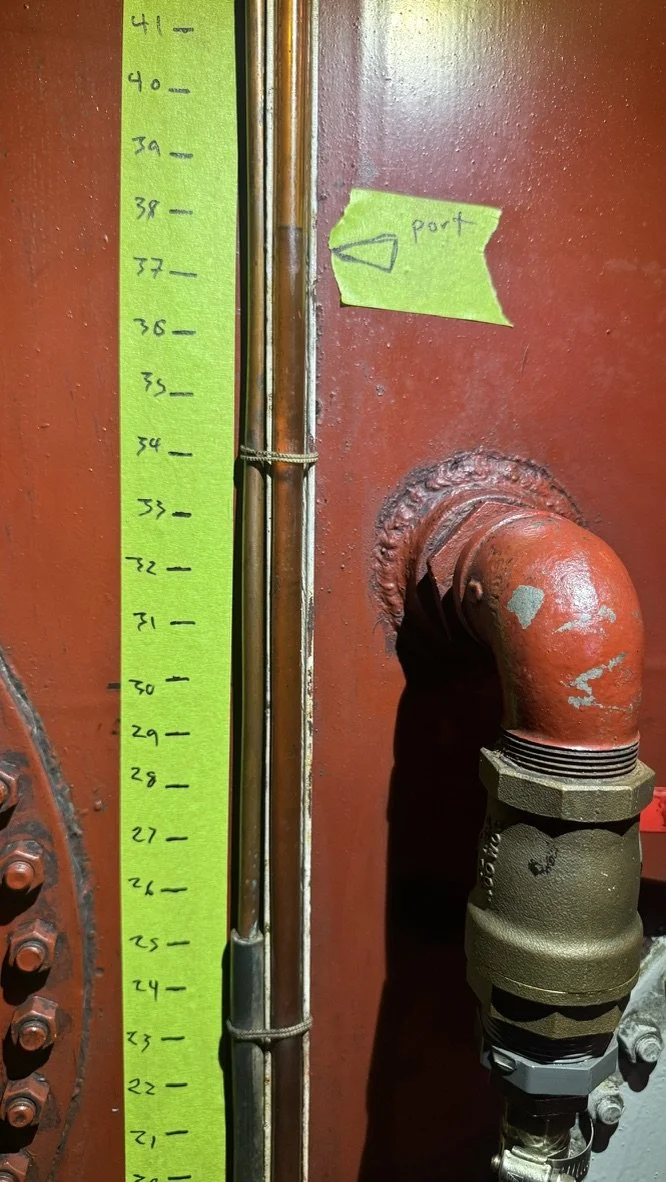
The labels on the hard lines in the engine room turned out to be courtesy of the former owner and wrong and the space between the gravity pulloff on the side of the built in tanks ends up being attached to L shaped pick ups making it even more likely we will pick up sediment. We can feel the sludge when we “dip the tanks” (use a stick that is marked to measure the levels. 

The vessel has two detroit 671 which are very common engines and are quite thirsty (11 gph) so my concerns are not quelled too much by our new filters. Instead visions of us losing both engines in a high current area give me some stress. This makes me investigate the ground tackle. The vessel has a huge anchor and hydraulic windlass but only 200 feet of chain. This is minimal for this area because anchorages are often 50 feet deep. 4 to 1 is okay  but there is wind in the forecast ahead and if we lose power we will be in deep water with little hope of the anchor catching before we hit the rocky shore. 

Windlass work

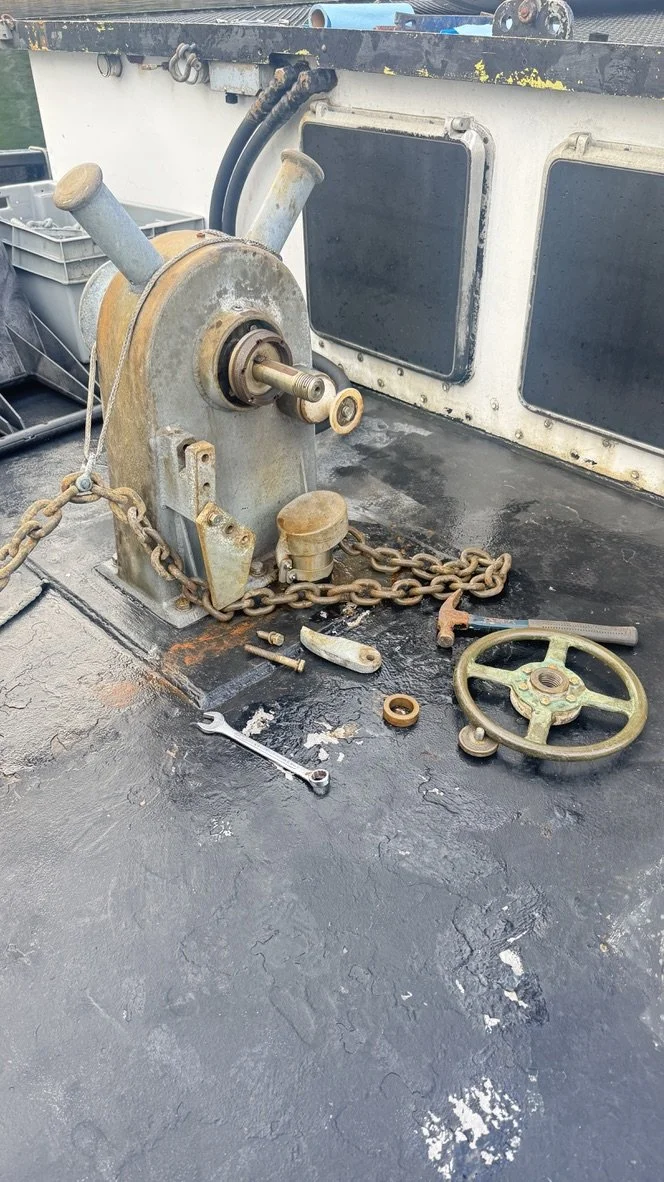
Our first stop from PR is Curlew Bay on Fin Island. The gypsy is locking when we try to use the windlass clutch to lower the anchor so we use the reverse operation with the hydraulics to lower the big anchor. Once it's down we disassemble the clutch and see if we can replace the friction cone and regrease everything. 
We also get skunked trying to crab which is hard to believe in this remote anchorage. 

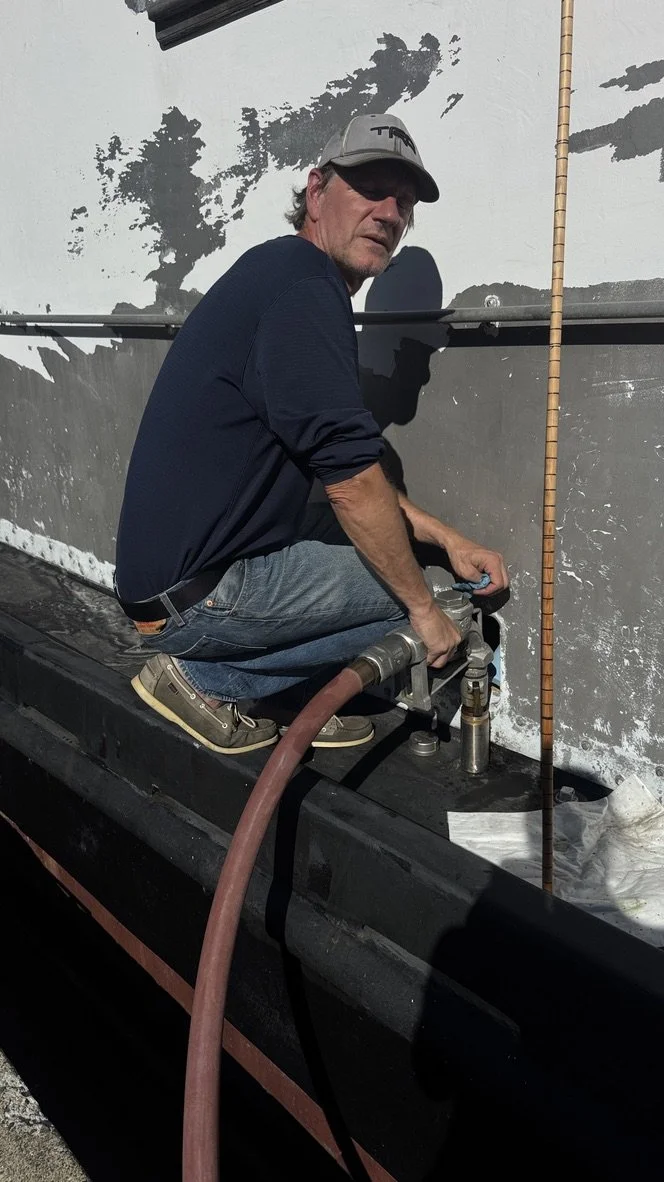
Dave on one of the starboard tanks

The next day we see how the scow performs in some small beam seas. The low side decks are awash and the motion is snappy. We stop at a battered reservation fuel dock in a place called Klemtu. A few elders are situated up top of the headwall and are entertaining themselves watching the bustle at the fuel dock on a sunny day. Some jokes are cracked about the current US administration after a brief and failed attempt to not look American. (NOTE: convert to liters your estimated fuel requirements before you pull up, asking for gallons is a dead give away) We push for Dyer Cove on Reginald Island. A beautiful place and what looks like a fishing paradise. The next jump is another exposed hop. Despite getting some swell relief behind the Goose Group the swells show us we wouldn't want to be out in too much seas in that flat bottom boat. The packing glands are old style and drip into a sump that has no bilge pump. Instead of a bilge pump with a float switch like regular designs we have to flip a switch to activate a pump that pulls a belt off one of the engines and use a big hose to vacuum out the water from tupperware containers under the stuffing boxes. This goes with every other engine room check. 

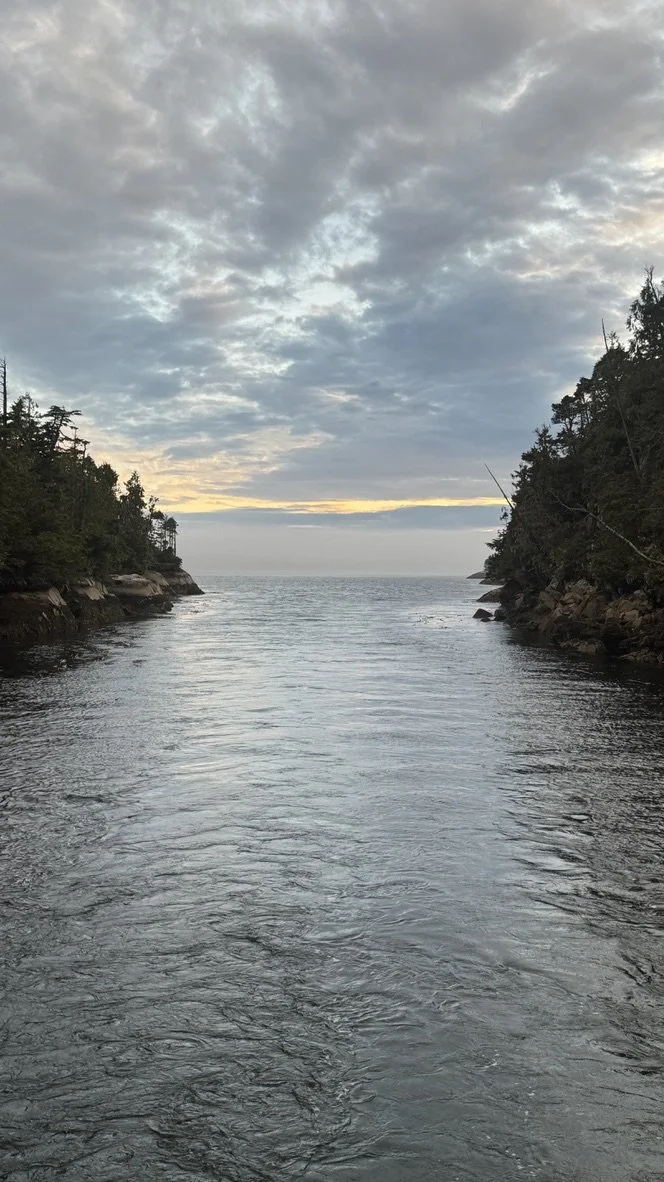
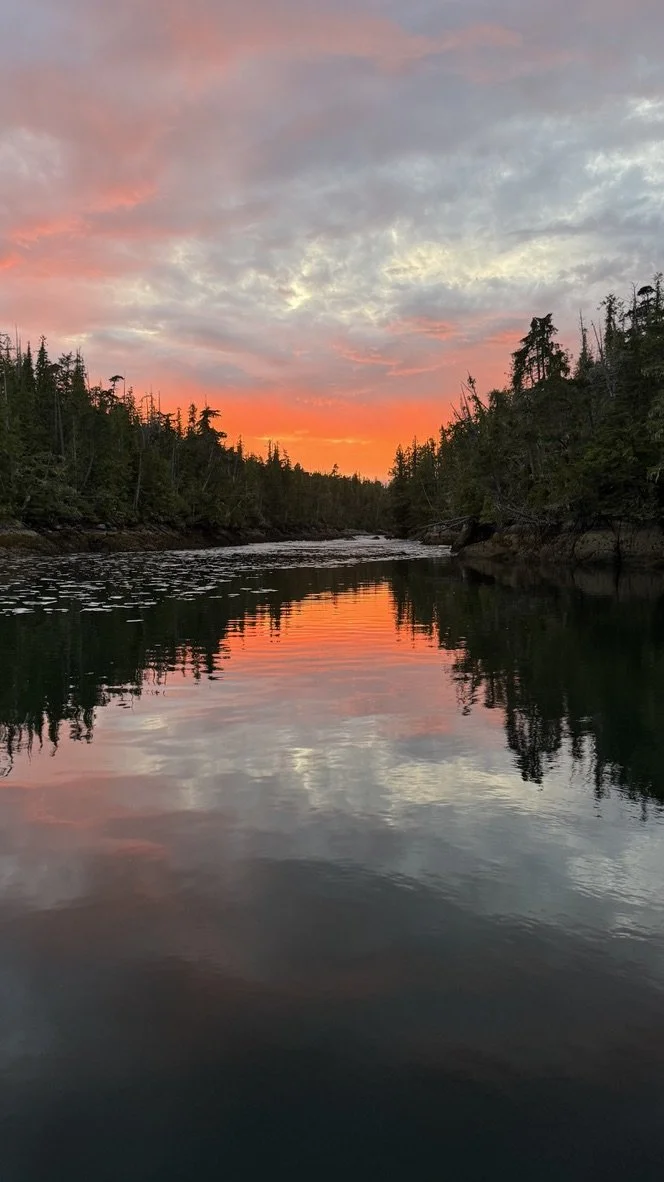
The next leg is the last exposed leg and we pull into Miles inlet just as its getting dark. This is a magical place. There is a narrow inlet to a small anchorage that sits between two tidal rivers. There is just enough room to turn around this 50 footer. 

Just came out of a fog bank and into this tiny entrance

As the tide ebbs the water froths and the wind blows these little froth islands around. One of the most beautiful spots in the 700 miles. Dont tell anyone.

Next stop Port Hardy. I looked at flights to Seattle for the owner who was dealing with drama from his kids and family back home and he flies out. I grab some fresh provisions and things we missed in PR while the boys put 800 gal onboard.

Not in Kansas any more Toto

Some of our work to figure the 3500 gal fuel tank design.

Now everyone has their own cabin and the vibe feels much better. The tank design is still baffling us all. There are 6 tanks built into the steel hull and they sit at different heights to the waterline so we are trying to correlate the fuel manifold and sight glasses to the fuel we have onboard. 

Heading south to Port Neville; a small wayside with a dock and the ruins of a postoffice outpost not so long ago left. 

The dock is full as to be expected, arriving at the last minute so we anchor behind some aluminum purse seiners. 

The next push gets us through Race Passage; an infamous tidal gate and often very windy cut. Some of the most drama documented on the R2AK is in this narrow stretch. We are visited by a huge pod of dolphins. 

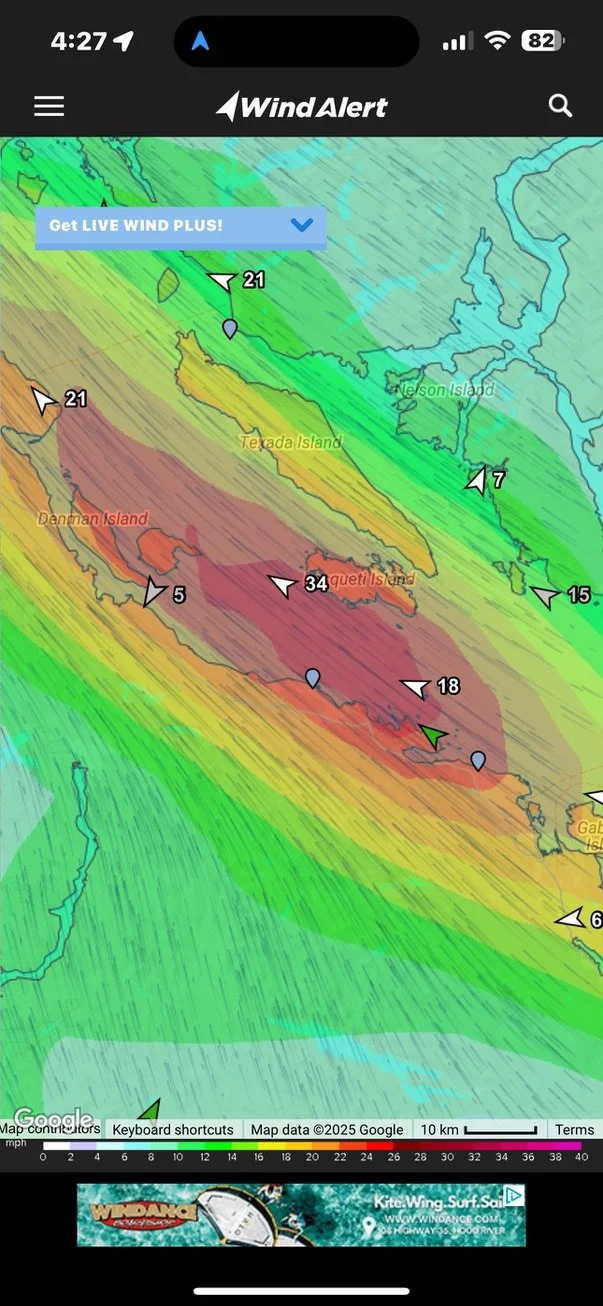
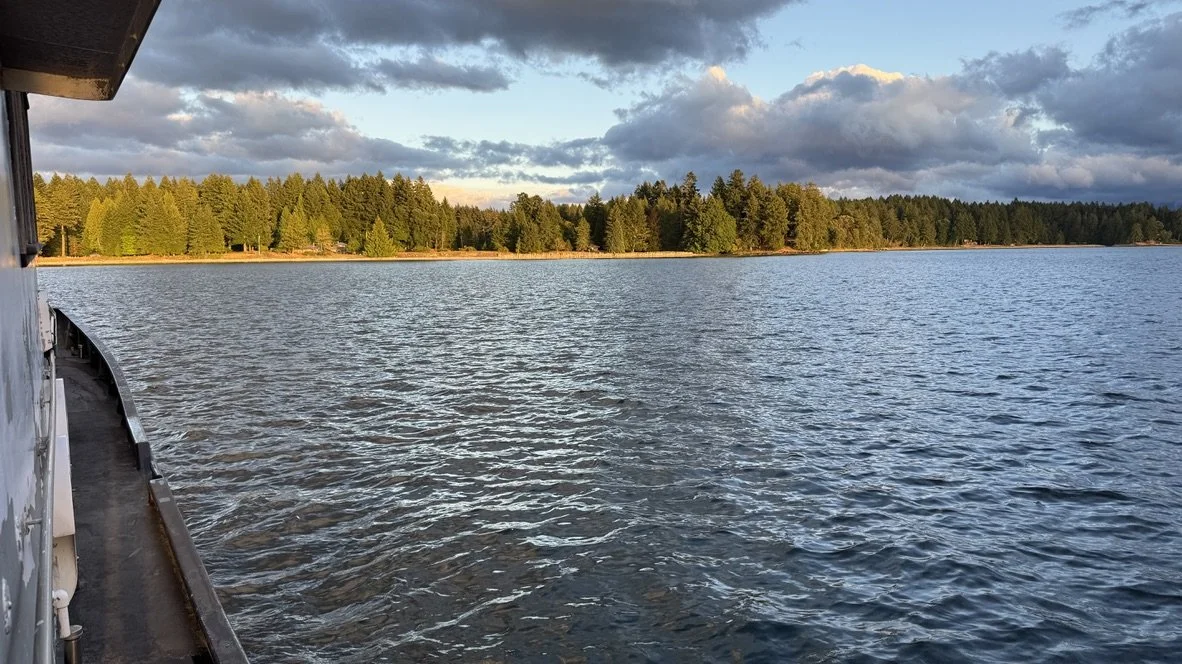
The weather window we were so lucky to have for this delivery and that was largely squandered in our laydays working on the boat in PR has run out. We come out of the narrow confines of the part of the inside passage most dominated by tidal currents into a mixture of fog and smoke coming from a big fire in port alberni on the other side of Vancouver island. The fog eventually gives way to a building southly. We are now in the northern waters of the Straits of Georgia and the bows of the scow are throwing water into misty sheets covering the windows. We have been using “Rain X” to help with visibility as there are no wipers. It allows for visibility about %50 of the time. We are going to have to find a place to wait out the southerly gale that is building. I choose Courtenay with the hope that we will be able to get ashore but after poring through the cruising guides I decide there is too much fetch and as we will be setting the anchor in the dark for the first time that it's better to drop the hook a little south east of the town in the lee of Denman Island. 

Anchor down and anchor alarms on; we use the down time to do some laundry. There is a full size washer and dryer in the engine room. 

The scenery is very different in this area. It feels like the waters we came from are very far away. Industrial scenes seem so foreign after even our short sojourn through the wilds of BC.

5am wake up and 10 anchor down catches up. Almost better having a set watch on 24 hour deliveries.

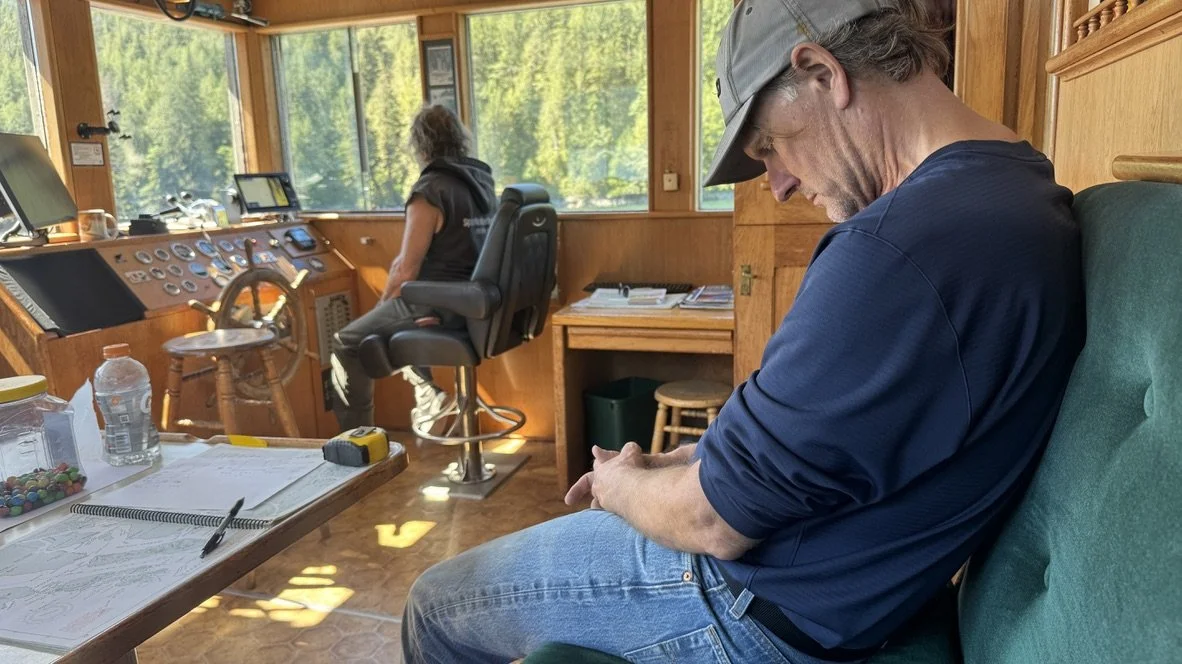
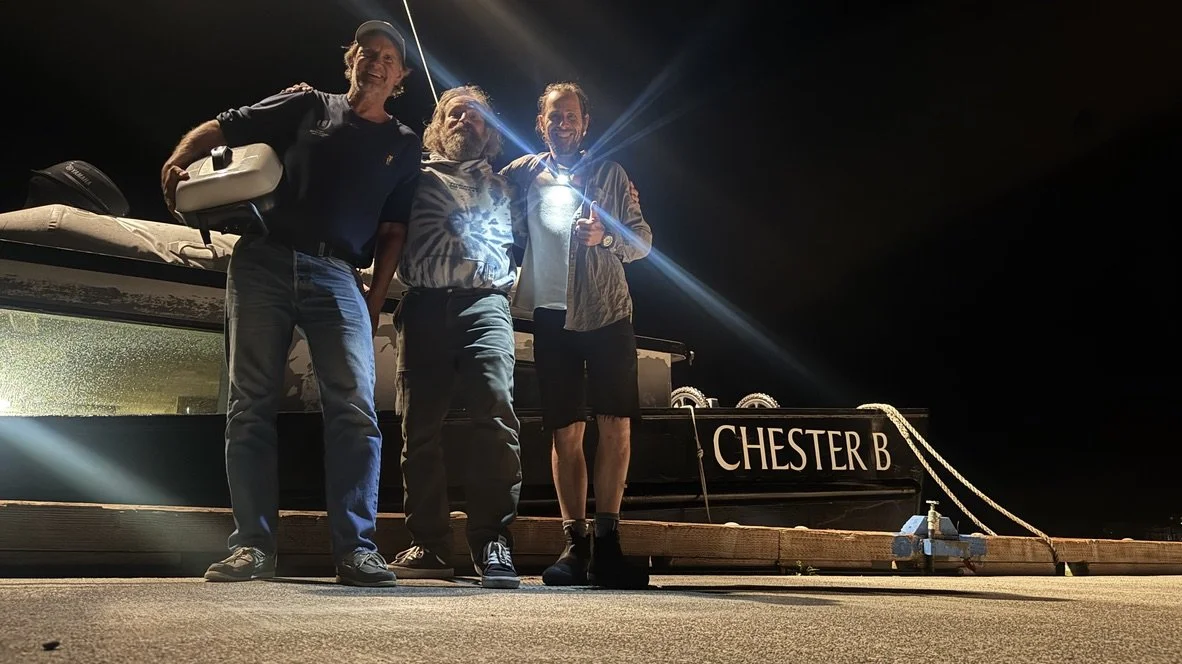
Doug is getting calls from his kids who are visiting Lopez and I can tell he is ready to get home. I discuss with Dave if we are okay to drop him off in the San Juans and continue alone and he's fine with it. The rest of the passage is uneventful and we arrive in Seattle at the Shilshole Marina in temp moorage. 

Dropping Doug off in friday harbor but not before a picture

Port Townsend to Astoria J 109

A wonderful sporty little boat and a nice bit of weather to do it.

Sleep is work

So nice to have a dodger. These race boat deliveries usually dont have dodgers or much in the way of comforts. In the past I think the convention was to have part of the crew deliver the boat home after the race. That may be less and less so. We can hope..

The only hick up was that the engine didn’t start when we first got to the boat. The gear shift assemblage was looking pretty tired and after crawling into the lazaret for a closer look I realized it was the wires that prevent you form starting the engine in gear that were corroded. Once bypassed it started right up.

Amazing sailing across the bar on this one. The Coast Gaurd recommend that you motor but many sailboats like this one don’t motor half as well as they sail.

Cutwater 288 Bellingham to FR

These boats and Ranger Tugs have really taken off in recent years. One thing is for sure; they are a lot more maneuverable than other 300,000 dollar boats.

I helped to owners pick this boat up from the broker last year and due to supply chain issues it didnt come with the davits installed. I brought the boat over with a friend so they could be installed by the dealer. Boy was it a trial getting home. Next time Im flying.

Anacortes to LA Day 18

Point Conception is the last cape to worry about on the coast and we get by it in calm weather.

However a small craft advisory coming.We finally got into some wind and turned off engine… Unfortunately when the speed dropped below the amount we needed to get in before dark we went to start the engine. It did not turn over..

Its the starter this time.

Beyond ready to drop the mic.

One more tow and we are done.

The process of getting a tow from these big chains like Towboat US is a little frustrating. There is a central router and you cant really speak to the captain that is going to tow you until you answer a million questions and if you are trying to call a few companies this really takes a while. If you are in a situation like this call early and call around.

We get the boat into the slip thanks to some very fine boat handling by our tow boat’s skipper. The crew head home and I stay a day more to go over the boat from stem to stern with the owner showing what he needs to address before leaving the dock again.

Big thanks to the crew! It took over a dozen people to make this happen. The crew on the boat, the electrician, the mechanics. the shore support that drove us and our parts around all came together and made it happen.

The sailmakers that went over the sails

The crew of 6 sailors

Jon Palmer who lent us tools and taxied us around PA

Mary and her friend in Westport who brought the new alternator

The tech for Balmar

The Electrician Christian who worked over time

Capt Lars for advice on crab gear and how to avoid it

Tom’s sister who drove us around LA

Alls well that ends well

Grateful to have this guy onboard. Tom Muir AKA Tommie Sox!

Anacortes to LA Day 12

Heading into Coos Bay. Lost second reef line in the night. (Should have kept old cables from the transmission because we could have used then to pull reef line through the boom again.)

Cross bar at 10:20 autopilot not functioning right.

We are heading in because the weather has deteriorated and we will not get around the cape before it hits.

The crew have to get back to their lives and have given so much to this helping get the boat this far.

I will hang out on the boat and reach out to potential crew to finish the trip. Fortunately Tom and Max are going to come back for the rest of the trip. This short notice recrewing is a real challenge though. People of course need notice to join on these passages so it seriously limits who we can get. We could do the rest of the trip with the three of us but we still have three capes to go and a boat that is proving to be worn out in more ways than one.

I decide to head up the river to the “City of Coos Bay” rather than Charleston the little fishing port close to the entrance. Coos Bay is a very charming little coastal town with a two big linear docks a short walk to everything. When we arrived the guys split off to rent a car and Tom and I found City Hall to pay for moorage.


Anacortes to LA Day 11

We left at 6:30 after running the engine to confirm the batteries were charging. No leaks of coolant or oil from the manifold the only issue was it was going to be the sea state running to due to max ebb at 7:30. These bars should be negotiated before slack or on the flood but if you are heading out you can get away with going on the ebb in calm weather. However you must be committed because turning around is not really and option.
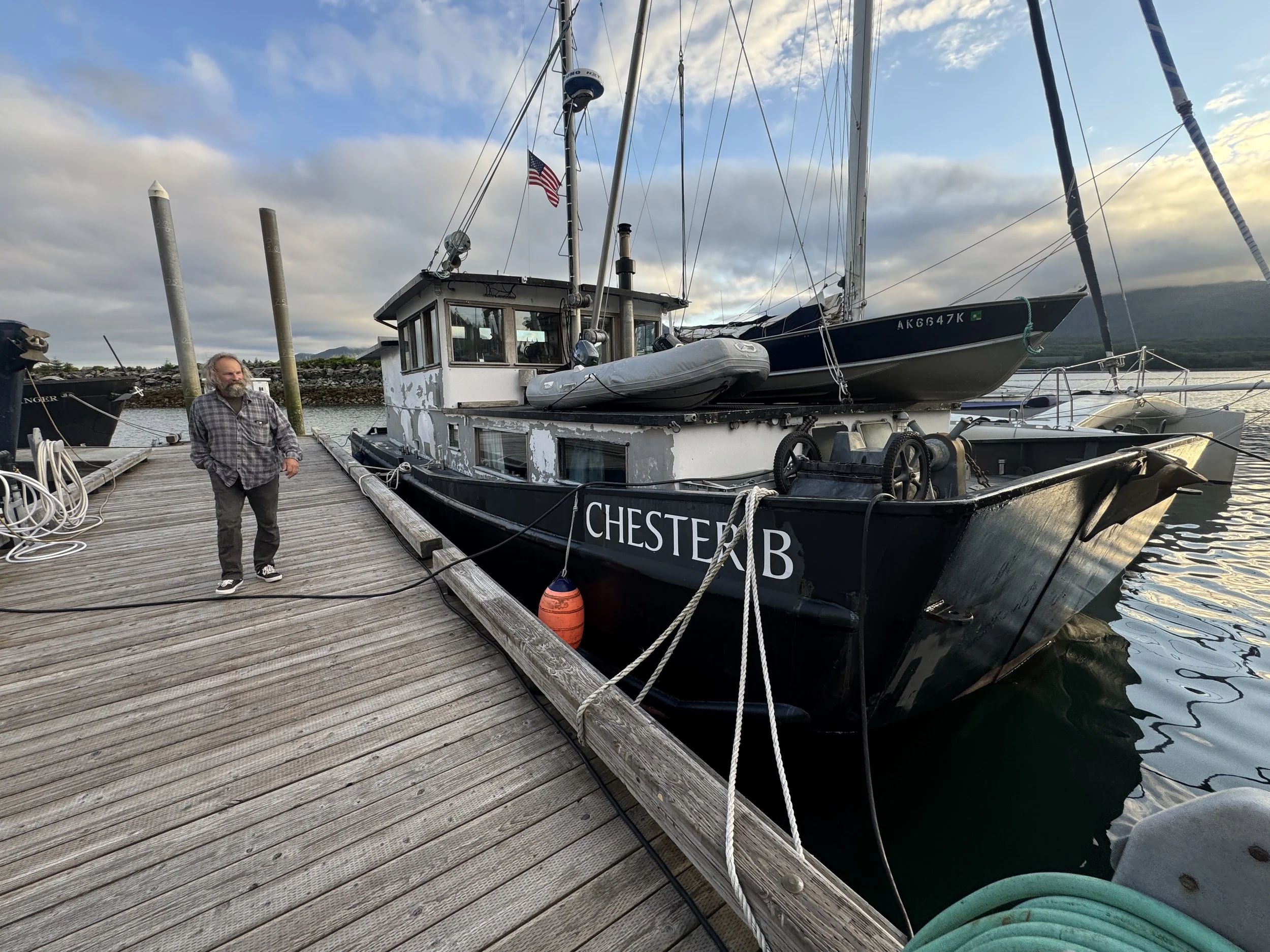
Popping wheelies on the Grays Harbor Bar.

Steep 8 footers and water on the deck with a little through the forhatch. Then upon successfully catching the drone Har Rai when walking forward to the cockpit drone in one hand and remote in the other fell onto the side deck and dropped the drone. It bounced before it went overboard and in his despair lost his glasses as well. It can not be said enough. “one hand for the ship and one hand for the sailor.” Madison was standing by on the aft deck and could have carried the remote while Har Rai carried the drone.

Freshly harvested razor clams for dinner thanks to Mary Tom’s friend!